

[비즈한국] As application demand for "Youth Relief Housing," which provides transit-oriented housing to young people at prices below market rate, surges, critics point out that those without first-priority status have no chance of benefiting from the policy. With public rental supply continuing to shrink in the wake of a construction industry downturn, concerns are being raised that the supply-demand imbalance may worsen in the future.
According to the Seoul Housing and Communities Corporation (SH) on the 29th, the average subscription competition rate for the first round of 2025 Youth Relief Housing, which closed applications on April 23, reached 146 to 1.
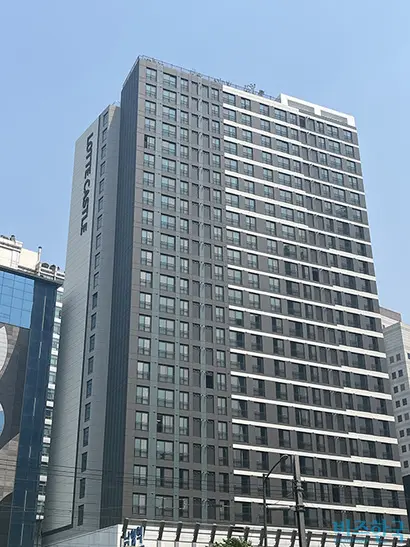
For the popular Yongsan Namyeong Station Lotte Castle Heritage, 7,111 people applied for 40 units of the 23㎡ type, resulting in a competition rate of 177.8 to 1, while a 33㎡ unit in a Youth Housing project in Dangsan reached a competition rate of 2,742 to 1.
For Youth Housing, winning as a 2nd or 3rd priority applicant is ‘like picking stars from the sky’
Youth Relief Housing is a project in which the Seoul Metropolitan Government collaborates with the private sector to provide public and private rental studio apartments to non-homeowning youth aged 19 to 39 in areas with excellent access to subway stations or public transportation at prices cheaper than the market rate.
In the case of public rentals, which offer housing at rent levels up to 30% lower than the surrounding market rate, the project was considered an alternative to the current market where sale and lease prices have skyrocketed. However, as the supply is limited compared to demand, the need for supply expansion has been raised.
In particular, priority for moving in is divided into 1st, 2nd, and 3rd ranks based on eligibility, income, and assets during the application process, and it is generally accepted that it is practically impossible to win unless you are in the 1st priority group.
In fact, an analysis of the cutoff for document screening for 2024 Youth Relief Housing released by the SH Corporation showed that among 124 youth supply types across the 1st, 2nd, and 3rd rounds, only 5 cases had 3rd-priority winners.
A person surnamed Lee, who was selected as a reserve candidate in this first round of applications, said, "I applied for a type that selects a total of 4 people with 2nd-priority status and received reserve number 14, but I don't have high expectations because the competition is so fierce," adding, "I also received a reserve number last year, but the turn never came, so I gave up on the qualification."
Youths driven to high monthly rents due to slim chances of winning
Youths who fail to win Youth Relief Housing are placed in a situation where they must bear high housing costs. This is due to the rising burden of housing costs as demand for monthly rent increases in the lease market.
According to the Bank of Korea's Economic Statistics System (ECOS), the consumer price index for monthly rent in Seoul rose by 1.6% this March compared to the same period last year. This is the largest increase in 11 years and 2 months since January 2014 (1.7%).
A person surnamed Yeom (26), who is working as an intern in Seoul, said, "I have applied for Youth Relief Housing several times, but since I am in the 3rd priority rank, I have never even passed the document screening," adding, "I live in a monthly rental because I am afraid of jeonse fraud, but with a salary in the 2-million-won range, there is very little money left in my hand after paying 700,000 won in monthly rent."
Concerns grow over supply-demand imbalance amid fears of a ‘supply cliff’ for Youth Relief Housing
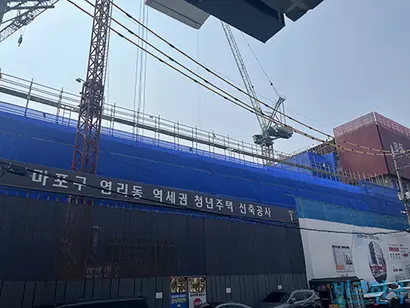
Despite explosive demand from the youth, the supply volume has been rapidly decreasing every year. The scheduled occupancy volume confirmed for next year is only 2,020 units. This is a significantly lower figure compared to the 8,050 units scheduled for supply this year.
An official from the Seoul Metropolitan Government said, "There is more volume scheduled for 2026, but we do not disclose complex information until just before confirmation, as we cannot guarantee completion," adding, "It is a difficult situation to increase supply as new orders have decreased recently due to the construction industry downturn."
The number of building permits for Youth Relief Housing project sites is also continuously decreasing, leading to concerns about a potential halt in supply. According to the Seoul Metropolitan Government, the number of building permits for Youth Relief Housing as of April this year has dwindled to 45 in 2021, 22 in 2022, 10 in 2023, and 4 in 2024, with no new permits issued so far this year.
Analysis suggests that supply conditions have worsened as contractors find it difficult to secure business viability due to rising construction costs.
In fact, Hyundai E&C 000720 gave up the construction rights for a 616-unit Youth Relief Housing project in Deungchon-dong, Gangseo-gu, Seoul, last year. The construction cost was set at approximately 7.5 million won per 3.3㎡, and the judgment was made that profitability was too low.
A construction industry official said, "Due to the downturn in the construction industry, labor costs and raw material prices are rising, increasing the burden of costs," adding, "Unless support for operators is expanded, it will be difficult for the supply to proceed as planned."
Experts emphasize that deregulation for private operators is necessary to expand supply.
Park Hap-soo, an adjunct professor at Konkuk University’s Graduate School of Real Estate, said, "In a situation where demand from single-person households continues to rise, it is necessary to expand volume and segment regions to increase supply to resolve the housing crisis for youth," adding, "The government needs to induce participation in supply by providing incentives so that the private sector can secure business viability, such as by raising the floor area ratio or increasing the purchase price when the government buys the housing."