

[비즈한국] Franchises have rapidly expanded in the food and beverage industry, favored for the convenience of starting a business and the promise of a certain level of income. However, with the recent nearly 20% plunge in sales for major brands under Theborn Korea475560 due to the so-called "Baek Jong-won risk," the reality that franchise businesses do not always guarantee success has become apparent. Amid this, store owners in certain commercial districts are choosing to leave their franchises, concluding that independent operation is more advantageous. We visited these locations to hear their reasons.
"I need to change with the seasons, but..." Stifled by Headquarters' Policies
Jeon Seung-bin (63), who operated a franchise café in a university district for 8 years, converted to an independent café last February. There are already more than 8 cafes operating within a 100-meter radius of his shop. In such a fiercely competitive environment, seasonal new menu items were essential to attract trend-sensitive university students. However, headquarters' policies stood in the way. The structure imposed fines for selling beverages outside the designated menu. "Students like new things, but I felt frustrated because I was only allowed to sell the prescribed menu," Jeon said, explaining why he terminated his contract.

University districts are signature "specialty" commercial areas with significant fluctuations in revenue depending on semesters and school breaks. According to merchants in these areas, the difference in sales between peak and off-peak seasons can be as much as fourfold. However, franchise stores struggle to respond flexibly because they must follow headquarters' guidelines. Jeon also had to endure sales drops during the 4-plus months of school breaks each year without being able to take any real countermeasures.
After switching to an independent café, he gained the freedom to immediately reflect customer feedback. He boldly removed unpopular drinks and introduced new items. Sales nearly doubled compared to before. He plans to introduce discounted menus during school breaks to maintain demand. "Although I had to spend extra on interior renovations, it's not a waste at all when I see the sales increasing," Jeon said.
Palate Over Brand... Independent Self-Employment is Better for Neighborhoods with Many Regulars
Kim Ha-jin (46, pseudonym), who switched from a franchise meat restaurant to an independent one in Nowon-gu, Seoul, gave similar reasons. His restaurant is located in a "bedroom community" dense with large apartment complexes, and his primary customers are family groups in their 50s and 60s.
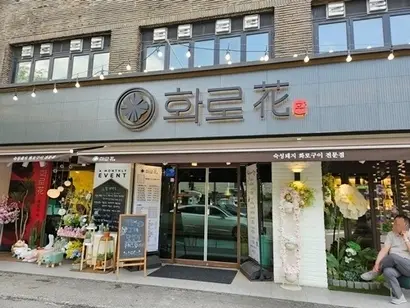
Customers in this age group prioritize price and menu composition over brand when choosing a restaurant. "Tailoring the food to the customers' tastes rather than sticking to a brand image was helpful for sales," Kim said. Instead of the steamed egg dish provided during his franchise days, he started serving 'gang-doenjang' (thick soybean paste stew) and installed an ice cream machine for the kids. He also runs discount promotions frequently. The customer response has improved noticeably.
Customers in their 50s and 60s tend to prefer familiar places over new ones. Analyzing payment records, Kim's restaurant reached a return visit rate of about 20%, and the actual figure is likely higher if we include instances where different family members pay on separate visits. "Since I have many regulars, brand recognition didn't mean much," he added. The low volume of delivery orders, characteristic of a meat restaurant, was also a factor in lowering his reliance on the brand.
Brand Identity Is Good, But Owners Need Autonomy
In commercial districts where group orders are frequent, independent self-employment is often more suitable than a franchise. Kim Tae-hyun (52, pseudonym), who operated a 'B' gimbap franchise for 10 years near a subway station in Seoul before converting to an independent gimbap shop, said, "The location is the same, but the sales have actually increased."
His main customers include nearby churches, hospitals, and tour groups. These groups place many large orders and carefully consider the restaurant's location and food prices. "They order dozens of rolls of gimbap when there's an event or meeting, and they choose my shop because of the good accessibility," Kim explained.
Franchises remain an attractive option for prospective entrepreneurs with no experience in the food service industry. According to Statistics Korea, the number of franchise outlets in 2023 was 301,885, a 5.2% increase from the previous year, and the number of employees exceeded 1 million. However, according to data from the Fair Trade Commission, the closure rate for food service franchises reached 14.9% last year. This means more than 1 in 10 stores closed their doors.
Voices in the industry suggest that for franchises to have sustainable competitiveness, they must move away from the method of uniformly imposing headquarters' operational policies. Eo Yoon-sun, a professor of Food Service Startup and Franchise at Sejong Cyber University, advised, "While keeping brand identity is important, headquarters must guarantee autonomy for franchisees so they can respond to various commercial districts, and it is necessary to expand communication channels such as operating a win-win committee."