

[비즈한국] Attention is focused on how the presidential election, scheduled for June 3, will impact the real estate market. Major presidential candidates have declared that they will stabilize real estate prices by increasing housing supply. However, there is persistent criticism that they are putting forward only abstract pledges without concrete plans.
According to KB Real Estate, the average sale price of a home in Seoul was 1.00398 billion won in May of this year. This is the first time since KB Real Estate began tracking statistics in 2008 that the average housing price in Seoul has exceeded 1 billion won. Homeownership is becoming increasingly difficult for the average citizen.
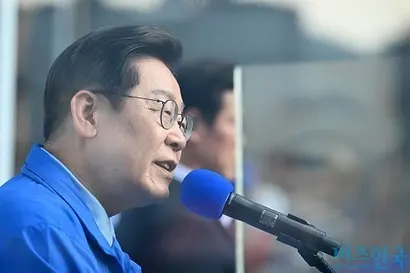
Democratic Party presidential candidate Lee Jae-myung pledged to increase housing supply through redevelopment and reconstruction. In his pledges for the metropolitan area, Candidate Lee stated, "We will completely revamp the aging infrastructure of the 1st generation new towns (Bundang, Ilsan, Sanbon, Jungdong, Pyeongchon) to enhance both urban functions and residential quality." He added, "We will lower entry barriers for redevelopment and reconstruction in aging urban areas of Seoul to promote higher floor area ratios and ease individual financial contributions. We will also prepare for the development of 4th generation smart new towns with convenient transportation to provide comfortable and affordable housing for non-homeowners, such as young people and newlyweds."
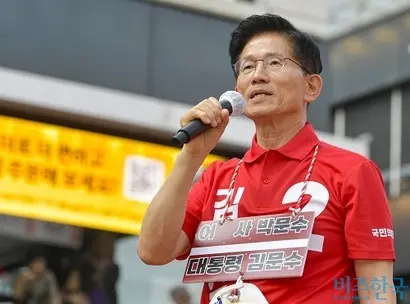
People Power Party presidential candidate Kim Moon-soo pledged to supply 'Youth Marriage 3-3-3 Housing,' which includes support for housing costs or loan interest for up to 9 years—3 years upon marriage and additional years upon childbirth. He promised to promote 'half-price monthly rent zones' near universities and significantly relax floor area ratios. He also stated that he would delegate authority for redevelopment and reconstruction to local governments to shorten project durations.
Candidate Kim Moon-soo explained that he would also ease real estate-related taxes. He plans to reform the Comprehensive Real Estate Holding Tax and abolish the system for recovering excess profits from reconstruction. While Candidate Lee Jae-myung did not announce specific tax-related pledges, he has shown a more lenient stance on real estate taxes compared to the past. In a discussion with economic YouTubers on May 8, Candidate Lee remarked, "Let's not suppress people who want to buy homes by unnecessarily hitting them with taxes."
Lee Jun-seok, candidate for the Reform Party, is also putting forward pledges for increased real estate supply and tax relief. In his policy documentation, Candidate Lee stated, "We will significantly raise floor area ratios to increase supply by improving business viability, and increase the number of units available for sale by focusing on the 59㎡ type supply." He added, "We will flexibly reduce taxes and incidental costs, such as acquisition taxes and capital gains taxes that occur when buying and selling homes, in line with life-cycle changes."
Looking at the real estate pledges of the three candidates, while there are differences in detail, they are consistent in their goal of increasing housing supply. However, real estate is not the main focus of their campaigns. This atmosphere contrasts with the 20th presidential election in 2022, where real estate issues were a central concern.
Criticism also arises regarding the lack of detailed content. Critics argue that the candidates only offer general remarks about increasing supply without explaining specific supply plans or how to secure funding. Candidate Lee Jae-myung is also being evaluated as having taken a more conservative approach to real estate development pledges.
The Citizens' Coalition for Economic Justice (CCEJ) commented on Candidate Lee Jae-myung's real estate pledges, saying, "Pledges centered on development and expanding the private market—such as the reconstruction of 1st generation new towns, preparations for 4th generation new town development, expansion of the Great Train Express (GTX), and easing of reconstruction regulations—suggest that the policy direction has shifted to the right." They added, "Regarding real estate taxes, there was no confirmed intent to normalize the Comprehensive Real Estate Holding Tax or property taxes, and there were no pledges to normalize the realization rate of officially assessed prices or to strengthen taxation on multi-homeowners."
Regarding Candidate Kim Moon-soo’s pledges, CCEJ assessed, "It focuses on private-led supply expansion, tax relief, and large-scale civil engineering projects like GTX construction. However, the enormous profits generated from development projects will be concentrated solely on landowners and developers, which could deepen chronic social polarization." They added, "Key reform tasks such as expanding the post-completion sales system, reforming the functions of the Korea Land and Housing Corporation (LH), and strengthening the development profit recovery system were not included in the pledges." As for Candidate Lee Jun-seok, they pointed out, "The real estate sector appears to emphasize supply-oriented and tax-cutting policies. Structural reform pledges such as the post-completion sales system, publicization of public housing sites, and LH reform were not mentioned, and there is a lack of approach toward restoring the public nature of housing. The pledges in the real estate sector give the impression of being poorly prepared."
The People's Livelihood Hope Headquarters of People's Solidarity for Participatory Democracy also pointed out, "Overall, housing and real estate pledges are inadequate, and it is very disappointing that housing welfare policies for the vulnerable are missing. Fragmented policies are not enough to stabilize housing prices and ensure the residential stability of the working class. One cannot help but ask whether the presidential candidates have the will to solve Korea's housing problems."
The real estate industry expects that there will not be significant changes in the market for the time being even after the election, on the grounds that neither Candidate Lee Jae-myung nor Candidate Kim Moon-soo is focusing on real estate. Jeong Bo-hyun, a real estate analyst at NH Investment & Securities005940, analyzed, "It appears that it will take time for the actual policy effects to be reflected in the market. Since the direction of the candidates' real estate pledges in this election is similar, the market trend is likely to be swayed more by the global trade environment, the timing of interest rate cuts, whether major regulated areas like Gangnam and Yongsan are lifted, and supply and demand conditions in the short term."
Kim Ji-yeon, a lead researcher at Real Estate R114, explained, "Until the next government's real estate policies are specified after the election, market participants are expected to maintain a wait-and-see attitude. Furthermore, market anxiety may increase due to concerns over supply shortages and the implementation of the 3rd stage of the Stress Debt Service Ratio (DSR) loan regulations. In a situation where it is difficult for the market atmosphere to change rapidly in the short term, the preference for 'one quality home' (똘똘한 한 채) is expected to continue for the time being, given the shortage of housing supply in Seoul and the metropolitan area."