

[비즈한국] The "No-Do-Gang" (Nowon, Dobong, and Gangbuk) real estate market, which once garnered high expectations for reconstruction due to its dense concentration of aging residential complexes, is losing vitality and sinking. Investors appear to be distancing themselves as the projects struggle to secure profitability due to excessive additional contribution fees. To make matters worse, with further loan regulations scheduled for this coming July, concerns are rising that the market slump could become prolonged.
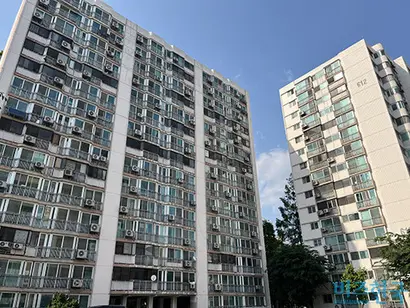
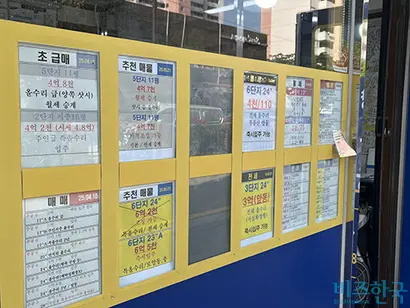
On the 22nd, at a real estate office near Sanggye Jugong in Nowon-gu, Seoul, local brokers expressed their frustration, stating, "Inquiries from investors have completely dried up." This is largely due to the difficulties in finding a construction firm for Sanggye Jugong Complex 5, one of the fastest-moving projects in Nowon-gu. After canceling their contract with GS E&C006360—which had been selected as the builder—amid disputes over contribution fees, the complex’s bidding process for a new contractor ended in a no-bid failure on the 28th of last month.
A real estate agent operating near Sanggye Jugong said, "Even for Complex 5, which has the fastest reconstruction speed, one would still have to wait several years until move-in," adding, "As the selection of a builder for Sanggye Jugong Complex 5 fell through, skeptical reactions toward reconstruction are emerging within the local area."
Nowon-gu, dense with aging complexes, struggles with reconstruction due to low profitability
The Nowon area, crowded with old apartment complexes, has long held expectations of price increases driven by urban renewal projects. According to the Housing Census by Statistics Korea, there were 90,559 apartments in Nowon-gu that were over 30 years old as of 2023. This is the highest figure among all autonomous districts in Seoul.
However, due to the nature of being an outer district of Seoul, it has been consistently pointed out that the projects suffer from chronically low profitability because the land stake is relatively small compared to other areas, and general sale prices are relatively low. Furthermore, following the rise in construction costs since 2021, the burden of additional contribution fees has grown, leading to the assessment that the momentum for major local reconstruction projects has stalled.
In fact, it is reported that an owner of a 31㎡ (exclusive area) unit at Sanggye Jugong Complex 5 would have to pay an additional contribution fee in the range of 400 million won to receive a 59㎡ unit, which is why the complex has yet to even find a construction company. Another reconstruction site, Dobong-gu’s Sangmun Hanyang Complexes 2, 3, and 4, is also facing hurdles, with reconstruction contributions estimated at 350 to 400 million won per union member household.
A Nowon-gu real estate agent, "B," remarked, "There are not many buyers in the Gangbuk area who can actually afford additional fees in the hundreds of millions of won," adding, "Since 'Forena Nowon,' completed in 2020, is the only nearby complex that has finished reconstruction recently, there are few comparative sites to measure profitability against."
Analysts also suggest that the indefinite postponement of the abolition of the Reconstruction Excess Profit Recovery Tax (Reconstruction Tax) has further fueled buyers' anxieties regarding contribution fees. The Reconstruction Tax is a system that collects up to 50% of profits exceeding 80 million won per union member. The Yoon Suk-yeol administration had pushed to abolish it, but the move was thwarted by opposition from the Democratic Party of Korea.
Dwindling reconstruction expectations lead to a series of falling transactions in No-Do-Gang
As the red light flashes for securing profitability in reconstruction projects, buying sentiment in other reconstruction sites across the No-Do-Gang area has also cooled.
According to the Ministry of Land, Infrastructure and Transport's actual transaction price disclosure system, a 59㎡ unit in Samho Complex 3 of "Mi-Mi-Sam" (Miryung, Miseong, Samho 3rd), a key reconstruction site in Wolgye-dong, Nowon-gu, was sold for 780 million won on the 27th of last month, a drop of 49 million won from the previous transaction. This represents only about 79% of its peak price of 980 million won.
In Dobong-gu, a 58㎡ unit at Chang-dong's "Sang-ah 1st" was contracted for 350 million won on the 7th of last month. This marks a decrease of 215 million won in just two months from the previous transaction of 565 million won.
As transactions for major complexes stagnate, overall house prices in the No-Do-Gang area are showing weakness. According to the Korea Real Estate Board, as of the third week of May (the 19th), Nowon, Dobong, and Gangbuk all remained flat (0.00%), making them the only autonomous districts in Seoul that did not record an upward trend.
Implementation of 3rd phase DSR in July raises concerns over prolonged slump in Seoul's outer regions
Amidst this, financial authorities have decided to implement the third phase of the stress Debt Service Ratio (DSR) in the metropolitan area starting in July. This has raised concerns that buying sentiment in the No-Do-Gang area, which relies heavily on loans, will remain stifled for some time.
Stress DSR is a system that lowers loan limits by applying a certain level of stress interest rate when calculating DSR to account for risks such as future interest rate hikes. Although the stress rate is not reflected in actual loan interest rates, it effectively increases the principal and interest payment amount, thereby reducing the loan limit. With the third phase of stress rates applied, mortgage loan limits in the metropolitan area are expected to decrease by approximately 10 to 30 million won compared to previous levels.
A real estate agent, "C," in Chang-dong, Dobong-gu, said, "After the loan regulations in the second half of last year, inquiries about transactions completely stopped," adding, "The Gangbuk area is centered on actual residents and has a high demand for loans, including gap investments, so it is inevitably hit hard by these regulations."
The expectation for a "last-minute rush" of demand to secure loans before limits are reduced is also not very high. Agent C stated, "With transactions currently centered on fire-sale properties, it seems difficult for prices to rebound until the end of the presidential election," adding, "Since there are no transactions happening to begin with, it is difficult for a last-minute demand wave to form."
Experts predict that the implementation of these new loan regulations will deepen the polarization between core areas of Seoul, centered around Gangnam, and the outer regions.
Lee Eun-hyung, a research fellow at the Korea Housing Institute, stated, "The upcoming loan regulations could deepen the polarization between a market centered on actual buyers in Seoul's outskirts who rely heavily on loans and the Gangnam area where buyers have more disposable capital," adding, "The No-Do-Gang area, where many people take out loans to purchase apartments, is expected to feel the impact of these regulations more significantly than the central areas."