

[비즈한국] In March 2025, Northvolt, a leading European battery startup, collapsed, leaving behind $5.8 billion (approximately 7.9 trillion KRW) in debt. From its early days, Northvolt was considered the "hope of the European battery industry," raising high expectations that it would play a pivotal role in reducing Europe's dependence on Chinese battery manufacturers.
While Northvolt’s bankruptcy proceedings are still underway, its co-founder and former CEO, Peter Carlsson, founded a manufacturing AI startup called Aris Machina just three months after the bankruptcy announcement and has already begun raising capital. Does even failure become an asset for a star founder? The European venture ecosystem is now facing fundamental questions regarding the balance between the "aesthetics of a fresh start" after failure and the "privilege of avoiding accountability."
Northvolt's Bankruptcy: The Collapse of Europe's Battery Strategy
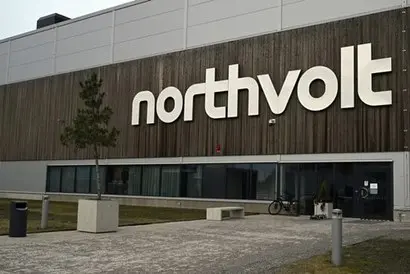
Northvolt was a symbol of European battery independence, centered around its gigafactory in Skellefteå, Sweden. However, a combination of massive cost overruns, quality issues, and failed demand forecasts led to the declaration of a total shutdown of the Swedish plant in March 2025. After its last remaining client, Scania, shifted its supply line to China's CATL, Northvolt was effectively left without a single customer. It is expected that the approximately 900 employees remaining at the factory will face further layoffs. The Gdansk plant in Poland has already been sold to Scania, and the sale of other business divisions is currently under discussion.
The concerning part is that 600 million euros (900 billion KRW) in guaranteed loans from the German government and KfW (German state development bank), along with the 450 million euro (700 billion KRW) project for the Heide plant in Germany, remain outstanding. With the parent company effectively in a state of suspended operation, both the recoverability of public funds and the continuity of the project remain opaque.
Northvolt’s bankruptcy is not merely the failure of a single startup. It is a case that illustrates how structurally vulnerable the entire European battery industry is within the China-led global value chain. On May 8, at the Battery Day conference held at Interbattery Europe in Munich, Dr. Ines Miller of the global consulting firm P3 Group provided a sharp diagnosis of the reality of the European battery industry.
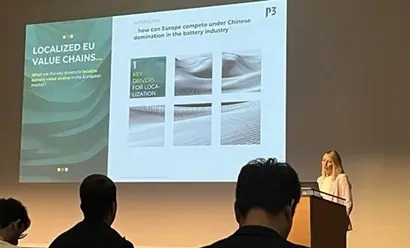
China has already solidified its price competitiveness through low-cost raw materials, vertical integration, and massive production capacity. Cell prices for NMC (Nickel Manganese Cobalt) and LFP (Lithium Iron Phosphate) have dropped by 30–45%. As Chinese companies have recently focused on LFP technology, their price competitiveness has risen sharply, putting the European battery industry, which relies on NMC, in a position where it is being pushed out by China's low-cost strategy.
Through the Inflation Reduction Act (IRA), the U.S. is accelerating regionalization by providing tangible incentives across the entire value chain. Specifically, the core of the IRA’s support for the electric vehicle and battery industry involves providing tax credits of up to $7,500 (10 million KRW) for EVs produced in the U.S. and tightening local sourcing requirements for key battery materials to promote domestic production and processing. This is inducing the regionalization of the battery supply chain and leading European and Asian companies to expand their investments in the U.S.
On the other hand, Europe remains trapped by regulations, complexity, and regional disparities. Unclear industrial strategies, slow execution, and a high-cost structure—all of these are linked to Northvolt's downfall. Ultimately, Northvolt's bankruptcy is both a clue and a warning regarding the future of European tech companies. It is the result of a combination of systemic foundations that Europe has yet to fully establish and a lack of policy execution capability. Who, then, should heed the lessons of this failure? Who is taking responsibility for the bankruptcy, and how? How should future strategies be changed and corrected? All these questions are inevitably raised by the case of Northvolt.
Northvolt Founder's New Startup: Too Quick a Recovery?
Peter Carlsson, co-founder and former CEO of Northvolt, cashed out some of his shares just before Northvolt’s bankruptcy and immediately co-founded an AI-based manufacturing startup, Aris Machina. This startup is developing AI software for manufacturing process optimization and has already attracted funding in its early stages from major European VCs, including Earlybird, Village Global, AENU, and Planet A.
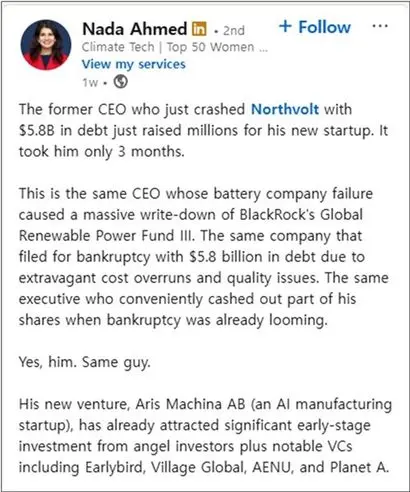
However, he is facing significant criticism because the business item itself is similar to the areas where Northvolt failed, and he launched a new venture without providing an official explanation regarding his responsibility for the organization's collapse. A heated debate is ongoing on social media. Nada Ahmed, a Norwegian climate tech expert, raised the issue on LinkedIn: "This CEO, who bankrupted a company leaving behind $5.8 billion in debt, raised millions for a new startup in just three months. Last customer exit, quality issues, cost explosions, and even cashing out some shares. Why is no one stopping him? Is this the peak of venture capital madness?"
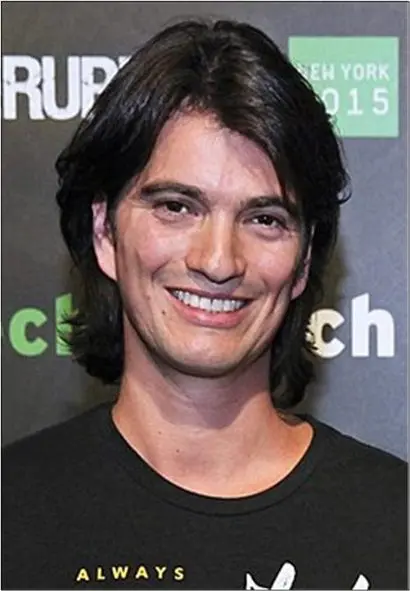
This case brings to mind Adam Neumann, the founder of WeWork, the symbol of the shared office business. After WeWork's bankruptcy, Neumann founded a residential rental platform called "Flow" and attracted investment once again.
Neumann was criticized for using corporate funds for personal projects and involving family members in the company while serving as CEO during the period when WeWork's enterprise value plummeted from approximately $47 billion (64 trillion KRW) to $8 billion (10.9 trillion KRW). Even then, he received a severance package of approximately $1 billion (1.3 trillion KRW) upon leaving the company.
Amidst this, when the famous U.S. VC Andreessen Horowitz decided to invest $350 million (470 billion KRW) in Neumann’s new startup, it caused a major controversy in the industry. Many investors and founders questioned how Neumann could attract such massive investment despite his negative management record at WeWork.
In particular, although Neumann’s new startup "Flow" was introduced as a residential rental platform, critics pointed out that it was not significantly different from existing luxury apartment complexes. This raised concerns that it might be repeating vague concepts like the "Community-adjusted EBITDA" mentioned at WeWork. "Community-adjusted EBITDA" was a non-standard accounting metric created by Adam Neumann and the WeWork management at the time to exaggerate or distort financial health, and it was criticized by the investment industry and accounting experts as a representative example of "numerical deception." While WeWork was actually losing billions of dollars, it used this indicator to claim that it was "getting closer to profitability."
While Neumann attracts massive investments, the reality is that female and minority founders still face difficulties in raising funds. Neumann’s case clearly reveals the structural imbalance and bias in the venture investment ecosystem.
It is time to sound an alarm once again on the idea that "even failure becomes an investment asset" for some famous founders. The omission of analysis and accountability for failure provides more than just emotional discomfort. The startup and venture ecosystem is a place that takes so many risks that there is a culture of accepting failure. Those who achieve success despite taking risks are packaged as heroes. The large and small problems hidden behind them are often dismissed as "trivial" matters that can be overlooked in the face of success. Such things are shaking a healthy ecosystem.
Europe, like Silicon Valley, has encouraged "learning through failure." However, to keep the ecosystem healthy, we need to think about responsible failure. The news of the former Northvolt CEO's new startup is a warning siren for the future of the European startup ecosystem.
The author, Eunseo Lee, majored in Law in Korea and studied Theater in Berlin. She is based in Berlin, a city of arts and a hub for European startups, where she leads 123factory, connecting the Korean and German startup ecosystems while growing alongside the city.