

[비즈한국] Recently, Korean musicals have been making such an impact on the global stage that the term "K-Musical" has emerged. The musical "Maybe Happy Ending" received the Best Musical award from the New York Drama Critics' Circle, followed by Best Musical and Best Direction honors at the Drama League Awards. Having already secured major awards including Best Musical, Best Book, Best Direction, and Best Score at the 2025 Outer Critics Circle Awards, expectations are high for a win at this year's Tony Awards. With nominations in a staggering 10 categories, including Best Musical and Best Book, the prospects for winning in major categories appear brighter than ever.
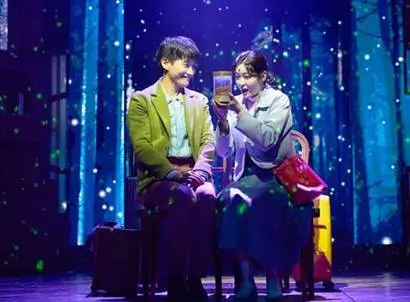
The musical "The Great Gatsby" also won the Best Costume Design of a Musical award at the 2024 Tony Awards, following its win for Best Scenic Design at the 68th Drama Desk Awards. It has become an exemplary case by reaching many international audiences through long-running performances not only in London's West End but also on Broadway in the United States.
These two works achieved success abroad through different paths. "Maybe Happy Ending" is an original musical, while "The Great Gatsby" is based on the novel of the same name by American author F. Scott Fitzgerald. Original musicals based on existing works have the advantage of being more familiar to local audiences, which can make promotional marketing easier. Of course, this requires focusing on the existing fandom of the original work, and ensuring that costumes and stage designs align with local sensibilities and historical research.
The musical "The Great Gatsby" has successfully overcome these challenges and gained recognition. However, while it may appeal to the general public, it can be difficult to win awards for Best Musical or Best Direction because it must distinguish itself from other adaptations of "The Great Gatsby." On the other hand, the original musical "Maybe Happy Ending," while potentially lower in public awareness due to being an unfamiliar story, can be recognized for its unique artistic quality and direction if executed well.
What about the specific details of these works? The two productions also differ in their time and space. The musical "Maybe Happy Ending" is a story set in the future, dealing with artificial intelligence robots—a topic of much current interest. By combining this with universal, popular romantic tropes, it completes the story of the "Helperbot." Through this futuristic love story, it provides insights into current human identity. The musical "The Great Gatsby" projects the present onto a story from the past. It deals with the crisis of morality resulting from materialism, which is not far from today's reality.
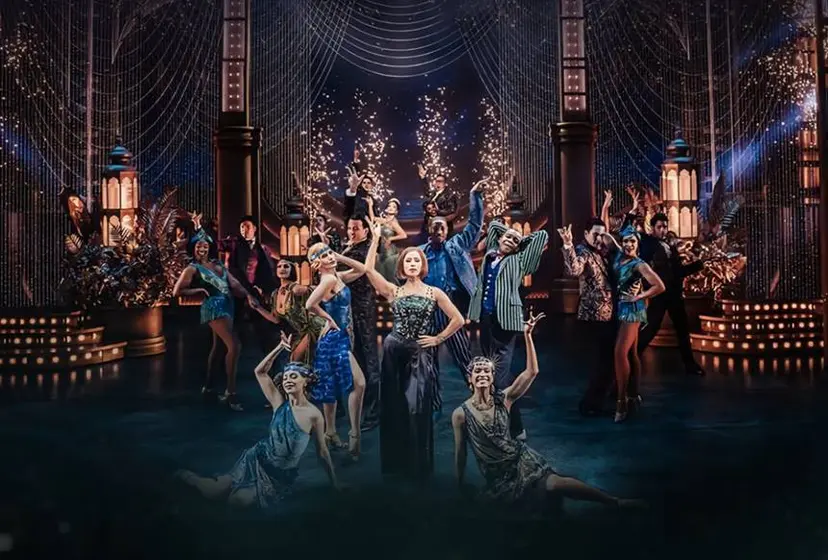
Both works share the commonality of collaboration between domestic and international artists. The musical "The Great Gatsby" reached the public through local actors. "Maybe Happy Ending" marks the first instance of a work that began in Korea with a script by a Korean writer being performed on Broadway with a large-scale local production team, director, and cast in an "open-run" format. Notably, the songs were written by Hue Park and composed by Will Aronson, who also worked together on the musical "Bungee Jumping of Their Own." It goes without saying which case and type of success is more exceptional.
The case of the original musical "Legendary Little Basketball Team," which features basketball as its theme, is also worth noting as an example of international expansion. It serves as an exemplary model of collaboration between schools and local public organizations. The musical began at a school, passed through a local cultural foundation, entered Daehak-ro, and subsequently found success overseas. It was originally born in 2016 at the Korea National University of Arts’ Creative Platform. A collaboration between writer Park Hae-rim and composer Hwang Ye-seul, it brought student actors together, gained attention through a showcase, and subsequently enhanced its quality with support from the Ansan Arts Center. It was invited to the 2017 BESETO Theatre Festival in China and successfully staged a licensed performance in Japan in February 2024.
The "Legendary Little Basketball Team" flourished thanks to "enhancement deals." This is a method where a private production company leases the performance rights for a work discovered by a non-profit theater or organization, supplements it, and pays a portion of the profits as royalties. Global musical successes such as "Les Misérables," "Rent," "Spring Awakening," "Next to Normal," and "Hamilton" were completed and found international success through enhancement deal structures.
Above all, it is an encouraging phenomenon that domestic universities are now actively supporting musical production. Through intense creative processes, 3 to 5 works are presented in reading showcases, judged and selected, and then formally performed. Cases where international companies, such as Japan's leading performing arts production company HORIPRO, directly participate in university reading showcases have also emerged. Musical departments are popping up in universities across the country. I look forward to seeing more cases where school support and student teamwork lead to not only popular success but also overseas expansion. Such cases and models are likely not limited to musicals and could be fully applied to other fields as well.
The author, Kim Heon-sik, has been exploring and navigating the landscape of popular culture since his 20s, driven by the hope that there is a way to make the world a better place through culture. He continues to walk this same path in the 21st century, an era driven by artificial intelligence and quantum computers, with the same belief.