

[비즈한국] The presence of Roh Tae-moon, President of Samsung Electronics005930, is growing. President Roh currently serves as the Acting Head of the DX (Device eXperience) Division, Head of the MX (Mobile eXperience) Business, and Chairman of the Quality Innovation Committee. Samsung's DX Division is responsible for the production and sales of various electronic products, including TVs, refrigerators, washing machines, and smartphones. Since the sudden passing of former DX Division Head and Samsung Electronics Vice Chairman Han Jong-hee last March, President Roh has taken on the acting role. Recently, President Roh also represented the company when announcing its position on the acquisition of FläktGroup. Assessments suggest that his standing within Samsung Electronics is on the rise.

Rising Presence
President Roh Tae-moon joined Samsung Electronics in 1997 and was appointed Head of the Mobile Communications Business (now MX Business) in 2020. The following year, in 2021, the Mobile Communications Business was renamed the MX Business and placed under the DX Division.
President Roh became the youngest president in Samsung Electronics' history and earned the nickname "Mr. Galaxy." However, his position is not necessarily unrivaled. Samsung Electronics currently has two vice chairmen, Jeon Young-hyun and Jung Hyun-ho, who outrank him. Furthermore, there are over 20 executives with the title of president at the company.
Evaluations of President Roh are not entirely positive, largely because Samsung Electronics' smartphone market share has been declining. According to market research firm Counterpoint Research, Samsung's global smartphone market share was 21% in 2022, 20% in 2023, and 19% in 2024. While it still holds the number one spot, it is facing stiff competition from companies like Apple and Xiaomi.
President Roh's original term was set to end in March of this year. Some in the business world speculated that he might retire or be reassigned to a minor role, citing the expectation that Samsung would carry out a massive reshuffle to reform the company. However, he succeeded in securing a reappointment.
Recently, his scope of responsibility has expanded. With the passing of former Vice Chairman Han Jong-hee last March, a leadership vacuum emerged. Han had previously held the roles of DX Division Head, DA (Digital Appliances) Business Head, and Quality Innovation Committee Chairman. Consequently, in April, Samsung appointed President Roh as the acting head of the DX Division and head of the Quality Innovation Committee. For Roh, this provides an opportunity to demonstrate his capabilities in areas beyond smartphones.
Samsung Electronics stated, "President Roh led the 'Galaxy myth' based on his technological leadership during his time as Head of the MX Business and was a key figure in driving the global growth of the mobile business. We expect him to continue strengthening the competitiveness of our finished product businesses, as well as the MX business, by leveraging his successful experience in the smartphone sector while serving as the Acting Head of the DX Division."
Nevertheless, President Roh remains in an acting capacity. It would not be unusual for a new figure to take over as DX Division head next year. For Roh to formally ascend to the position, he must prove his competence through performance or instill confidence that he will deliver results in the future.
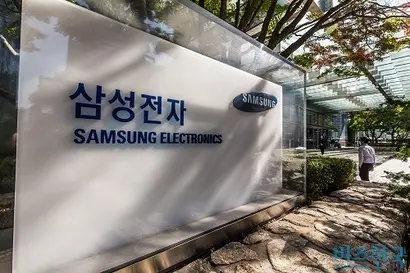
Fläkt Acquisition: A Safe Choice
On May 14, Samsung Electronics announced that it had signed an agreement to acquire the German firm FläktGroup, a leader in the European HVAC (heating, ventilation, and air conditioning) market. The acquisition price is 1.5 billion euros (approximately 2.345 trillion won). Samsung plans to finalize the acquisition process within the year. This marks Samsung's first multi-trillion won merger and acquisition (M&A) since it acquired Harman in 2017.
Fläkt is more closely linked to the DX Division than the DS (Semiconductor) or SDC (Display) divisions. If the acquisition creates synergy with Samsung’s DX Division, it could significantly benefit President Roh. Samsung Electronics itself explained, "By combining Samsung's building integrated control solutions (b.IoT/SmartThings) with Fläkt's HVAC control solutions, we expect to expand our stable and profitable services and maintenance businesses." b.IoT is managed by the DX Division.
President Roh was the one to announce the official position on the Fläkt acquisition. He stated, "By acquiring Fläkt, a specialist in central HVAC systems with high demand in areas like AI and data centers, Samsung has laid the groundwork to leap forward as a global total air conditioning company. We will continue to nurture the HVAC business, which is expected to see high growth, as a future growth engine."
However, some analysts argue that the impact of the acquisition may not be significant. Greg Roh, head of research at Hyundai Motor Securities, told Reuters, "This acquisition is meant to strengthen the home appliance business and is not a game-changing deal. It seems Samsung chose a safe path rather than a bold bet."
Following the Hit Galaxy S25, Will the 'Edge' Sell Well?
President Roh also faces the challenge of ensuring the success of the newly released smartphone, the "Galaxy S25 Edge," which officially launches in Korea on the 23rd. The "Galaxy S25," released in February, is considered a success, having surpassed 1 million units in domestic sales in just 21 days—the fastest in the Galaxy series' history. Kim Rock-ho, a researcher at Hana Securities, evaluated, "Samsung's MX business recorded solid shipments centered on the Galaxy S25, and profitability has improved due to cost reduction measures."
President Roh emphasized, "The Galaxy S25 Edge is a product that transcends the limits of ultra-slim technology to innovate the user experience. It is a new category in the industry that achieves a perfect balance between design and engineering craftsmanship."
Meanwhile, there are concerns. The Galaxy S25 Edge is extremely thin at 5.8mm, making it the thinnest Galaxy S series ever. However, it is more expensive than the standard Galaxy S25. The prices for the 256GB capacity models are 1,155,000 won for the Galaxy S25 and 1,496,000 won for the Galaxy S25 Edge.
Furthermore, surveys indicate that there aren't many consumers who prefer ultra-thin smartphones. If consumers do not favor thinness, the incentive to choose the more expensive Galaxy S25 Edge diminishes. On May 12 (local time), the U.S. publication Android Authority reported, "Survey results show that only 17.7% of respondents prefer very thin smartphones. In contrast, 40.3% are satisfied with current smartphone thicknesses, and 41.9% would prefer thicker smartphones if it meant better battery life or enhanced functionality."
Samsung stresses that the Galaxy S25 Edge features strong durability, an ultra-high-resolution wide-angle camera, and an improved cooling system in addition to its thinness. However, with a limited consumer base preferring ultra-thin phones, it is difficult to guarantee how well the high-priced model will sell. A scenario where the Fläkt acquisition fails to yield expected results and the Galaxy S25 Edge underperforms would be the worst-case scenario for President Roh.
Currently, Samsung Electronics is expressing confidence in the sales of the Galaxy S25 Edge. During the Q1 earnings conference call on April 30, a Samsung official stated, "Unit costs for major components are expected to rise in the second quarter due to uncertainties in tariff policies, but we will increase the proportion of premium products through the launch of the Galaxy S25 Edge."