

[비즈한국] The deposit protection limit will be raised for the first time in 24 years. On May 16, the Financial Services Commission (FSC) announced a legislative notice for amendments to six regulations to increase the deposit protection limit. As there have been long-standing criticisms that the protection limit is too low compared to the scale of assets, expectations among financial consumers are high. While the market anticipates an influx of funds into mutual finance institutions and savings banks, attention is now focusing on the capacity of these sectors to provide deposit protection.

Savings Bank Deposit Insurance Fund Deficit Widens for 3 Consecutive Years
The deposit insurance payout limit, which has been maintained at 50 million KRW since 2001, will rise to 100 million KRW. In addition to general deposits, the protection limit for retirement pensions (defined contribution and personal retirement pensions, and SME retirement pensions), pension savings, and accident insurance payouts, which are subject to separate protection limits, will also be increased from 50 million KRW to 100 million KRW.
The FSC will pre-announce the "Presidential Decree on Partial Amendments to Six Regulations for Raising the Deposit Protection Limit," which contains these provisions, until June 25. The six regulations subject to amendment are all enforcement decrees, primarily concerning the Korea Deposit Insurance Corporation (Depositor Protection Act) and the mutual finance sector (Credit Unions, Agricultural Cooperatives, Fisheries Cooperatives, Forestry Cooperatives, and Saemaul Undong). They are scheduled to take effect on September 1.
The market is paying close attention to whether funds will flow into savings banks and mutual finance institutions, based on the speculation that consumers will seek out secondary financial institutions, which offer relatively higher interest rates than commercial banks. There are also predictions that competition for deposit interest rates among financial institutions will intensify to prevent customer churn.
There is another reason why savings banks and mutual finance institutions are receiving attention: concerns over whether they can handle potential financial accidents that might occur after the limit increase. Savings banks are financial institutions covered by the Korea Deposit Insurance Corporation (insured financial institutions), and if bankruptcy or an insurance event occurs, the corporation compensates depositors on their behalf. Insured financial institutions are subject to different standard insurance premium rates depending on their sector, with savings banks having the highest at 0.4%. Banks have the lowest at 0.08%, while financial investment, life/non-life insurance, and comprehensive finance companies are all at 0.15%. Additionally, a differential insurance premium system is in place, setting rates differently based on management and financial conditions.
The problem is that the savings bank account within the Deposit Insurance Fund has been in a persistent deficit. The deficit in the savings bank account has been confirmed to have widened for three consecutive years. According to statistics from the Korea Deposit Insurance Corporation, the deficit in the savings bank account of the deposit insurance fund rose from 1.7896 trillion KRW in 2022 to 1.8424 trillion KRW in 2023, and 1.8979 trillion KRW in 2024.
Funds excluding those for savings banks are showing a steady upward trend in accumulation. The total fund accumulated by banks, financial investment firms, life insurance companies, non-life insurance companies, and comprehensive finance companies reached 19.7019 trillion KRW in 2022, 20.7356 trillion KRW in 2023, and 22.6711 trillion KRW in 2024.
The reason for the savings bank account deficit is the continuous occurrence of insurance events since 2003. The cumulative deficit of the savings bank account soared to 2.8282 trillion KRW in 2010. In 2011, the government created a "Special Account for Structural Adjustment of Mutual Savings Banks" within the deposit insurance fund, used exclusively for stabilizing savings banks, and raised restructuring funds through a portion of insurance premiums from insured institutions, borrowings, and recoveries. Over 27 trillion KRW was injected into the process of liquidating 31 insolvent savings banks, and the debt of this special account also grew to 5.7 trillion KRW.
Financial Authorities Move to Manage Mutual Finance Sector Risks
As the deficit in the savings bank account remains unresolved, concerns are being raised that the burden could be passed on to other sectors due to the higher protection limit. However, there is a high possibility that funds will not flock there due to the lower attractiveness of interest rates offered by savings banks. As of March, the balance of deposits at savings banks has fallen below 100 trillion KRW (99.9873 trillion KRW). Even when looking at deposit and savings products currently in the market, the interest rates between primary and secondary financial institutions are similar, topping out at around 3%.
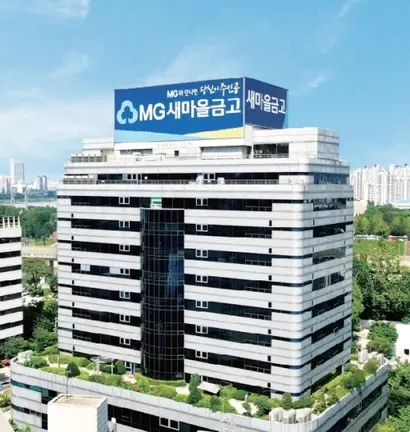
The status of protection fund accumulation in the mutual finance sector is also noteworthy. In the case of Agricultural Cooperatives, Credit Unions, Fisheries Cooperatives, Forestry Cooperatives, and Saemaul Undong, reserves are operated and managed by individual central federations rather than the Korea Deposit Insurance Corporation, through bodies like the Fund Protection Committee. An examination of the reserves showed that none were in deficit, and most were maintaining an upward trend.
As of the end of 2024, the depositor protection fund reserve for Agricultural Cooperatives was 6.1026 trillion KRW, and for Credit Unions, it was 2.1418 trillion KRW. Fisheries Cooperatives divide protection between deposits/savings (credit business) and insurance (mutual aid business), and the fund balance for deposit/savings protection was confirmed to be 555.2 billion KRW (as of 2024). Saemaul Undong stated in its central federation financial report that its depositor protection reserve is 2.6691 trillion KRW. The Forestry Cooperatives have not yet released their 2024 fund report, but their 2023 fund balance was 144.5 billion KRW.
Meanwhile, financial authorities are preparing for risks that may arise from capital shifts. A task force (TF) involving related institutions such as the Bank of Korea, the Financial Supervisory Service, and the Korea Deposit Insurance Corporation is currently operating to monitor industry conditions, and a "Mutual Finance Policy Council" will be held in May to review risk management measures for the mutual finance sector. They are also reviewing soundness management plans for secondary financial institutions to ensure that funds flowing into savings banks and mutual finance institutions do not lead to reckless lending. Furthermore, as the scale of deposits to be protected is increasing, new insurance premium rates are expected to be applied starting from the 2028 payment period.
A financial institution official noted, "Insurance events are supposed to be handled with pre-accumulated premiums; if an account is in deficit, it could be seen as having insufficient capacity to handle such events." However, the official also projected, "If a large-scale insolvency occurs in the savings bank industry after the protection limit is raised, because reserves in other sectors are relatively sufficient, they could potentially tap into those first or respond by raising funds through external borrowing or bond issuance."