

[비즈한국] On December 31, 1950, a striking article appeared in a corner of The Washington Post. The headline read: “Young Mom Discovers Abyssal Depths of the Universe!” The ‘young mom’ was astronomer Vera Rubin, who was a doctoral student at the time. She had recently given birth to her first child. Carrying her newborn, Rubin braved a snowstorm with her father and husband to attend an astronomy conference. There, she created what she would later remember as the most embarrassing moment of her career—her own ‘dark history.’
At the time, Rubin had analyzed the movements of 108 external galaxies distributed across the northern sky. She found a pattern suggesting that the movement of these galaxies was generally biased in one direction. Based on this, she proposed the possibility that the entire universe might be rotating around a specific axis. In her presentation, she used the grand and audacious title, “Rotation of the Universe.” It was a radical claim and title, unthinkable for a doctoral student just beginning her research.
Rubin’s claim directly contradicted the core assumption that the universe is uniform and isotropic, with no specific directionality. Naturally, the reaction from astronomers was cold. A bold young woman who had just given birth was claiming that the entire universe was rotating. This shocking and embarrassing incident even made headlines with the ridiculous title mentioned earlier. As time passed, her findings were eventually attributed to a statistical bias or error caused by limited data. The cosmological principle, which states that the universe is uniform with no particular directionality, was accepted as an obvious fact for a long time.
However, a shocking discovery has recently emerged that brings to mind Rubin’s ‘dark history’ research from half a century ago. New studies seem to show that the universe does indeed rotate in a specific direction. Moreover, this latest research utilizes more extensive observational data from the James Webb Space Telescope (JWST). It is truly baffling. The author of this paper, Lior Shamir, even claims that this finding could serve as the most direct evidence for the Black Hole Cosmology hypothesis—the idea that our universe is trapped inside a single, giant black hole—which has long been considered merely an intriguing hypothesis. Is this discovery true? Are we really trapped inside a giant black hole?
Most galaxies in the universe, including our own Milky Way and the neighboring Andromeda Galaxy, exhibit clear disk and spiral arm structures. These are called spiral galaxies. All spiral galaxies rotate in one direction. One can easily determine the rotation direction of a galaxy by the shape of its wound spiral arms. Astronomers, including myself, are interested in spiral galaxies not just because they are beautiful (though that is a big reason).
The rotation of a spiral galaxy is governed by the dark matter halo that surrounds the entire galaxy. The direction of a galaxy's rotation reflects the environment of the large-scale structure of the universe and the directionality of dark matter at the time of the galaxy's formation. By systematically studying the rotation of various spiral galaxies based on vast amounts of data, we can understand how dark matter is distributed throughout the universe and in what direction it flows, much like mapping wind currents on a weather map.
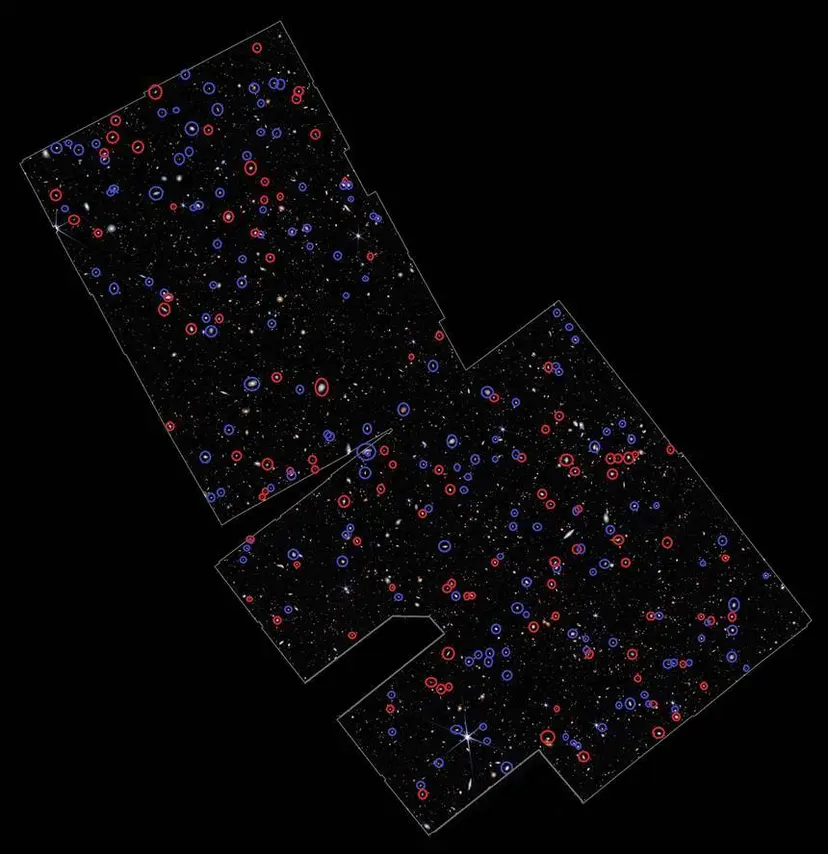
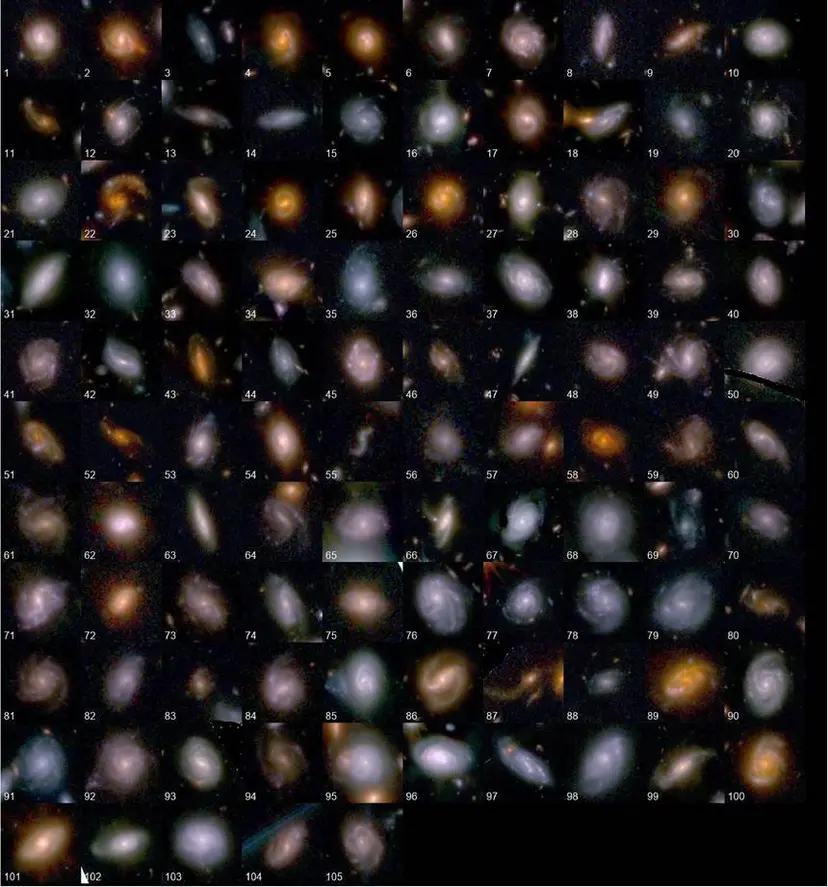
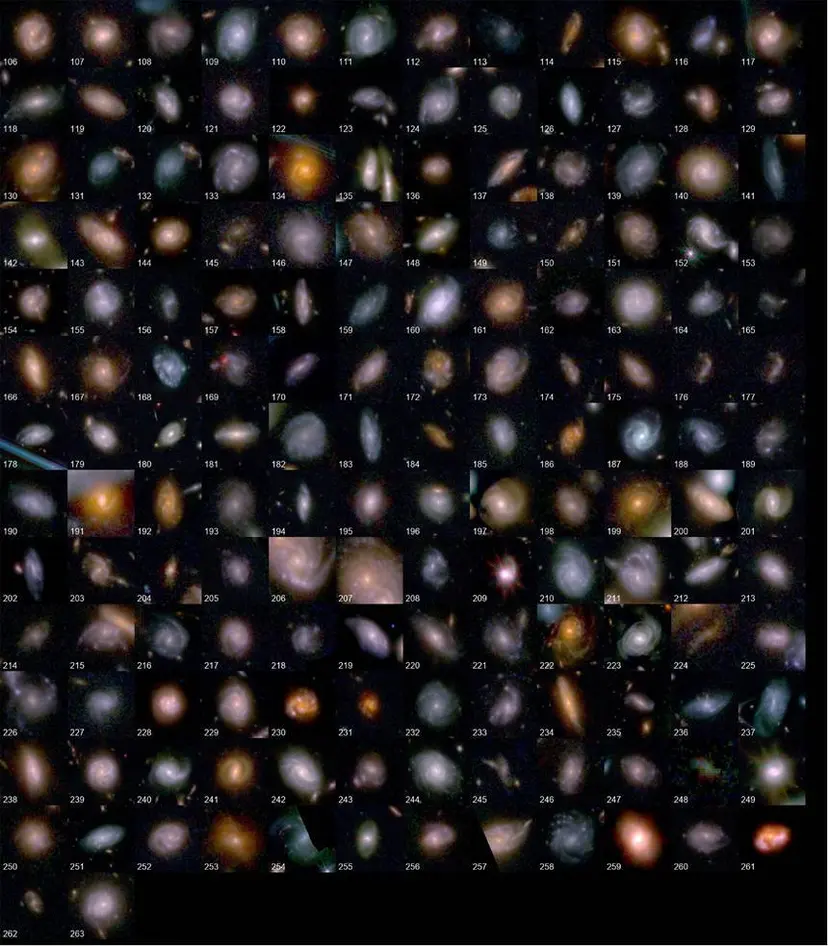
Dr. Shamir recently conducted a large-scale hunt for spiral galaxies by analyzing images from the JWST Advanced Deep Extragalactic Survey (JADES). Specifically, he selected 263 galaxies where the spiral arm structure was distinct enough to easily determine the direction of rotation.
According to the conventional view that galaxies should exist randomly with no specific directionality, the rotation direction of these spiral galaxies should also be random. Galaxies rotating clockwise and counter-clockwise should be distributed 50:50. However, the results of this paper are shocking. Among the 263 observable galaxies, a whopping two-thirds rotate clockwise. Only one-third rotate counter-clockwise. This is an extremely skewed imbalance. If more than half—nearly 66%—of the galaxies in the universe rotate in one specific direction, it implies that when averaging all galaxies in the universe, the universe itself must also be rotating with a dominant specific directionality.
In fact, this issue of galaxy rotation asymmetry has been raised in other studies before. Previously, astronomers classified millions of galaxy images observed through the Sloan Digital Sky Survey based on their shapes. At the time, artificial intelligence lacked the ability to classify images effectively, so astronomers sought help from astronomy enthusiasts worldwide. As a result, millions of galaxies were classified within a year. Astronomers then discovered an interesting fact: there were slightly more galaxies with counter-clockwise rotating spiral arms.
To verify if this bias was real, astronomers conducted an interesting test. They flipped the same galaxy images as if reflected in a mirror and asked people to vote again. If there were truly more counter-clockwise rotating spiral galaxies in the universe, then after flipping all the images, the results should show more clockwise rotating galaxies. What was the result? Interestingly, the proportion of counter-clockwise rotating galaxies remained slightly higher. This meant that even when looking at the same spiral galaxy images, people perceived a slightly higher percentage as being wound in a counter-clockwise direction. The study based on Galaxy Zoo data ultimately concluded as a minor happening, showing that the actual universe was not asymmetric, but that people's perception of the spiral arm direction was simply slightly biased.
However, this latest result is different. It is because the rotation direction of the spiral galaxies was not classified by mere eyeball estimation. The spiral arms of a galaxy, where stars and gas are concentrated at a higher density, are brighter in pixels than the regions between the arms. Using this, the team automatically detected the spiral arms for all galaxies and determined their respective rotation directions. Intriguingly, the result of that analysis showed the baffling outcome that two-thirds of all galaxies are rotating clockwise. This is difficult to understand. There is no reason for the universe to show such asymmetry. How, then, should we accept this result?
First, the most likely possibility is that the data used in this analysis itself is biased. While 263 galaxies might seem like a lot, it is, in fact, a very small number compared to modern statistical studies. Of course, this study has the particularity of using only high-resolution galaxy images observed by the James Webb Space Telescope. However, it is too meager to represent the directionality of the entire universe. Furthermore, this study only utilized JADES data, which observed a specific direction with the James Webb. It is not a study targeting all galaxies distributed in various directions across the universe, but rather an analysis conducted only on galaxies clustered in a similar direction from the start. This point is highly critical.
In fact, when we say the universe is uniform and isotropic, this cosmological principle refers to a very macroscopic scale. While galaxy clusters may feel huge to us, they are very small structures compared to the scale of the universe as defined by the cosmological principle. Within a single galaxy cluster, the galaxies living there can sufficiently share a specific directionality. In fact, a result published in Nature Astronomy in 2021 showed that the filaments of the cosmic web are also rotating in one direction.
At that time, astronomers used data from the Sloan Digital Sky Survey to perform a massive statistical analysis on 213,625 galaxies belonging to 17,181 filaments. This is overwhelmingly more than the 263 used in the recent James Webb study. A filament can be simply described as a long, cylindrical structure where galaxies are strung together. However, if this filament is rotating around its long axis, half of the galaxies in the filament should appear to be approaching us, while the other half appear to be receding. Astronomers compared the relative directions and speeds of the galaxies in each filament. The result was surprising: for each filament, half of the galaxies were moving away from us and the other half were approaching! The difference was so clear that it could never be explained by assuming a non-rotating filament. Furthermore, the rotation appeared stronger in filaments with heavier galaxy clusters at their ends.
This shows that the entire filament is rotating due to the gravitational field around it. When the filaments of the cosmic large-scale structure were formed, matter did not just flow in; the angular momentum it possessed at the beginning was also conserved. The accumulation of this has resulted in the swirling, rotating filaments we see more clearly today.
This 2021 discovery means that if you look at a corner of the cosmic large-scale structure, it is entirely possible to observe the galaxies in that area rotating in one direction. Ultimately, to discuss whether the entire universe has a consistent rotation component, one cannot judge by looking at just one galaxy cluster or a couple of filaments. We must collect and analyze millions or tens of millions of galaxies distributed across both the northern and southern hemispheres to make a fair assessment.
In this study, the author used high-resolution image data from the James Webb to clearly distinguish spiral arms even for distant galaxies. However, the James Webb has a very narrow field of view, and it is not a telescope designed to quickly scan the entire sky like other surveys. Consequently, it is inevitable that only galaxies within a specific, narrow field of view can be analyzed, which leaves plenty of room for the galaxies in that area to appear as if they have a tilted directionality.
Nevertheless, the author goes a step further and makes an unconventional claim. If the universe really is rotating in one direction as a whole, it implies that our universe is a world trapped inside a giant black hole.
Black Hole Cosmology began to be discussed as early as when a young Stephen Hawking was researching the singularities of black holes. Physically, there is no difference between a black hole singularity and the singularity of the primordial Big Bang. Both are states where a massive amount of mass is concentrated at a single point, with infinite density and zero volume. Therefore, if the singularity of a black hole and the Big Bang singularity of the early universe cannot be distinguished, it is conceivable that our universe was also born from the singularity of a very large black hole. In fact, black holes in our universe continue to swallow matter and grow in size, and our universe, too, is continuing to expand.
Also, a black hole has a limit called the event horizon, beyond which we cannot know what is happening; this feels similar to the boundary of the universe that we can perceive through light, i.e., the observable horizon of our universe. Moreover, some recent astronomers have even argued that dark energy, which accelerates the expansion of the universe, might be related to the supermassive black holes residing at the centers of galaxies throughout the universe, raising suspicions about whether there is some connection between the entire universe and black holes.
All black holes discovered in the universe are rotating rapidly in one direction. A black hole, created when a giant, spread-out cloud of stars and gas suddenly collapses and shrinks into a tiny point while slowly rotating, gains a very fast spin in the process to conserve angular momentum. If our universe is truly a world trapped inside a larger black hole, as claimed by Black Hole Cosmology (also known as the Schwarzschild cosmology), then the black hole containing our universe would also be rotating rapidly, and we would see the entire universe rotating in one direction. The author of the paper mentions this circumstantial possibility and claims that this discovery hints at Black Hole Cosmology.
Because the concept of Black Hole Cosmology mentioned by the author is so radical, people are focusing only on that, but the observational data used in this study has a more important meaning.
In recent years, astronomers have discovered huge structures spanning billions of light-years in the universe. Examples include primordial filaments where several quasars are connected in a long line at the edge of the universe, and even superstructures where galaxies are connected on a scale nearly half the size of the observable universe. Such structures seem to defy the existing cosmological principle that the universe should be uniform on a macroscopic scale. These superstructures cannot be reproduced in simulations applying the existing standard cosmological model. To solve this, astronomers are even considering the possibility that the universe started out skewed or biased from the very beginning. Therefore, it is more reasonable to view the claims of this paper as an extension of the suspicion regarding the non-uniformity and anisotropy of the universe.
If it were confirmed that the universe as a whole is indeed rotating and possesses angular momentum, the moment Vera Rubin recalled as her ‘dark history’ might be re-evaluated as the moment of an era-defining discovery that first spoke the truth about the rotation of the universe. Just as the cosmological constant (Lambda), long dismissed as Einstein’s ‘dark history,’ was eventually re-evaluated as a piece of far-sighted insight following the discovery of dark energy.
“Extraordinary claims require extraordinary evidence.” It is a saying by Carl Sagan that makes me reflect on its meaning once again.
References
https://www.k-state.edu/news/articles/2025/03/lior-shamir-james-webb-space-telescope-spinning-galaxies.html
https://academic.oup.com/mnras/article/538/1/76/8019798?login=false
https://www.nature.com/articles/s41550-021-01380-6
Who is the author, Ji Ung-bae? He loves cats and the universe. After watching ‘Galaxy Express 999’ as a child, he dreamed of spreading the beauty of the universe. He currently researches galaxy evolution through galaxy interactions at the Center for Galaxy Evolution and the Near-Universe Research Laboratory at Yonsei University, and is engaged in various science communication activities such as lectures and writing. He is the author of books such as ‘The Observatory of Thumb,’ ‘Thinking About the Universe All Day,’ and ‘Stars, the Science of Light.’