

[비즈한국] In 2008, Wirye New Town began its ambitious development with the vision of becoming a key residential hub in the southern metropolitan area. The wide-area transport improvement measures announced at the time envisioned an integrated transport axis connecting Wirye, Seoul, Gwacheon, and Bundang, centered on two railway networks: the 'Wirye-Gwacheon Line' and the 'Wirye-Sinsa Line.' Residents trusted the promise and paid huge wide-area transport contributions. The Seoul Metropolitan Government made the promise, and the Ministry of Land, Infrastructure and Transport established the plans.
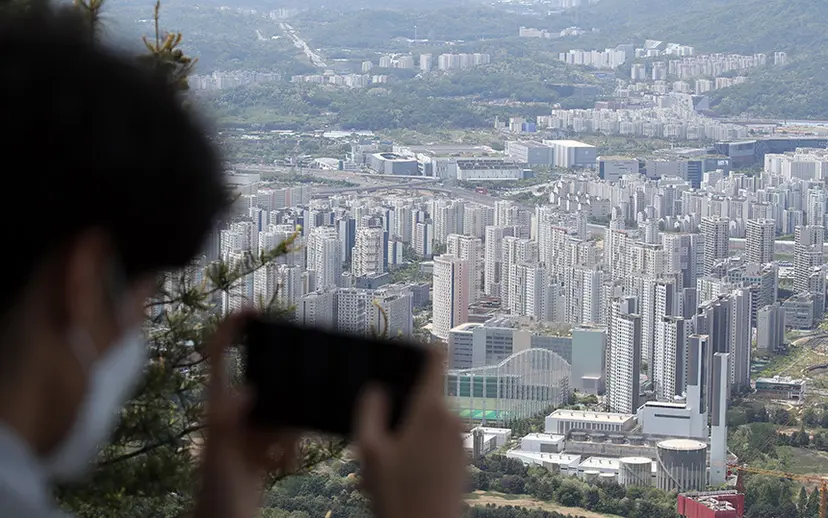
But in 2025, what kind of reality are we facing? The Wirye-Gwacheon Line bypasses Wirye New Town entirely, and private investors have pulled out of the Wirye-Sinsa Line citing low project feasibility. Although the Seoul Metropolitan Government says it will convert it into a public finance project, even passing a rapid preliminary feasibility study is not guaranteed. Given the situation where the key transport network of a new town is being 'passed over,' the anger of the citizens is only natural. Where did the promises made 17 years ago go?
If the Mayor of Seoul, the Governor of Gyeonggi-do, and the Ministry of Land, Infrastructure and Transport are not responsible, then who is?
We must clearly hold someone accountable for this problem. Wirye is a complex administrative district involving Seoul's Songpa-gu, as well as Seongnam, Hanam, and Gwacheon cities. However, the Mayor of Seoul and the Governor of Gyeonggi-do, who have jurisdiction over these areas, have never proactively proposed a comprehensive review or alternative for these railway networks. Instead, as the projects drift, they merely repeat positions like "the economic feasibility is lacking" or "it is the central government's share."
But I want to ask: Is the role of the Mayor of Seoul simply to manage the city's street sweepers? Is the position of the Governor of Gyeonggi-do only meant to exercise personnel rights for provincial government officials?
Building a transport network that determines the lives and commute times of millions of citizens is a litmus test where local governments can demonstrate true leadership. Yet, so far, not one of the local leaders in these regions has made this issue their own political destiny or shown the leadership to 'push through' the obstacles.
Rising construction costs? Lack of demand? There are many excuses, but the solution lies in discarding indifference
The reason the Seoul Metropolitan Government and the Ministry of Land, Infrastructure and Transport switched the Wirye-Sinsa Line from a private investment to a public finance project is simple: there isn't enough money, and the project lacks profitability. However, this distorts the essence. The fact that the Wirye-Sinsa Line has low profitability does not mean its necessity has disappeared. More important than profit is public interest, and the fact that this line is directly linked to the quality of life for hundreds of thousands of metropolitan citizens.
Lack of demand is also an excuse. Wirye is one of the areas attracting the youngest generation in the metropolitan region; it has a high population density and sufficient growth potential. It is just that the current transport infrastructure is failing to support it, leading to a decline in commercial facilities, job-housing proximity, and educational accessibility. The goal of policy should be to cultivate demand, not to abandon railways because demand is lacking—such logic is merely a self-justification for incompetence.
Wide-area railway networks are a litmus test for a politician's vision, responsibility, and capability
Urban planning is done in 10-year cycles, and wide-area railway networks are planned in 20-year cycles. Even if the administration changes several times, the lives of citizens must go on. Yet, every time the government changed, the railway networks related to Wirye were left with nothing but names, while the physical traces disappeared. The Wirye-Sinsa Line was originally planned to connect to Yongsan but was shortened to Sinsa, and the Wirye-Gwacheon Line, true to its name, will now bypass Wirye New Town.
By now, citizens are asking, "Whose town is Wirye New Town?"
A government exists to take responsibility for the lives of its citizens. If national projects were judged solely by profitability, Seoul Subway Line 1 would never have existed in the first place. Transport networks like subways, wide-area railways, GTX, and BRT should be judged from the perspective of long-term strategy and balanced national development rather than short-term profit.
If you intend to speak of presidential dreams, take care of your region first!
Recently, both the Mayor of Seoul and the Governor of Gyeonggi-do are frequently mentioned as presidential contenders. But I cannot help but ask: If you cannot even solve the Wirye-Sinsa and Wirye-Gwacheon lines, how do you intend to lead a nation of 50 million people?
The reason former President Lee Myung-bak could start as a mayor and become president is simple. When he was Mayor of Seoul, he created an image of a "tenacious leader who gets things done." Because there were tangible improvements in citizens' lives—such as the New Town projects, the restoration of Cheonggyecheon, and dedicated bus lanes—the public believed in his 'execution ability.'
But what about the current metropolitan leaders? They pass the buck to the central government, engage in passive administration by only obsessing over the preliminary feasibility study results, and repeat bureaucratic phrases like "alternatives are under review" in the face of citizen inconvenience. If this is the level of someone who wants to be president, we have no reason to choose them.
Metropolitan voters vote based on transport networks!
Metropolitan voters no longer give their votes based on political rhetoric or images. If these three things do not improve—"Has my commute improved?", "Has my child's educational environment improved?", "Has the surrounding environment improved?"—voters will certainly judge them with their ballots in the next presidential election.
As of 2025, the Wirye-Gwacheon Line and the Wirye-Sinsa Line are becoming the touchstone. In particular, Wirye is a core political area where Seoul's Songpa, Gyeonggi's Hanam, Seongnam, and Gwacheon intersect. A politician who loses trust here loses it across the country. If you are eyeing the presidency, solve these lines now.
Formation of a metropolitan joint consultative body is necessary
This problem cannot be solved by the efforts of Seoul or Seongnam alone. Even now, a 'Wirye Transport Special Committee' should be established, and a metropolitan railway joint consultative body in which the Seoul Metropolitan Government, Seongnam City, Hanam City, Gwacheon City, and the Ministry of Land, Infrastructure and Transport participate should be formed.
I look forward to concrete proposals, such as realigning the Wirye-Gwacheon Line (passing through the center of Wirye), disclosing the supplement to the Wirye-Sinsa Line feasibility study and alternative route scenarios, fully disclosing the usage of Wirye New Town contributions to ensure transparency, and reviewing the creation of a joint transport fund between Seoul and Gyeonggi-do.
We must act responsibly from now on. We need a politics that stops making excuses for the past and begins communicating with citizens to reprioritize their needs.
Transport is power. Without competence, there are no votes!
Wirye New Town is not just a city with a hot real estate market. Countless young couples, office workers, and children are designing their futures here. However, the transport hell that has persisted for 17 years has now become a "political hell."
Transport is power. Politics that wastes the time and livelihood of citizens deserves to be judged in elections. If you are preparing for next year's presidential election, solve the Wirye transport network first. That will be the mark of a capable, leader-worthy politician.
Kim Hak-ryul, head of the Smart Tube Real Estate Research Institute, known by the pen name 'Pachong,' served as a team leader at the Gallup Korea Real Estate Research Division. He operates and hosts the Naver blog 'Pachong's World Exploration' and the YouTube channel 'StuTV.' His books include 'Power of Gyeonggi Real Estate (2024)', 'Absolute Principles of Seoul Real Estate (2023)', 'Future of Incheon Real Estate (2022)', 'Kim Hak-ryul's Absolute Principles of Real Estate Investment (2022)', 'Future Map of Korea Real Estate (2021)', 'Only Places That Will Rise, Rise From Now On (2020)', and 'Korea Real Estate User Manual (2020)'.