

[비즈한국] Last year, while the government’s total revenue was 594.5 trillion won, total expenditure reached 638 trillion won, resulting in a consolidated fiscal deficit of 43.5 trillion won. A major factor was that national tax revenue stood at only 336.5 trillion won, falling 30.9 trillion won short of the government’s original budget projection of 367.4 trillion won. The shortfall in tax revenue occurred because, while corporate tax receipts plummeted due to last year’s economic slowdown, the total amount of tax exemptions and reductions exceeded 70 trillion won.
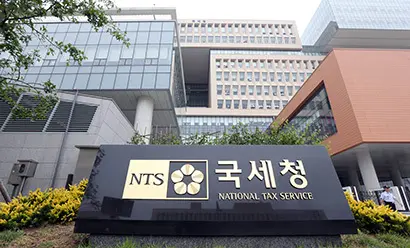
The fact that tax exemptions exceeded 70 trillion won is due to the failure of the "In-depth Evaluation of Tax Special Cases" system, which the government has been running for 10 years to review tax-free and exemption systems reaching their sunset dates. Even last year, although the evaluation recommended reducing or abolishing 24 items, only 6 were actually repealed due to political concerns over backlash from certain beneficiary groups. This has led to calls for reforming some of these tax special cases that place a burden on public finances.
According to the "2025 Basic Plan for Tax Expenditures" released by the government on March 25, last year’s national tax exemption amount reached 71.4 trillion won, an increase of 1.6 trillion won from 69.8 trillion won in 2023, surpassing the 70 trillion won mark. South Korea’s national tax exemptions crossed the 40 trillion won threshold in 2018 (43.9 trillion won), reached the 50 trillion won range in 2020 (52.9 trillion won), and surpassed the 60 trillion won range in 2022 (63.5 trillion won), showing rapid growth.
This year, tax exemptions are projected to rise to 78 trillion won, an increase of 6.6 trillion won from last year. However, some point out that as the trade war initiated by U.S. President Donald Trump threatens to drive up inflation, nominal wage increases could push the total exemption amount beyond 80 trillion won. The problem is that while tax exemptions are surging year by year, they are not being properly managed or reformed.
In 2015, the government introduced the "In-depth Evaluation of Tax Special Cases" system to overhaul the tax exemption regime. In particular, it conducts mandatory in-depth evaluations for systems with annual exemptions exceeding 30 billion won that are reaching their sunset. Since 2015, mandatory in-depth evaluations have been conducted on a total of 109 tax special cases, with 6 recommended for abolition and 18 for long-term reduction or abolition. Yet, out of those 24 items, only 6 were actually abolished, showing that proper reform is not taking place.
This year, 23 tax special cases were subject to mandatory in-depth evaluation. Among these, 13 items have been extended more than 6 times—including the "income deduction for credit card usage," which has been extended over 10 times—accounting for more than half of the total items. This suggests that proper reform may not be easy this year either. Given that the 23 items accounted for 15.8 trillion won in tax exemptions last year, roughly one-quarter of the total, the burden on public finances is significant.
Of the 27 tax special cases set to sunset at the end of this year, 5 have exemption amounts exceeding 1 trillion won, including the "income deduction for credit card usage." This system was introduced in 1999 under the Kim Dae-jung administration to prevent businesses from concealing sales; last year, the exemption amounted to 4.1183 trillion won, and it is expected to reach 4.3693 trillion won this year. The "Special Tax Reduction for SMEs," which has been maintained for over 30 years with 8 sunset extensions, saw 2.3639 trillion won in exemptions last year and is projected to reach 2.5 trillion won this year. The "tax credit for purchases of recycled waste materials," which benefits scrap dealers, has been extended 10 times, with its exemption amount expected to grow from 1.5306 trillion won last year to 1.6100 trillion won this year.
The "tax exemption for contributions and deposits in cooperatives," which has had 7 sunset extensions, will see its exemption amount rise from 1.2356 trillion won last year to 1.3716 trillion won this year. Similarly, the "tax special case for tax-free comprehensive savings," also extended 7 times, will see its exemption increase from 1.0901 trillion won to 1.1929 trillion won over the same period. Notably, the "income deduction for credit card usage" was evaluated for redesign in 2022 but was instead expanded and extended, and the "Special Tax Reduction for SMEs" was evaluated for long-term reduction or abolition in 2022, yet it was still extended.
An official from the business sector stated, "If tax special cases are expanded and extended by ignoring evaluation results, the in-depth evaluation system itself could become meaningless," adding, "Since tax revenues could worsen this year and next due to the trade war, we need the political will to reform these tax special cases that burden the budget to ensure fiscal soundness."