

[비즈한국] The meal kit market, which grew rapidly during the pandemic, is showing signs of a sharp contraction. The unmanned meal kit stores that sprang up everywhere during the startup boom have significantly shrunk in size over the past few years. Rumors suggest that with continued sluggish sales, meal kit manufacturing plants are finding themselves in a situation where neither operation nor closure is easy.
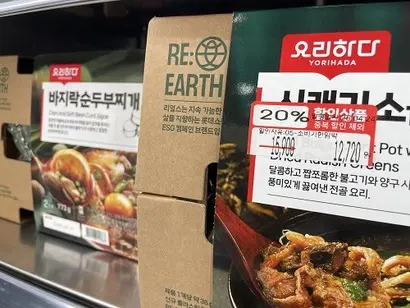
Meal Kits Lose Price Competitiveness, Supermarkets Pile Up Stock Near Disposal
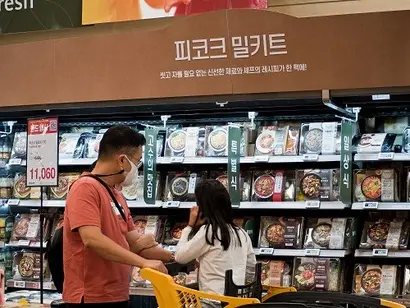
On the afternoon of the 24th, the meal kit (pre-prepared food) section of a large supermarket in Seoul was filled with discounted items. These were products nearing their expiration dates that had failed to sell. Products with one day left until expiration were being sold at a 50% discount, while those with two days remaining were available at a 20% discount. Despite the high discount rates, there were few customers purchasing them. A middle-aged couple browsing the meal kit section repeatedly picked up discounted items only to put them back, eventually leaving without making a purchase.
In 2021, the most popular item in the startup market was the meal kit. Due to the spread of COVID-19, demand for home-cooked meals replaced dining out, and consumers looking for meal kits that could simplify meal preparation surged. Unmanned meal kit stores, in particular, received significant attention in the startup market because they required little capital and could be operated by a single person.
The market also grew rapidly. According to the Korea Rural Economic Institute, the domestic meal kit market expanded from 10 billion won in 2017 to 300 billion won in 2021. There was even a forecast that the market would reach 725.3 billion won by 2025.
However, as demand for dining out increased in 2022, the number of customers visiting specialized meal kit stores dropped noticeably. This is when the momentum behind the trend of opening new meal kit stores began to fade. Nevertheless, the industry predicted that while the growth rate might slow down, the market would be unlikely to collapse entirely, citing the fact that many consumers had already become accustomed to the convenience of meal kits.
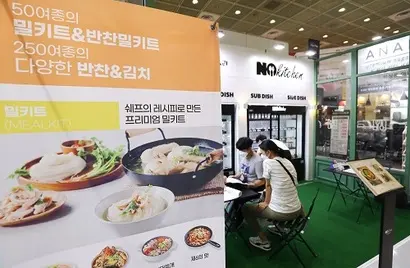
The variable was the economic downturn. As the recession continued, consumers began looking for cost-effective products and started feeling that meal kit prices were no longer reasonable. Lee Jong-woo, a professor of business administration at Ajou University, explained, "The biggest problem with meal kits is their lack of price competitiveness. Because meal kits involve the process of portioning, packaging, and distributing vegetables and ingredients, they are bound to be expensive. In terms of logistics and manufacturing costs, they are by no means cheaper than restaurants. This is why people have stopped seeking them out as the recession continues."
He added, "Sales of meal kit products at large supermarkets are also bound to be sluggish. The core customer base for supermarkets is essentially people looking to buy ingredients at low prices. Would such consumers buy high-priced meal kits? In the early days of the meal kit market's growth, companies supplied products at low prices as an investment. However, as product prices gradually rose, consumers stopped buying them. As the recession drags on, consumption of frozen goods or cheaper supermarket deli items is expected to increase."
Unmanned Meal Kit Stores Shrink Significantly, Meal Kit Factories Also Sigh
The scale of unmanned meal kit stores has also greatly diminished. Brand A, a franchise of unmanned meal kit stores, has seen its number of stores drop from over 140 in 2022 to 60 today. Brand B also expanded its franchises to 464 in 2022, but this number fell to 363 in 2023 and currently stands at 264. The number of franchise stores has been cut in half in just three years. Brand C's meal kit stores also saw their 44 locations in 2021 drop to 28 the following year, with only 7 currently remaining.
Even though the number of stores has dropped significantly, the average sales per store have actually decreased as well. Brand B's average sales per franchise were recorded at 203.48 million won in 2021, but shrunk to 131.5 million won in 2023. Brand A also saw its average store sales in 2023 reach 132.19 million won, a significant decrease compared to 2021 (256.38 million won).
Many brands have completely withdrawn from the franchise business within a few years. Some unmanned stores have drastically reduced their meal kit offerings and are barely maintaining revenue by increasing the proportion of items like ice cream and frozen foods.
An industry official noted, "How many people would actually visit a store just to buy a meal kit? Many people have begun to consider the process itself to be a hassle. You have to buy the meal kit, go home, cook it, and then deal with the waste. Many people think it's just easier to grab a simple meal outside instead."
Meal kit factories are also facing a wave of closures. Manufacturing plants that moved into industrial complexes in 2021 during the meal kit frenzy are giving up operations one by one, and are in a difficult situation as they cannot find new tenants to take over the facilities.
An official at a real estate agency located in a capital region industrial complex said, "About three or four years ago, many young people came looking for space, saying they wanted to start meal kit manufacturing or meat processing businesses. Since you need to install specific facilities in a general factory to run a food business, many companies invested their own money for construction and renovations. Now, all those companies that moved in back then are putting their factories up for sale. However, there are no new food companies looking to move in, so they can't get out of the factories."
They continued, "If there were another company in the same industry (meal kits) looking to move in, they could just hand over the factory as-is. If not, they have to spend money to dismantle the food facilities and restore the factory to its original state. Because restoration is so expensive, they are waiting to see if they can pass the factory to another food company. However, since the meal kit market is completely stagnant, there are almost no inquiries, and everyone is suffering."
Another real estate agent added, "A few years ago, I used to get dozens of inquiries for food factory rentals every day. But now, it's quiet. Trends in the food industry change rapidly. The meal kit trend has completely cooled off, and these days, bakery factories are the ones on the rise."