

[비즈한국] Voices calling for the integration of KTX and SRT have emerged from within the Korea Railroad Corporation (KORAIL). Following the dismissal of former President Yoon Suk Yeol, the Korean Railway Workers' Union (KRWU) stated on April 4, "The Railway Union will finally complete the integration of high-speed rail this time," adding that "this is a promise made to the citizens in the square who decided to drive out the forces of insurrection and realize a grand social reform, and it is a historical duty to strengthen public railways." The Railway Union is primarily composed of KORAIL employees.
The high-speed rail integration mentioned by the Railway Union refers to the merging of KTX and SRT. Domestic high-speed rail is currently divided between KTX, operated by KORAIL, and SRT, operated by SR. While KORAIL held a monopoly on domestic high-speed rail until the 2000s, the system shifted into a competitive structure with the official launch of SRT in 2016.
In fact, the government launched SRT to establish a competitive system for high-speed rail. In December 2013, the Ministry of Land, Infrastructure and Transport (MOLIT) stated, "We expect the introduction of competition to normalize railway management and serve as a starting point for the development of the railway industry," adding, "As we have promised, we plan to form a healthy competitive structure within the public operation system."
However, contrary to the term "competitive system," there is a significant performance gap between KORAIL and SR. KORAIL recorded an operating loss of 441.5 billion won in 2023, followed by an operating loss of 69.4 billion won in the first half of last year. In contrast, SR has maintained profitable management, recording an operating profit of 13.8 billion won in 2023 and 3.4 billion won in the first half of last year.
Inside KORAIL, it is argued that the government granted excessive privileges to SRT. They contend that the so-called "lucrative routes" with high passenger volume are funneled to SRT, while KTX is left to cover most of the routes with relatively fewer passengers. In 2023, the government also provided a 359 billion won in-kind contribution to SR.
The Railway Union argues that the KTX-SRT integration is necessary for the benefit of citizens. During a press conference on Railway Day last June, the union stated, "(Integrating KTX and SRT) would eliminate tens of billions of won in redundant costs incurred annually, and the increased transportation revenue could benefit more citizens with cheaper fares than now," adding, "The current railway structure is split among the Korea National Railway, KORAIL, and SR due to the separation of infrastructure and operation and the competitive system, making it difficult to carry out proactive policies." The Korea National Railway is the entity responsible for constructing and managing railway infrastructure.
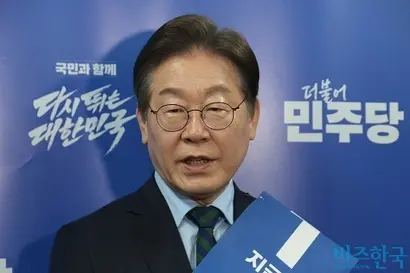
There is a sense of anticipation within the Railway Union toward Democratic Party presidential candidate Lee Jae-myung. During the 2022 presidential election, Candidate Lee Jae-myung pledged to integrate KTX and SRT. The Democratic Party also shows a positive reaction to the KTX-SRT integration. At a parliamentary audit by the Land, Infrastructure and Transport Committee last October, Democratic Party lawmaker Lee Yeon-hee pointed out, "It has been found that an annual redundant cost of 40.6 billion won is incurred due to the competitive system between KORAIL and SR," and asked, "What kind of competitive system is it when both KORAIL and SR, which are both public enterprises, are playing a zero-sum game while the total number of passengers and transportation volume remains the same?"
The Democratic Party has generally shown a positive attitude toward integration, with former President Moon Jae-in also reviewing the KTX-SRT merger during his term. However, Candidate Lee Jae-myung has not released an official stance regarding KTX-SRT integration ahead of this presidential election. Because of this, some analyze that there might have been a change in the railway policy envisioned by the candidate.
The People Power Party has made no specific mention regarding the KTX-SRT integration. Many lawmakers from the People Power Party show a friendly attitude toward SRT. Furthermore, the Yoon Suk Yeol administration has publicly opposed the KTX-SRT integration. During a parliamentary audit by the Land, Infrastructure and Transport Committee last October, a Ministry of Land, Infrastructure and Transport official responded to questions regarding the integration by saying, "We currently believe there are benefits from comparative competition," and added, "We will strive to keep the competitive system healthy."
The Reform Party mentioned the KTX-SRT integration in February of last year. At the time, the Reform Party stated, "We will push for a policy to integrate KORAIL and SR to enable genuine competition, and issue licenses to new private operators to run low-cost high-speed rail." However, in various opinion poll indicators, Reform Party candidate Lee Jun-seok's approval rating has remained in the single digits, making it difficult to foresee a presidential victory.
Although the Railway Union continues to claim the necessity of integration, KORAIL has not released an official stance either. BizHankook inquired with both KORAIL and SR regarding their positions on the integration, but neither company provided a specific statement.