

[비즈한국] The exodus of foreign investors from the domestic stock market continues. The portion of market capitalization held by foreigners has failed to recover to the 30% level since August 2024, and the total value of foreign holdings dropped from 738 trillion won at the end of 2023 to 666 trillion won in January 2025. Sensing a crisis, the government pushed for a "Value-Up Program" to resolve the "Korea Discount" and introduced the "Korea Value-Up Index," composed of 105 undervalued, high-quality stocks. Every week, we select one stock from the index to analyze its management status and corporate value enhancement plans, determining whether it is a star to watch that could prevent the "downfall of the Korean stock market."
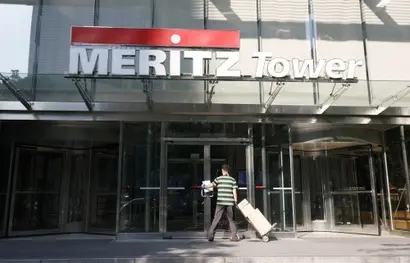
Meritz Financial Group has consistently held a spot in the top 10 of the Korea Value-Up Index. As of April 25, its stock price was 119,100 won, and its market capitalization stood at 21.9893 trillion won. Meritz Financial is a holding company that owns subsidiaries including Meritz Fire & Marine Insurance, Meritz Securities, and Meritz Capital. It was established in March 2011 as the first insurance holding company in Korea and has since expanded its business.
What stands out is the upward trend in its stock price. Looking at the charts for the past 2–3 years, Meritz Financial’s stock has been on a steady climb. This upward trend is also reflected in its returns. It has recorded a 1-year return of 53.1%, a 6-month return of 13.6%, and a 3-month return of 9.0%. Although it dipped slightly after hitting a closing price of 127,400 won on March 6, it has shown signs of recovery.
Among the constituents of the Korea Value-Up Index, Meritz Financial is particularly "sincere" about enhancing shareholder value. Its Total Shareholder Return (TSR)—which represents the profit (dividends and capital gains) an investor can obtain through investment over a certain period—is close to 80%. The company is also proactive in drafting and implementing value enhancement plans.
Meritz Financial announced its corporate value enhancement plan on July 4, 2024. Furthermore, it explicitly stated that it would disclose the progress of the plan alongside its quarterly earnings. As promised, Meritz Financial released status reports on its value-up plan throughout the 2nd–4th quarters of 2024, categorized into △share buyback/cancellation returns △Total Shareholder Return (TSR), and △status of share buybacks.
Meritz Financial established its value-up plan based on four principles: △profit generation through core business performance, △efficient capital allocation, △transparent and active shareholder returns, and △equal shareholder value. Its core benchmark is the Total Shareholder Return, its execution metric is the shareholder return ratio, and its goal is to use at least 50% of its consolidated net income for shareholder returns. Specifically, it set a five-year compound annual growth rate (CAGR) target of 28.2% for net income, a five-year average Return on Equity (ROE) of 22.5%, a Cost of Equity (COE) of 8.3%, proactive mid-term shareholder return policies, and enhanced shareholder communication through management-led quarterly IR sessions.
The mid-term plan is set to be achieved from the 2023 fiscal year through the 2025 fiscal year. The company returns 50% of its consolidated net income to shareholders by comparing its internal rate of return (IRR) with the shareholder return yield. In the long term, starting from the 2026 fiscal year, it will reconfigure its capital allocation based on the level of returns. It essentially makes decisions between internal investment and shareholder returns based on the metric of shareholder value enhancement.
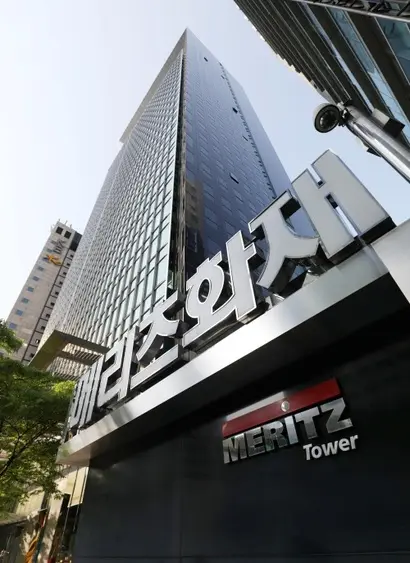
If the internal rate of return is higher than the share buyback/cancellation yield or the required rate of return (the minimum return an investment must earn to be accepted), internal investment is prioritized. While this reduces the scale of shareholder returns, it is more effective for long-term value creation. Conversely, if the internal return is lower than the buyback/cancellation yield or the required return, shareholder return is prioritized. If the internal return and shareholder return yields are similar, internal investment is pursued, as securing future profits is considered more advantageous for increasing shareholder value.
Following this plan, Meritz Financial achieved a Total Shareholder Return of 78.3% and a shareholder return ratio of 53.1% in 2024. It executed 1.24 trillion won in shareholder returns, consisting of 1 trillion won in share buybacks and 240 billion won in dividends. Given its 2024 consolidated net income of 2.3334 trillion won, it used more than half for shareholder returns as planned. It also continues to implement share buybacks and cancellations. On April 14, it canceled 4.6147 million treasury shares, amounting to approximately 500 billion won.
The total shareholder return increased by nearly 34 percentage points in one year, up from 43.9% in 2023. While the dividend yield decreased from 5.5% to 2.3%, the sharp rise in stock price caused the capital gains yield to jump from 38.4% to 76.0%. Comparing the stock prices at the end of 2023 and the end of 2024, the value nearly doubled from 59,100 won to 104,000 won.
The steady increase in net income, led by Meritz Fire & Marine Insurance, is another reason for high expectations regarding future shareholder returns. Meritz Financial’s net income was 2.3334 trillion won, a 9.8% increase from the previous year (2.1254 trillion won). This was driven by its main subsidiary, Meritz Fire & Marine Insurance, which posted results close to 2 trillion won with a net income of 1.7105 trillion won. Meritz Securities recorded 630.1 billion won (including 108.8 billion won in dividends from its capital arm), and Meritz Capital recorded 117.1 billion won.
Because of this, the securities industry often refers to Meritz Financial as a "Value-Up Model Student" or a "Safe Haven." However, since the stock price has already risen significantly, analysts suggest that more effort is needed for further gains. Ahn Young-jun, an analyst at Kiwoom Securities, pointed out, "The upward trend in the stock price has been driven by continuous share buybacks, and the company will likely maintain its buyback-centered shareholder return policy for the time being. However, for the stock price level to rise further, the company must prove that its earnings strength has improved. While Meritz Fire & Marine is expected to maintain stable performance, whether Meritz Securities can improve its profitability remains uncertain."
![[Value-Up Stars] Meritz Financial Group: The Star Student of Shareholder Returns, Will the Stock Price Rally Continue?](https://s.bizhankook.com/attachments_thumb/2026/05/94339_thumb.webp)