

[비즈한국] Talk of a “K-Pop crisis” has always existed. It is also true that the industry has grown through such crises. However, while one might argue that the current K-Pop crisis stems from individual artists, groups, or content, that is likely not the fundamental background when viewed from the perspective of cultural content consumption. Unlike general goods, which are judged by economic efficiency or practicality, cultural content must possess cultural value and enjoyment, including brand value. Simply put, it must be “hip.” This doesn't just mean looking cool or stylish; it must also contain future-oriented values that lead the zeitgeist. In this regard, K-Pop is facing a crisis.

Two phenomena lie at the heart of the discourse surrounding the K-Pop crisis. The first is the sharp decline in album sales. According to the Circle Chart of the Korea Music Content Association, physical K-Pop album sales in 2024 totaled 98.9 million copies, a 17.7% decrease compared to 120.2 million copies in 2023. While eleven groups sold over 3 million copies of a single album in 2023, only seven teams managed to do so in 2024. The second phenomenon is that K-Pop songs are becoming less visible on the Billboard or Oricon charts. They are rarely seen in the top tiers of the Billboard 200 or Hot 100. While artists like Jimin and Rosé have charted, the number of instances where K-Pop songs stay on the charts for an extended period has relatively decreased.
In this situation, the reduced activity of K-Pop’s “blue-chip” artists is also cited as a sign of crisis. The analysis suggests that things would change if BTS or BLACKPINK were to return. One might point to Seventeen or Stray Kids, who are actively promoting, but even their outward performance has clearly shrunk. Seventeen, which became the first K-Pop act to exceed 16 million cumulative annual album sales in 2023, saw that number drop to 8.96 million in 2024.
Of course, the return of BTS or BLACKPINK would provide a boost to K-Pop. However, it is also true that there is an excessive reliance on them. Among the top 2,500 most-streamed songs on Spotify globally through 2024, the only 25 K-Pop tracks belong entirely to BTS (16 songs) and BLACKPINK (9 songs). It is questionable whether the generational transition from 4th-generation to 5th-generation idol groups can be called successful. Furthermore, it is not particularly reasonable to use album sales as the sole benchmark for K-Pop’s success.
What is important is the driving force that sustains fandom culture: does it contain the desirable cultural values of this era? Controversies surrounding K-Pop charts and album sales persist, including collective actions like “streaming/buying campaigns” solely for one’s own idol, filling up the initial sales charts, purchasing albums just to enter fan sign events, unfair terms and conditions, and the “back-breaker” (financial burden on fans). There is growing soul-searching within fandoms because purchasing albums that one does not even listen to causes environmental pollution. This is contrary to ESG (environmental, social, governance) standards. It is not only harmful to the environment (E), but it is also unclear whether it fulfills social (S) cooperation and responsibility.
The governance (G) cannot be considered sound, either. The Korean training system is facing criticism not only for moral and ethical responsibilities but also for legal flaws. One cannot overlook the decisive role the HYBE352820 situation played in this.
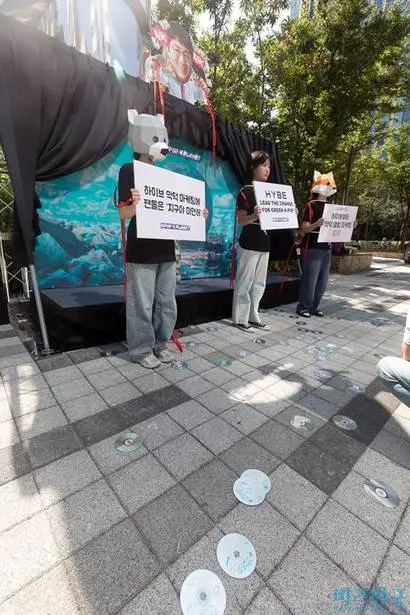
The actions of HYBE, the top K-Pop company in Korea, have been disappointing. In particular, the conflict between HYBE management and Min Hee-jin/NewJeans dealt a fatal blow not only to moral and ethical responsibilities but also to global expansion. The multi-label system was effectively a facade. NewJeans, which presented a new model for a 5th-generation girl group, has been unable to promote actively, and the image of K-Pop, which is the foundation of its consumption value, has been damaged. It is not just the content or image of individual artists that matters, but the ESG of K-Pop as a whole, and that has been cracked.
Amidst this, major agencies focused their efforts on launching idol groups composed of local overseas members. As seen in Japan, examples of groups gaining popularity with concepts similar to K-Pop have already emerged in various countries. In North America, some members have even filed lawsuits citing human rights abuses in the Korean idol training system.
The “COVID effect” has also subsided. K-Pop had a relative advantage during the non-face-to-face era, but now that in-person activities and live performance culture have become active again, interest in and reliance on K-Pop are waning. This means the industry must move away from concepts relying on flashy visuals and focus on diverse content. At the very least, it must align with ESG principles.
Not long ago, the British band Coldplay drew attention by showcasing an eco-friendly concert during their visit to Korea. They captured social messages as well as the concerns of people around the world. K-Pop must also join this flow. Being fixated only on the emotions of teenagers creates limits for external expansion. It must show a path that embodies the cultural values of the era.
※ The views of external columnists may differ from the editorial direction of this publication.
Columnist Kim Heon-sik has been walking and navigating the forest of pop culture phenomena since his 20s, with the expectation that there is a way to make the world a better place through culture. He continues on the same path in the 21st century, an era of artificial intelligence and quantum computers, with the same belief.