

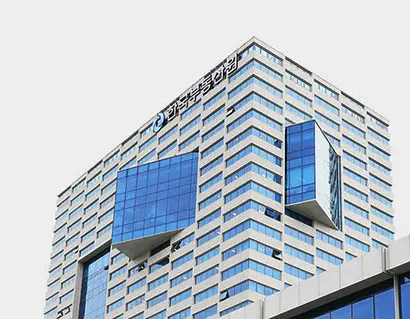
[비즈한국] In April 2024, the audit results on the “Current Status of Compilation and Utilization of Major National Statistics” released by the Board of Audit and Inspection (BAI) left a shocking mark on the history of South Korea's real estate policy. It was revealed that during the Moon Jae-in administration, the Blue House and the Ministry of Land, Infrastructure and Transport pressured the Korea Real Estate Board (REB) to manipulate housing price statistics no less than 102 times, accompanied by violations of the Statistics Act, abuse of power, and intimidatory directives backed by organizational and budgetary influence.
We must now ask: Who does the state exist for? And who should statistics serve?
What are statistics… The compass of policy has been manipulated
The foundation upon which a state operates is data. Above all, “official statistics” serve as the benchmark for evaluating government policy performance and determining future directions. From the economy, employment, and inflation to real estate, all major policies speak through numbers and move by numbers. The public is the same. People judge whether to buy or wait based on the housing price fluctuation rates announced in the news. Statistics are the language of trust and the compass of direction.
However, this audit result is an incident that shakes the very roots of that trust. It was an unprecedented situation where statistics were systematically manipulated and distorted based on political agendas, not merely due to simple errors.
The reality of the 102 statistical manipulations
According to the BAI investigation, the Moon Jae-in administration received real estate-related statistics in advance from 2018 to 2021 and ordered revisions if the figures did not align with their desired outcomes. Specifically, when the Seoul apartment price fluctuation rate was calculated at 0.67% in August 2018, the Blue House ordered it to be lowered twice, stating it should “reflect the effect of government measures,” resulting in a final figure of 0.45%.
In June 2019, when a 31-week downward trend turned into a plateau, the Ministry of Land, Infrastructure and Transport pressured the REB by saying, “A plateau is absolutely not allowed,” eventually resulting in the figure being adjusted to -0.01%. Within the REB’s internal group chat, messages such as “Guys, the Ministry of Land says to lower it. Let’s lower it” were exchanged.
In July 2020, after an upward trend was confirmed immediately following the announcement of the “three lease laws,” the Ministry of Land, Infrastructure and Transport directed the REB to keep the fluctuation rate under 0.09%, saying “0.12% is too high,” leading the REB to manually revise sample prices 149 times to comply.
Such manipulations did not occur only at specific points in time. They were concentrated during politically sensitive periods, such as immediately after policy announcements, just before elections, or when criticism from opposition parties and civic groups intensified.
Are real estate policy effects essentially an illusion?
The most severely damaged aspect of these audit results is the Moon Jae-in administration’s core policy of “real estate stabilization.” At the time, the government poured out consecutive policies such as regulations on multi-home owners, strengthened property taxes, loan restrictions, and supply measures, but the market only heated up further. While actual transaction prices skyrocketed and private statistics showed upward trends every day, the government insisted that “statistics show stability.”
However, the statistical manipulation revealed this time shows that the government's explanation was merely a “fabricated reality” intended to hide policy failure. The public made decisions based on manipulated figures, and as a result, many had to endure the pain of poor investments, misguided expectations, and flawed strategies.
The claim that housing prices had stabilized was merely the result of statistics, not a reflection of reality.
The impact of statistical manipulation… Damage to the public
The harm this incident caused to the public goes beyond a mere loss of trust. Distorted statistics affected actual taxes and policy benefits, such as reconstruction levies, property tax calculations, and official price standards. For example, by keeping the rise rate artificially low, reconstruction complexes could be burdened with higher costs than they otherwise would have been.
Furthermore, many individuals who were looking to buy or sell homes based their decisions on the manipulated data, leading to significant financial losses amounting to hundreds of millions of won for some. This incident can be viewed as an act that infringed upon the property rights of the public and a crime that undermined the legitimacy of policy.
Accountability and judicial processing… Not the end, but the beginning
Currently, key figures such as former Minister of Land, Infrastructure and Transport Kim Hyun-mee and former Blue House Policy Chiefs Kim Sang-jo and Kim Soo-hyun are under prosecution investigation and trial for charges including abuse of power and violations of the Statistics Act. However, this should not end with the punishment of a few individuals.
Whether there is a political motive or not, using national statistics as a promotional tool for power must never be tolerated under any circumstances. This incident is a case that proves a failure of the system and the absence of institutional oversight.
Restoring trust in national statistics
What is important now are measures to prevent recurrence. First, the agencies responsible for compiling statistics, such as Statistics Korea and the Korea Real Estate Board, must be reorganized into bodies independent of the Blue House or government ministries. As long as they remain under the Ministry of Land, Infrastructure and Transport as they are now, the same problem can recur at any time.
In addition, the participation of external private experts and civil monitoring organizations in the process of statistical compilation and verification must be institutionalized. Statistical data does not belong to the administration; it belongs to the public. Its accessibility and transparency must be open to the people.
Finally, the structure of conducting audits on “past statistics” whenever the regime changes should be avoided. Oversight must function on a constant and independent basis. The structure where the Board of Audit and Inspection audits only after the incident has already occurred is akin to “locking the stable door after the horse has bolted.”
Restoration of the Statistics Republic of Korea, this is the last chance
“Statistics do not lie. But liars use statistics.”
This statement is a warning to South Korea in this era.
State information must be built on trust. If statistics falter, policy falters, and if policy falters, the public falters. This incident should not be treated merely as a “misgovernance of the previous administration.” It signifies that the transparency and ethical standards of South Korean administration are on trial.
Whoever takes power in the future, can they return national statistics from a “tool of power” to an “asset of the public”? That is the lesson we must learn from this situation and the only way to restore the collapsed Statistics Republic.
Kim Hak-ryul, Director of the Smart Tube Real Estate Research Institute, known by the pen name Pasyong, previously served as a team leader at the Real Estate Research Division of Korea Gallup. He operates the Naver blog “Pasyong’s World Exploration” and the YouTube channel “Stew TV.” His books include “Power of Gyeonggi-do Real Estate (2024),” “Absolute Principles of Seoul Real Estate (2023),” “Future of Incheon Real Estate (2022),” “Kim Hak-ryul’s Absolute Principles of Real Estate Investment (2022),” “Future Map of South Korean Real Estate (2021),” “From Now On, Only Places That Will Rise, Rise (2020),” and “South Korean Real Estate User Guide (2020).”