

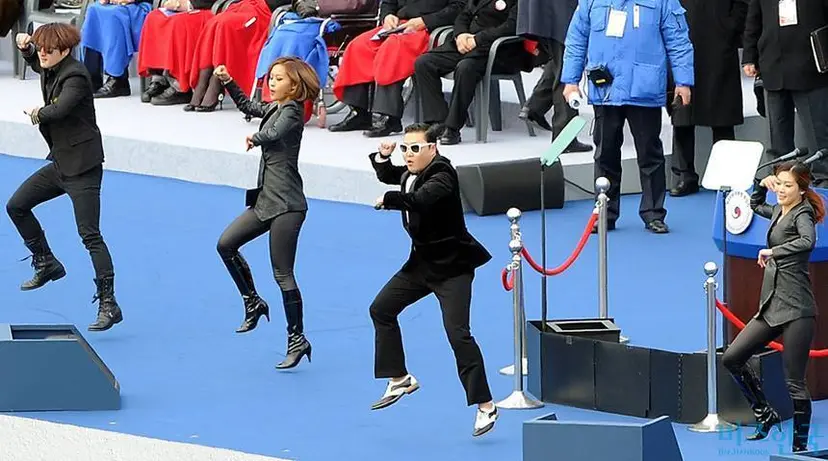
[비즈한국] On January 22, 2013, Google's Chief Business Officer Nikesh Arora mentioned that Psy’s “Gangnam Style” had generated over $8 million in revenue solely from YouTube advertisements. What made this revenue possible was the dance from Gangnam Style: the horse dance. However, the choreographer of the horse dance, Lee Ju-sun, received no additional profit beyond the basic choreography fee and a bonus provided by Psy. Had he received just 1 won for every YouTube view, it would have amounted to tens of billions of won. Furthermore, the dance was used for free in countless forms of content, including movies, dramas, and variety shows. The “Gangnam Style” music video, which completely changed the way YouTube counts views, has recorded 5.5 billion views as of April 16, 2025.
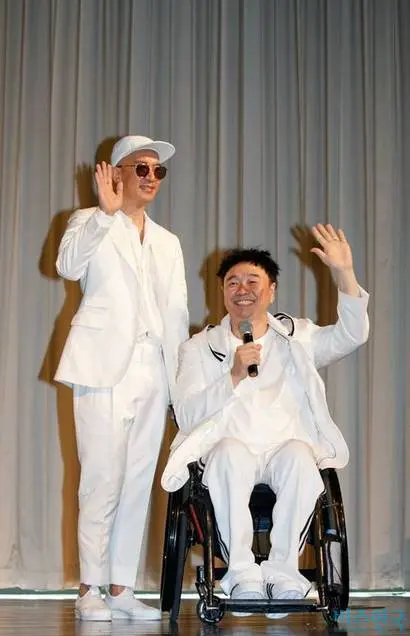
Long before Gangnam Style led the global Hallyu craze, the pioneers of the Korean Wave, which began in the mid-to-late 1990s, were the duo Clon. Clon also failed to have their choreography copyright properly guaranteed. However, the first signs of change started with them. On February 6, 2022, Clon’s Kang Won-rae wrote a harsh critique on social media regarding K-pop choreography plagiarism. He stated, “There are many dance moves appearing in TV commercials (CFs) that look very familiar,” adding, “Stop copying my choreography now.” He further noted, “The public may not know, but the choreographer themselves will know.” He was pointing out the reality that the copyright for dance, which is inseparable from hit songs, remains unprotected.
In April 2024, “Kungtari Shabara” appeared as background music in a KB Financial Group105560 commercial. The performers danced to the lyrics of the song. Upon seeing this, Kang Won-rae pointed out that his self-created dance had been used without compensation. He raised the issue of why songs have copyright while choreography does not. Typically, commercials frequently use dance songs where music and dance are paired, but they only pay music copyright fees. Subsequently, through a legal representative, Kang Won-rae became the first in Korea to have his choreography copyright recognized without a lawsuit and received copyright fees from KB Financial Group. He has essentially set a precedent so that even the Gangnam Style horse dance cannot be used carelessly anymore.
In fact, the strengthening of choreography copyright should be welcomed by the popular music industry. However, reality says otherwise. Even within the music industry, those who pay copyright fees may have different calculations.
On March 26, four music organizations—the Korea Management Federation (KMF), the Korea Entertainment Producers Association (KEPA), the Korea Music Label Industry Association (LIAK), and the Korea Music Content Association (KMCA)—issued a joint statement on choreography copyright. They stated, “K-pop choreography is a special category where music and dance are inextricably linked, and even in countries where the popular culture and arts industry is developed, such as the United States or Japan, copyright law does not recognize a separate right to claim profit distribution for choreography.”
The context of this statement highlights that since foreign advanced nations do not distribute profits for choreography, it is inappropriate for Korea to do so. However, the reason why this is unavoidable is contained within the statement: “K-pop choreography is a special category where music and dance are inextricably linked.” K-pop is dance music, and because group choreography is fundamental, dance is an essential element. This is evident when considering the global craze for K-pop cover dance competitions. Therefore, because no other music genre relies as heavily on choreography as K-pop, there is no precedent in other countries.
Of course, there are not entirely no similar precedents. The choreography copyright lawsuit between world-renowned choreographer Kyle Hanagami and Epic Games, the developer of the game 'Fortnite,' is a prime example. In 'Fortnite,' there are "emotes." They allow game avatars to express emotions, moving the avatar to perform dance actions. The first-instance court ruled that a 2-second dance move could not be protected by copyright law. It defined the core as "a 2-second combination of 8 body movements to 4-beat music," arguing that while an entire 5-minute choreography can be protected by copyright, the 2-second segment is merely a short routine and a "small component" of the whole.
However, the appellate court was different. It argued that choreography is composed of various elements, and because the choreographer “selected” and “arranged” elements that are not individually protected, it becomes a subject of protection. While the first trial judged by "pose," the second trial considered that beyond poses, factors such as body position, body shape, body actions, transitions, use of space, timing, pauses, energy, motifs, contrast, and repetition come together to earn creative recognition. In other words, it concluded that because the choice and arrangement of limb movements, hand and finger movements, head and shoulder movements, and tempo were creative, choreography copyright must be protected.
Furthermore, abroad, choreography copyright for performing arts like ballet and opera is recognized. Copyright fees are paid to the choreographer for every performance. Even when inviting foreign dancers to perform, if it lasts about 10 minutes, they are paid approximately 300 to 600 euros per performance. According to international copyright law, a choreographer's copyright is protected throughout their lifetime and for 70 years after their death. If dance is included in dramas, movies, photos, videos, or internet content for commercial purposes, one must obtain permission from the choreographer and pay copyright fees. National or public organizations provide honorariums; when the National Theater of Korea, the National Dance Company of Korea, or opera companies commission outside choreography, they hold the copyright for three years, and when re-performing, they pay a certain copyright fee to the choreographer.
In the United States, the 1909 Copyright Act protected choreography as a "dramatic composition," but in 1961, the U.S. Copyright Office decided to protect the copyright of abstract dance regardless of its connection to a story or theme. Consequently, the Copyright Act was amended in 1976 to define "choreographic works."
We, too, must protect choreography copyright. First, like lyricists and composers, choreographers should be paid copyright fees based on the number of stage performances. There are two types of stage performances: those for broadcast music programs and those for world tours or concert stages. For music program performances, the broadcaster should pay the copyright fee. This is something that agencies should also welcome. Copyright fees for concert choreography should be paid by the agency, which could be reflected in concert ticket prices or the costs of local promoters.
Next, if choreography is included in movies, dramas, or variety shows, choreography copyright fees should be paid. This is also positive for agencies. Profits generated when posting music videos on self-operated YouTube channels should also be distributed. Agencies might look displeased, but it is an unavoidable matter given the nature and context of choreography copyright. After a certain period, agencies should distribute copyright income to the choreographer. For instance, the agency could hold the choreography copyright for about 6 months or a year after the song's release. Since not all songs can be successful, the agency must bear some of the risk.
Also, similar to the "running guarantee" in the film industry, it should operate on a "running royalty" basis where additional profits are paid once a certain revenue threshold is exceeded. Of course, cover dances by fans that are not used commercially should be allowed, and uses for public purposes, such as education in public institutions, should also be exceptions. In fact, Kang Won-rae did not intend to keep the copyright fees for himself. He donated the entire amount of the choreography copyright fee he received from KB Financial to the Korea Practical Dance Association's development fund in November 2024.
Finally, guaranteeing choreography copyright is necessary for the entire K-pop industry. The level of dance that fans demand is constantly rising. To meet that level, painstaking effort is required, and we have reached a stage where development can only occur if incentives are provided. We must realize that the reality of management operating through sacrifice or haphazard methods, as in the past, has reached its limit.
The author, Kim Heon-sik, has wandered or traversed the forest of popular culture phenomena since his 20s, with the expectation that there is a way to make the world a better place through culture. He continues on the same path in the 21st century, where artificial intelligence and quantum computers are active, with the same faith.