

[비즈한국] Artificial Intelligence (AI)-based call centers are rapidly spreading from the financial sector to industries including insurance, telecommunications, and retail, as well as public institutions. The rationale is to improve the efficiency of counseling tasks by automatically responding to repetitive customer inquiries. While the adopting institutions and companies tout shorter wait times and 24/7 response systems as benefits, there is a clear disconnect with the reality on the ground. Critics point out that while problem-solving processes and lead times are actually delayed, the emotional labor intensity for general staff has increased due to customer complaints stemming from dissatisfaction with AI bot responses.

Behind AI 'Efficiency' Lie Human Counselors
"I get asked on the other end of the line, 'Are you a real person (not AI)?' It is also common to be verbally abused for the difficulty of getting connected to a human. While the workload has increased as all sorts of tasks are funneled into the call center, a process is underway to reduce the number of Seoul-based counselors by one-fourth and relocate the remainder to places like Daegu."
The Korea Student Aid Foundation, a quasi-governmental organization under the Ministry of Education, has become the center of the first "AI-driven call center restructuring" controversy among public institutions. The spark was a bid notice for a new outsourcing contractor posted at the end of last month. The notice included plans to reduce the regular staff at the counseling center entrusted to a private company by approximately 25% (from 199 counselors in Seoul to 148) and effectively relocate the organization previously working in Seoul to Daegu, where the headquarters is located.
In August of last year, the Korea Student Aid Foundation became the first public institution to implement an AI-based virtual counseling service. Virtual counseling and a Predictive Dialing System (PDS) were applied to the entire call center service. At the time, the foundation stated in a press release that "the daily average number of customer consultations improved by 2.8 times, the number of customer responses per counselor improved by 3.3 times, and when applied to repayment guidance for student loan delinquents, 91.5% of customers were handled via virtual counseling without connecting to a human." Virtual counseling is a service where AI informs customers of the purpose of the call and necessary information through automated outgoing calls without connecting to a counselor. In the PDS, a counselor is connected only if the customer actually responds to the automated call.
As the staff reduction became a reality just seven months after full implementation, the backlash from counselors is fierce. According to the foundation's request for proposals and bidding notice, the outsourced project will be operated for two years starting this June. The Korean Confederation of Trade Unions (KCTU) Service General Branch's Korea Student Aid Foundation Call Center Chapter argued, "They ended it with a single online notice during the transition period of contractors without proper explanation," adding, "The relocation to Daegu acts as pressure for us to resign."
AI's Weak Problem-Solving Capabilities: "Is This Truly for Customer Convenience?"
The prospect that the workforce structure will be reorganized through business automation via AI adoption is one of the representative scenarios predicted across all industries. Companies that view labor costs as their largest fixed expense expect to improve efficiency and reduce headcount by utilizing AI.
Call centers, which are mostly structured as external subcontractors or specialized subsidiaries, are the areas where dependence on AI is increasing the fastest. Enterprise AI services that allow even small companies to operate call center services without cost burdens are being launched one after another by startups both at home and abroad. Banks were early adopters of AI due to high response volumes and a high proportion of repetitive tasks like outbound calls. Public institutions are also actively introducing AI chatbots and call bots in their civil complaint departments.
Previously, Kookmin Bank reduced its number of call center service companies from six to four, citing the expansion of AI counseling, and sent "pre-dismissal notices" to about 240 counselors. Although employment was maintained following the union's demand for withdrawal, the prospect that similar situations will continue in various fields is emerging.
Critics point out that on the ground where the actual counseling takes place, side effects are emerging because the responsiveness of the problem-solving process and the service convenience felt by users are not sufficiently considered.
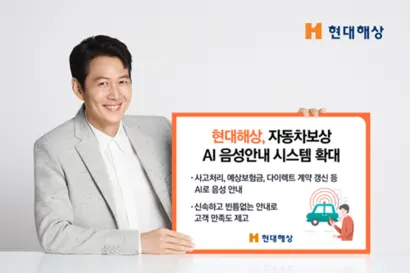
Concerns about safety are also being raised, especially as AI counselors are being applied to the insurance sector, which handles accident responses, insurance dispatch, and emergency situations. Park Young-mi, head of the Hyundai Hi-Car Insurance Claim Call Center branch, explained, "Since the introduction of AI last May, automated reception via mobile has been implemented in addition to general call center phone reception. While it allowed insurance company staff to be dispatched to accident sites without connecting to a counselor, in cases like highway accidents, a counselor connection is necessary. Problems such as the AI being unable to accurately identify locations mean tasks are not being handled perfectly."
Inquiries asking "Did my application go through correctly?" after reporting an accident are also frequent. An AI voice bot calls the customer about three times to verify accident details before a representative is assigned, and customers who miss these calls often call the call center back using the representative number displayed on their phones. It is the role of the general counselor to explain and resolve this. Park pointed out, "As more customers become frustrated, complaint-related calls increase, and counselors exhaust themselves trying to appease them. With the increase in procedures that customers must handle themselves—even on highways or in situations where they cannot safely stop their vehicles—I question whether customer convenience, including safety issues, was properly considered."
Data issues related to AI learning, inference, and judgment, which are essentially involved in the transition to AI call centers, represent another critical pillar. Jang Yeo-kyung, director of the Information Rights Research Institute, noted, "In the case of KT030200, which is building a 'Voice-to-Text' conversion system, it is understood that they are also requiring call center staff to take on quality management roles such as verifying consultation content," adding, "For AI, 'impact' is more important than any other technology. It is time to systematically review and prepare for how the introduction of technology affects people and society, including the workplace."