

[비즈한국] How would you feel if Black people painted their faces a light yellow, wore traditional Korean hats (gat), spoke Korean, and acted as if they were Korean? As a Korean, you would likely feel offended. Furthermore, if an artist were to conduct their activities with such a concept, it would be even more unsettling.
In the past, the reverse occurred when our K-pop artists stirred controversy by mimicking Black makeup and styles. In 2012, the boy band B2ST and the girl group Bubble Sisters faced international backlash for their "blackface" makeup. Specifically, B2ST member Lee Gi-kwang wore a curly wig, painted his face black, donned earrings, and exaggerated his expressions and movements in a ridiculous manner. It was similar to the "Sikameons" character makeup from the old comedy program "Show Video Jockey."
Let’s try another analogy. What if a Black artist used the image of Dangun Wanggeom as a mere decorative prop in their music video? While not every Korean treats Dangun as a deity, most would still feel uncomfortable if he were caricatured. BLACKPINK faced protests from Indians for featuring the Hindu god Ganesha in their "How You Like That" music video. Ganesha, the god of wisdom and good fortune, is one of the most beloved deities in India, to the extent that there is a dedicated festival for him. It is easy to understand why they were angry that Ganesha was placed on the floor beneath a chair.
This phenomenon is called "cultural appropriation." Dictionaries define it "politely" as members of one culture or identity adopting elements of another. It arises from the act of mimicking or imitating another's culture. For imitation or mimesis to occur, there is a prerequisite: the target must be clearly defined. One must identify specific traits—such as physical appearance or fashion style—in the case of Black people. However, if that does not properly reflect the essence and context of the subject, it brings about feelings of offense. Even if it does not violate legal rights like copyright or portrait rights, it can still be hurtful.
Above all, regardless of the mimicry or imitation itself, the attitude behind it causes offense. It is the attitude of acting as if one knows another's culture well, while turning them into objects of ridicule and entertainment. Black music and style were born out of the history of the diaspora and the pain of slavery. Unless one is Black and has personally endured their reality and suffering, it is inappropriate to imitate them carelessly.
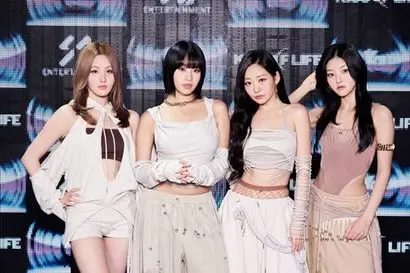
The recent case of cultural appropriation by the group 'Kiss of Life' was somewhat baffling. It happened at a time when K-pop groups and their agencies had been exercising caution due to a "red alert" regarding cultural appropriation. While recreating a "Black rapper's girlfriend" concept, they wore African braids. African braids should not be viewed merely as a hairstyle or a fashion trend. They represent a way Black people overcame the inherent limitations of their curly hair to reach an aesthetic level. It is a product of sublimation born out of pain. However, without an understanding of this context, Kiss of Life simply mimicked the hairstyle, used English as if they were native Black speakers, and used mocking expressions. They may have adopted Black music, but it is clear they have not embodied the identity of Black culture.
The dreadlocks worn by Jay Park or EXO's Kai in the past can also be cited as instances of cultural appropriation. The term "dreadlocks" originated from white people calling Black people on slave ships "dreadful." One has to wonder if the artists who adopted this hairstyle knew of its origins and the suffering of Black people. They are essentially misappropriating the result that was sublimated as a style. Furthermore, if this was used to gain commercial success or popularity, then they were simply using the pain of Black people as a means to achieve success.
Although 'Kiss of Life' issued an apology via a handwritten letter, the criticism from both home and abroad was intense. While awareness of cultural appropriation in our society has increased compared to the past, it seems likely that such incidents may become more frequent. This is because K-pop idol groups are shifting from being "produced" to "autonomous." Since BTS, it has become common for idol members to communicate freely with the public through social media individually. They don't just post content; they also hold live broadcasts frequently. As autonomous idols, there is no filtering process at the agency level, which can lead to potentially controversial content being exposed as is.
While "produced" idols have their limitations, they also have the advantage of planning, coordination, and control. Integrating the strengths of such planning strategies with autonomous activities will be necessary to control phenomena like cultural appropriation. Above all, only when K-pop and our society as a whole become vigilant and respect other cultures will such incidents cease to occur.
The author, Kim Heon-sik, has been walking through or navigating the forest of popular culture phenomena since his 20s, with the expectation that there is a way to make the world a better place through culture. He continues on the same path in the 21st century, an era of artificial intelligence and quantum computers, with the same belief.