

[비즈한국] There is growing speculation that Aekyung Group is preparing to sell Aekyung Industrial018250, a manufacturer of household goods. The move appears aimed at reducing the mounting debt of AK Holdings006840, which has been providing financial support to subsidiaries like AK Plaza. Industry experts analyze that while selling off subsidiaries may improve the financial structure in the short term, the long-term solution lies in improving the fundamental competitiveness of AK Plaza, which has become a burden for Aekyung.
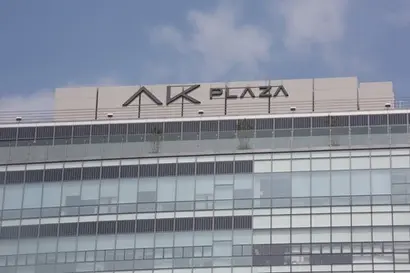
Rumors of Aekyung Industrial and Joongbu CC Sale: “Nothing Confirmed”
News is circulating that Aekyung Group is pushing for the sale of Aekyung Industrial. The potential sale involves a 63.38% controlling stake held by AK Holdings, Aekyung Asset Management, and specially related parties, with a reported asking price of approximately 600 billion KRW.
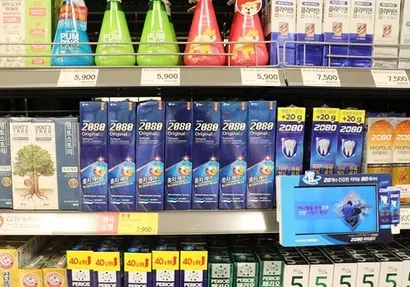
Aekyung Industrial is a core subsidiary of Aekyung Group, consistently generating cash through the sale of household goods and cosmetics. Its brands, such as household items “Kerasys” and “2080,” as well as cosmetics brands “Luna” and “AGE 20’s,” have a loyal customer base. Despite a recent downturn in performance due to the sluggish Chinese market, Aekyung Industrial recorded 679.1 billion KRW in revenue and 46.8 billion KRW in operating profit last year.
Aekyung Group is also reportedly moving toward selling the Aekyung Joongbu Country Club (Joongbu CC), located in Gonjiam, Gwangju-si, Gyeonggi-do. Joongbu CC is an 18-hole membership golf course owned by Aekyung Chemical161000. It is known for its high accessibility and popularity among golfers. Last year, Joongbu CC recorded 15.9 billion KRW in revenue and 1.8 billion KRW in operating profit.
The reason Aekyung Group has put profitable assets like Aekyung Industrial and Joongbu CC on the market is the urgent need to improve its financial structure. AK Holdings, the group’s holding company, has seen its debt expand due to repeated capital injections into its subsidiaries. From late last year to early this year, it poured over 160 billion KRW into AK Plaza, and it also supported Jeju Air089590 with 267 billion KRW in capital increases between 2020 and 2022. AK Holdings’ total debt increased from 2.8894 trillion KRW in 2020 to 4.0918 trillion KRW last year, with its debt-to-equity ratio rising from 233.9% to 328.7% over the same period.
There is a serious view within the group regarding the current liquidity risk. During the 55th Regular General Shareholders’ Meeting held on March 31, Ko Jun, CEO of AK Holdings, responded to a shareholder’s question about the group's management plan by saying, “Aekyung Group will undergo bone-cutting measures this year,” adding, “We will start searching for future growth engines now to ensure Aekyung Group can continue to grow 20 to 30 years from now.”
Meanwhile, Aekyung stated that nothing regarding the sale of subsidiaries has been finalized. An official from AK Holdings explained, “Nothing has been decided regarding which subsidiaries will be sold. We are in the stage of reviewing various possibilities,” adding, “It is not limited to simple financial structure improvement, but also includes considerations for rebalancing (business restructuring).”
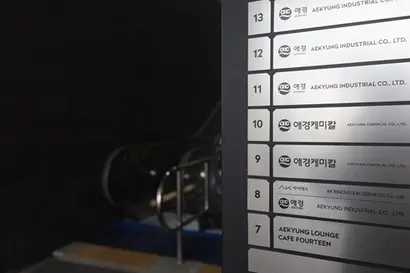
“Who Would Buy It Even If It Came to Market?”
As rumors of Aekyung Group’s subsidiary sales spread, attention has shifted to AK Plaza. Although AK Plaza has been a “burden” to the group due to continuous losses since 2020, it was excluded from this potential sale list.
AK Plaza operates four department stores in Bundang (Seongnam), Suwon, and Wonju, as well as seven shopping malls in locations like Incheon Airport, Hongdae, and Giheung. AK Plaza’s revenue last year was 295.2 billion KRW, with an operating loss of 18 billion KRW. Its market presence is also weak; as of last year, its market share was a mere 2.8%, a figure that has been declining annually from 3.9% in 2020.
Aekyung Group has been pouring money into AK Plaza to improve its condition. Last year, Aekyung Industrial lent 50 billion KRW to AK Plaza, and AK Holdings injected 60 billion KRW in capital. In particular, the total amount AK Holdings invested in AK Plaza by the end of last year reached 240.5 billion KRW.
While AK Plaza brands itself as a “local department store without luxury brands,” it has struggled to recover from poor performance. After acquiring Samsung Plaza (now AK Plaza Bundang) in 2007, it seemed to be increasing its market share through aggressive investment, but the gap with competitors widened during the pandemic. As luxury consumption surged following the COVID-19 outbreak, the competitiveness of AK Plaza, which lacked luxury brands, weakened significantly.
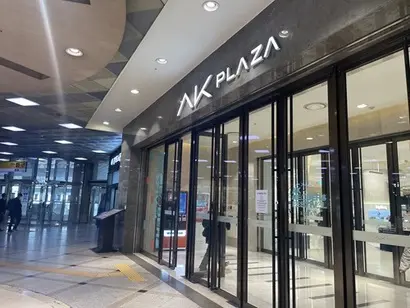
Industry experts believe that while Aekyung Group may have the desire to sell AK Plaza, it is aware that finding a buyer is difficult. The group previously attempted to sell AK Plaza but failed. An industry official remarked, “Even if AK Plaza were put on the market, would there be any buyers? Department stores are tied to real estate assets, making them difficult to sell.”
With Aekyung Group in a position where it must hold onto AK Plaza, experts point out that improving its performance is essential. Lee Jong-woo, a professor of business administration at Ajou University, noted, “In the past, department stores were like real estate leasing businesses. They just had to lease out good spots and take sales commissions. During the growth period of department stores, people flocked to them, guaranteeing stable profits without much investment.” He added, “However, the situation has changed now. You cannot grow using the same methods as in the past.”
Professor Lee advised, “AK Plaza models itself after Japanese department stores—the form where stores are built at every subway station to attract customers. Most of the customers who visit via subway are young people in their 20s and 30s. However, the brands and content currently in AK Plaza are ambiguous if they are meant to target MZ generation customers. They need to establish a clearer concept and pursue change.”
An official from AK Plaza stated, “The Hongdae branch has seen high growth recently, and the Suwon branch also had decent performance last year. We believe the situation is gradually improving,” and added, “We plan to improve areas like merchandising (MD) according to our strategy.”