

[비즈한국] Concerns surrounding Samyang Foods003230 are mounting following U.S. President Donald Trump's decision to impose a 25% tariff on South Korean products. Samyang Foods manufactures its products in South Korea and exports them to the U.S. Without a local production facility, it is in a difficult position to avoid these tariffs, and there are currently no plans to build one in the U.S. This stands in stark contrast to its rival Nongshim003230, which has already built a factory in the U.S., and Ottogi007310, which is also pursuing the establishment of a local U.S. plant.
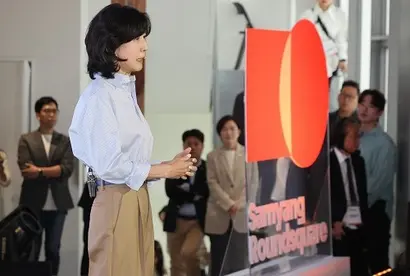
Samyang Foods decided to freeze prices for its ramen, snacks, and sauce products this year. Competitors Nongshim and Ottogi recently raised their product prices. A Samyang Foods official stated, "We judged that strengthening our growth engine through overseas market expansion rather than short-term price hikes is the way to solidify consumer trust and enhance our status as a global brand."
In fact, Samyang Foods is achieving significant results in overseas markets. Last year, it surpassed 1 trillion won in overseas sales, a feat largely attributed to the immense popularity of 'Buldak Ramen.' Son Hyun-jung, an analyst at Yuanta Securities, assessed, "The pace of Samyang Foods' market share expansion in the global market is accelerating," adding, "In particular, with Buldak Ramen entering the main food section of Walmart in the U.S. market in the fourth quarter of last year, it has begun a full-scale expansion beyond the Asian community to the general consumer base."
However, Samyang Foods has recently encountered an unexpected headwind. U.S. President Trump decided to impose a 25% tariff on products produced in South Korea. Currently, Samyang Foods produces its goods at its plants in Wonju, Iksan, and Miryang. Its structure relies on producing everything domestically and exporting it overseas. Ramen, in particular, is considered a representative budget-friendly food. If prices rise due to the inclusion of tariffs, it is highly likely that local consumers will turn away.
This is a point of comparison with its competitors. Nongshim is relatively free from tariff issues. It built a factory in Los Angeles (LA), U.S., in 2005 and completed a second plant in 2022. Most Nongshim products sold in the U.S. are produced locally. Ottogi is also pushing to build a factory in the U.S.; it established a local U.S. subsidiary in 2023 and has already purchased land in California.
Meanwhile, Samyang Foods is eyeing expansion into the Chinese market. It even plans to build a factory in China. In December last year, Samyang Foods announced in a regulatory filing that "Samyang Singapore will establish a Chinese production subsidiary to proceed with factory construction," adding that it "will add 6 production lines in Jiaxing, China." Completion is targeted for 2027.
The investment for the Chinese factory exceeds 200 billion won. However, if products produced in China are sold to the U.S. market, they will face massive tariffs. The U.S. decided to impose a 34% tariff on Chinese products. As China threatened retaliatory tariffs, the U.S. has warned of an additional 50% tariff.
Samyang Foods has yet to offer a clear strategy for the U.S. market. According to its business report, last year's revenue was 1.728 trillion won. Of this, 419.2 billion won (24.26%) came from the Chinese market, and 382.9 billion won (22.16%) from the U.S. market. While the Chinese market is important to Samyang Foods, it cannot afford to give up the U.S. market.
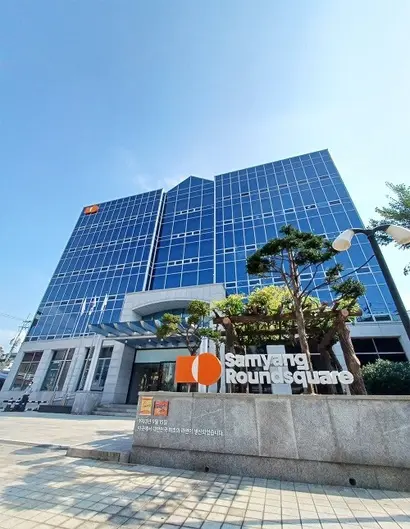
Some speculate that Samyang Foods will build a local U.S. factory. Kim Dong-chan, CEO and Executive Vice President of Samyang Foods, told reporters at the 'Korea Ramen Fair' on April 4, "We are racking our brains to come up with a good alternative," adding that "(thoughts on building a local U.S. factory) are being continuously discussed across various divisions."
However, with the decision to invest over 200 billion won in China, additional investment in the U.S. could lead to financial strain. Furthermore, the Samyang Roundsquare Group is also preparing to invest in its new 'Wellness & Healthcare' business. Samyang Foods has already been actively pursuing this by launching the plant-based healthcare brand 'Jack & Pulse' in October last year.
The owner family of Samyang Roundsquare Group is also showing interest in new businesses. In particular, the healthcare business is being led by Jeon Byung-woo, Director of Samyang Foods and eldest son of Vice Chair Kim Jung-soo. Director Jeon currently serves as the head of the Healthcare BU at Samyang Foods. In her New Year's address this year, Vice Chair Kim Jung-soo stated, "Based on our heritage of doing our utmost to provide stable nutrition for the public, we intend to redefine the value of our business by playing a professional role in realizing 'Wellness & Healthcare' beyond just diet for human health," adding, "We will change and leap forward through new attempts that break down the boundaries and stereotypes between healthcare and food to create integrated business synergies."
As such, while Samyang Foods faces expected difficulties in the U.S. market due to tariffs, building a local factory is a burden. CEO Kim Dong-chan has formed a task force (TF) to review countermeasures, but no clear solution has emerged yet. A decline in U.S. sales could lead to a worsening of performance. There is speculation that Samyang Foods might pull the 'price hike' card to maintain performance. However, CEO Kim Dong-chan emphasized on the 4th, "There are no plans for an increase for the time being."
While market concerns surrounding Samyang Foods are high, some offer a contrary opinion. They argue that tariffs may not necessarily be a negative factor, as Samyang Foods could gain an edge over Chinese noodle products in the U.S. market. Han Yu-jeong, an analyst at Hanwha Investment & Securities, stated, "The share of Chinese imports in pasta imported into the U.S. was 8.6% as of 2024, ranking 3rd," adding, "If high tariffs on China are implemented, Korean ramen, which has advantages in price and quality, will secure greater competitiveness in the U.S. market."
A Samyang Foods official stated regarding the U.S. tariff issue, "We have formed a response TF and are reviewing the situation from various angles."