

[비즈한국] Although the pilot project for consumer-to-consumer (C2C) trading of health functional foods has been running for nearly a year, transactions that fail to meet safety standards remain frequent on secondhand trading platforms. It is not difficult to find listings that violate guidelines, such as those lacking actual product photos, items posted in categories other than "health supplements," or posts clearly created by professional commercial sellers. Critics are calling for platforms to take more proactive measures to block such listings before consumer harm escalates.
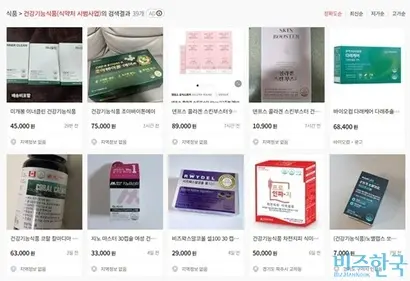
Following a review of four major secondhand trading platforms on the 7th, Bizhankook identified numerous cases of policy violations. These instances involved users posting items that did not meet trading criteria or trading health supplements on platforms not participating in the pilot project. Specifically, searching for "health supplements" on Joonggonara and Hello Market—neither of which are participating in the pilot—revealed health supplements openly listed under categories like "Living/Daily Items" or "Others." Joonggonara had listings for bundles of supplements with no stated expiration dates, while Hello Market featured products with missing expiration dates or items that had already expired as of April last year.
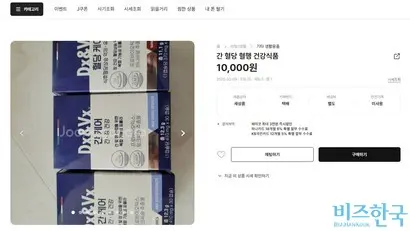
Even on platforms participating in the pilot project, cases were found where listings lacked photos of the actual product showing the name and expiration date, products with less than six months remaining before their expiration, or items posted in incorrect categories. Some sellers appeared to be professional merchants rather than individuals. On Bungaejangter, there were several listings that lacked actual photos to verify product condition or expiration dates, were listed under "Health Foods" rather than the mandated "Health Functional Foods" category, or violated expiration date regulations. Danggeun Market also had health supplement listings posted under categories like "Processed Foods."
One seller wrote in a product description: "These are new products, and they will be shipped in order of the latest expiration dates, so you can purchase with confidence. I have various other health foods and cosmetics, so please browse my shop." Upon visiting this seller’s page, about 50 health supplement and cosmetic items had been registered within a single week. The use of the term "shipped" and the variety of supplements suggest the seller is likely a commercial merchant, not an individual. The purpose of the C2C health supplement pilot program is to facilitate resource recycling among individuals. A business posing as an individual to sell health supplements on these platforms disrupts the distribution order and even raises concerns about tax evasion.
The platforms participating in the pilot program have already been flagged by the Korea Consumer Agency (KCA). Shortly after the pilot began, the KCA investigated the distribution status of pharmaceuticals and health supplements on major secondhand platforms between June and July of last year. The results showed 124 instances of C2C health supplement trades on non-participating platforms and communities, and 170 instances of non-compliant trades on participating platforms. Health supplements accounted for the largest share (51.5%) of monitored items, which included pharmaceuticals, supplements, and unregistered imported foods.
At the time, the KCA pointed out, "As the secondhand market grows, it is necessary for platform operators, community managers, and the individuals using them to comply with relevant laws and regulations to ensure the distribution of safe goods." The agency added, "We requested self-monitoring from the platforms prior to this investigation, and while they preemptively blocked some inappropriate medical and health supplement listings, illegal and non-compliant trades were still found. Along with the platforms' efforts to block these, consumers must also exercise compliance."
The Ministry of Food and Drug Safety (MFDS) and the platforms have introduced guidelines and technologies to manage these trades. However, critics argue that platforms need to re-examine their management systems as non-compliant transactions continue to recur. The MFDS guidelines stipulate that tradeable products must have visible labels or icons, be unopened, have at least six months of shelf life remaining, and be stored at room temperature. Furthermore, they must be traded within a dedicated "health functional food" category, and individual trading is capped at 10 times per year, with a cumulative value not exceeding 300,000 won, to prevent for-profit bulk sales.
Danggeun Market has implemented an Optical Character Recognition (OCR) system that automatically deletes listings if photos lack text or marks identifying them as health functional foods, and sends notification messages to the posters. Bungaejangter limits the total number of posts and edits for health supplements to 10. If a user is caught violating the guidelines, the penalties escalate from post deletion to temporary sales restrictions and eventually permanent bans.
Recently, the volume of C2C health supplement trades on these platforms has neared 2.8 billion won. According to the MFDS, in the 10 months since the temporary allowance of these trades began in May last year, there have been 88,330 transactions totaling 2.77139 billion won. Authorities, having previously maintained a cautious stance due to product safety and distribution concerns, decided to allow the trades on a pilot basis, stating, "We determined that restricting non-profit, one-off, or temporary individual transactions needed to be reviewed for the sake of improving consumer convenience." The pilot project began last May and is scheduled to end on the 7th of next month.