

[비즈한국] Due to U.S. President Donald Trump's unilateral reciprocal tariffs, it is predicted that some of the overseas weapons procurement projects pursued by the Defense Acquisition Program Administration (DAPA) will be delayed or scrapped. This is interpreted as a result of rising procurement costs caused by the tariffs, which exceed the originally planned project budgets.

# Second AEW&C Aircraft Project Contract Postponed in April Due to Price Hikes from Tariff Policy
According to the defense industry on the 7th, the "second Airborne Early Warning and Control (AEW&C) aircraft project," which was slated for model selection and basic contract signing this month, is expected to be delayed. Three global defense companies—Boeing (E-7A) and L3Harris (Global 6500 AEW&C) from the U.S., and Saab (GlobalEye) from Sweden—have thrown their hats into the ring for this project.
This project, which aims to acquire additional early warning aircraft by 2031, was originally budgeted at 3 trillion won. However, as the price of the aircraft has risen beyond the allocated budget, additional funds have become necessary. In particular, with President Trump’s recent announcement of unilateral reciprocal tariff policies, production costs for components are expected to spike, making the April contract even more difficult to finalize.
According to the political news outlet Politico, the U.S. defense industry is also experiencing turmoil due to President Trump's tariff policy, as there are no exemptions for the defense sector. Bill Greenwalt, a former Department of Defense acquisition official, pointed to retaliatory tariffs and supply chain disruptions, explaining that "prices for some critical components could rise significantly, or procurement might become impossible altogether."
Defense products, which require complex manufacturing processes, often cross borders multiple times during assembly, potentially leading to multiple tariffs on a single product. Consequently, observers suggest that South Korea, a U.S. ally, may reduce its reliance on American weapons. An industry insider emphasized, "The possibility of U.S. firms winning the second AEW&C aircraft project is not high," adding, "The sky-rocketing procurement costs, which deviate from budget projections, are likely to become a major stumbling block."
# 'Offset' Requirements Targeted in Trade Barrier Report, Leading to Contract Cancellations
Overseas procurement projects have also been scrapped due to issues surrounding offsets and high acquisition costs. In the 2025 National Trade Estimate (NTE) report released on the 31st of last month, the Office of the United States Trade Representative (USTR) took issue with the South Korean Ministry of National Defense’s offset program for the first time. Although the offset system is utilized by most countries, the U.S. singled out South Korea as a major trade barrier.
An offset refers to a trade arrangement where the purchasing country demands benefits such as technology transfer, parts re-export, or the acquisition of depot maintenance capabilities as a prerequisite for weapon purchases. South Korea introduced the offset system in 1982, and through offsets from the F-16 fighter jet technology introduction project with the U.S., it was able to secure design technology for the T-50 supersonic trainer.
According to the Defense Acquisition Program Act, it is a principle to pursue offsets if the value of imported military supplies exceeds 10 million dollars (approximately 14.7 billion won). For competitive bidding, the offset ratio must be set at 50% or more of the purchase price, and for non-competitive bidding such as Foreign Military Sales (FMS) directly with the U.S. government, it must be set at 30% or more, requiring the other country to provide benefits of corresponding value.
The USTR's focus on South Korea's offset program stems from U.S. firms losing competitiveness in domestic overseas procurement projects. To improve compliance, the South Korean government imposes a penalty of about 10% of the weapon purchase price for non-compliance. Consequently, some companies promise extensive offsets during the bidding process, only to pay the penalty after the contract is signed. A prime example is Lockheed Martin, which promised to provide one military communication satellite as part of the first F-35A project but later canceled it.
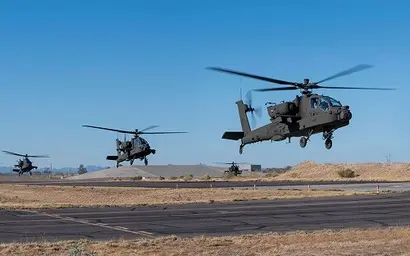
U.S. companies are effectively neutralizing the offset system by incorporating the potential penalty costs into the initial product price. For instance, in November 2022, the Army held a Defense Acquisition Program Promotion Committee meeting and decided to pursue the second phase of the large attack helicopter project to purchase Apache-class helicopters via FMS for 3.3 trillion won. However, as the U.S. State Department approved the sale of Apache attack helicopters and related equipment at 4.6655 trillion won, the budget was exceeded by a staggering 1.3 trillion won. The sales price was set high to account for potential offset penalties. Ultimately, this led to the cancellation of the large attack helicopter procurement project.