

[비즈한국] On the 4th, the Constitutional Court announced the removal of former President Yoon Suk-yeol from office. As the 111-day impeachment standoff draws to a close, expectations for a recovery in consumer sentiment are rising. However, industry experts analyze that the tangible economy will likely only rebound after the early presidential election.
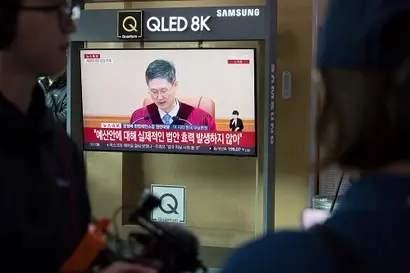
Rising expectations for consumer sentiment recovery following impeachment
This impeachment trial was the longest in history for a president. This compares to the 63 days it took to reach a verdict for former President Roh Moo-hyun and 91 days for former President Park Geun-hye. It has been noted that the prolonged political standoff led to long-term political and social chaos, causing consumer sentiment to shrink more than ever before.
The Bank of Korea’s Consumer Sentiment Index (CSI) for last December, during the period of martial law, stood at 88. This was a sharp drop compared to the previous month (101). The CSI is an indicator of consumer perception of the economic situation; a reading below 100 indicates that consumer sentiment is pessimistic.
There were predictions that the frozen consumer market, paralyzed by the aftermath of the impeachment, would recover once the impeachment was upheld. This is because, during the 2017 impeachment of former President Park Geun-hye, the consumer sentiment that had declined during the political crisis showed signs of recovery immediately after the Constitutional Court's ruling. The CSI, which had fallen to 93 during the Park impeachment, rose to 96.7 after the court upheld the impeachment in March 2017, and recorded 101.2 in April. Following the early presidential election in May, the CSI continued to rise through June.
Kim Jin-wook, an economist at Citi, analyzed in a recent report, "With a new administration set to be formed by June 4, we expect political uncertainty to gradually dissipate and the room for policy maneuver to expand," adding, "We estimate that a 10 trillion won supplementary budget could increase the annual economic growth rate by about 0.04 to 0.08 percentage points."
Lee Jong-woo, a professor of business administration at Ajou University, said, "Due to political uncertainty, companies had halted investments and employment, and the exchange rate surged due to political risk. Now that the impeachment has been upheld and political uncertainty is resolved, it appears the situation will improve."
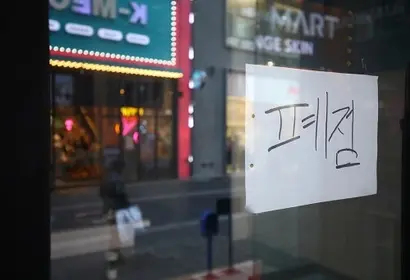
In 2017, they were busy boasting about the 'impeachment effect'… A different atmosphere in the retail sector
Disappointed voices are being heard among self-employed individuals during the first weekend following the impeachment ruling. Contrary to expectations that sales in the restaurant industry would surge due to the verdict, the actual boost in sales was not significant. "A," who runs a wine bar in Seoul, sighed, "People said things would clear up once the impeachment happened, but nothing has changed. Business was still bad over the weekend. I doubt the situation will get better anytime soon."
After the Constitutional Court upheld the impeachment of former President Park on March 10, 2017, the retail industry distributed data regarding the 'impeachment effect' during that first weekend. The convenience store industry released analysis showing that weekend alcohol sales between Friday the 10th and Sunday the 12th—the day of the ruling—had surged compared to the previous week. The chicken industry also reported an increase in sales on the 10th, the day of the verdict.
However, the atmosphere in the retail industry regarding former President Yoon's impeachment is quiet. An industry official said, "Because it is a sensitive issue, we decided not to distribute related data this year. The situation is also very different from 2017," adding, "There isn't really anything special to show as an 'impeachment effect'."
Another industry official added, "Just because the impeachment occurred, it doesn't seem like consumers are suddenly in a position to spend money. There hasn't been a particular change in sales trends," noting, "The current atmosphere is likely to continue for the time being."
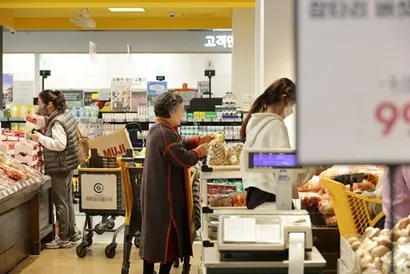
The industry expects that the economic recovery will only be felt after the early presidential election. Professor Lee Jong-woo predicted, "The decline in consumption due to political uncertainty is largely a result of companies' shrunken investment sentiment. Companies haven't been spending money—to the extent that corporate card usage has dropped significantly. Once a new government takes office, companies will increase investments and hiring accordingly. Shouldn't consumption revive then? I think we might see a short-term effect during June."
Some point out that until the early election is held, local governments must actively execute their budgets to stimulate the domestic economy. Lee Eun-hee, a professor of consumer science at Inha University, mentioned, "Consumers will develop positive expectations simply from the economic policies presented by presidential candidates. The various economic policies and outlooks offered by candidates before the election can have an effect on boosting consumer sentiment. However, regardless of the recovery of sentiment, consumers do not have the capacity. How can they consume if they don't have money? Even before the early election, local governments need to take measures such as front-loading their budgets. Companies should also try to revive cash flow through measures like early settlements."