

[비즈한국] Luxury platform Balan, which recently experienced settlement delays, has filed for corporate rehabilitation. Industry insiders are expressing concerns that as investment sentiment toward e-commerce declines, the management difficulties faced by platform companies will intensify this year. While there is growing pressure to strengthen platform regulations to prevent a repeat of the TMON-WeMakePrice (TMAP) crisis, some experts argue that tightening regulations in the current market climate is not advisable.
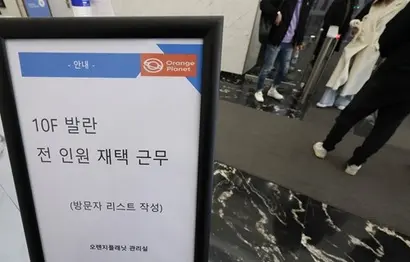
Balan Finally Files for Corporate Rehabilitation; Rising Tension in the E-commerce Industry
On the 3rd, Balan CEO Choi Hyung-rok appeared at the Seoul Rehabilitation Court. He attended the debtor interrogation session regarding Balan's corporate rehabilitation proceedings (court receivership). Balan had previously filed for corporate rehabilitation with the Seoul Rehabilitation Court on March 31. In a statement that day, CEO Choi explained, "Although we proceeded with some of the planned investment attraction within the first quarter of this year, securing additional funds was delayed contrary to expectations, leading to a short-term liquidity crunch." He added, "We filed for rehabilitation to stably settle commercial claims with our partners and to enhance the sustainability of the Balan platform."
Balan, once considered the top player in the luxury platform industry, failed to pay settlement funds to its partnered sellers on March 24 (related article: 'Shocked by the TMAP incident…' The full story behind Balan's settlement delays and police involvement). At the time, Balan explained regarding the settlement delay, "We discovered an error while reviewing settlement payment details, and the delay is merely due to the time required for the re-settlement process," adding, "We will announce a settlement plan on the 28th." However, Balan failed to provide a settlement schedule on the 28th, posting only an apology, and ultimately announced its filing for corporate rehabilitation on the 31st.
Industry estimates place Balan's unpaid settlement amount at a minimum of 13 billion KRW. Balan’s position is that it will resolve short-term liquidity issues through the rehabilitation process and normalize its business through M&A. However, trust in Balan among sellers has already collapsed. One seller stated, "Everything they said—that there were no problems with the company and that they would not go through rehabilitation—was a lie. I don't know what to do from here."

Seo Yong-gu, a professor at Sookmyung Women's University's School of Business, expressed concern, saying, "Balan has been in a state of capital impairment since 2023. It feels like something that was bound to happen eventually. If an acquirer for Balan emerges, normalization might be possible, but otherwise, a situation like the TMAP crisis could repeat itself."
However, the industry views the possibility of a Balan M&A as low. One industry official noted, "Who among domestic companies would step up to acquire Balan? We could place our hopes on foreign private equity firms, but I think it would be difficult."
With Balan entering corporate rehabilitation, expectations are that tension within the e-commerce industry will rise. Lee Jong-woo, a professor at Ajou University's Department of Business Administration, said, "The perception that e-commerce is risky has become deeply ingrained in investors. Investors will adopt a more conservative stance on e-commerce investments. The problem is that most platforms are operating at a deficit. They were dependent solely on investment funds, and once that funding stops, these problems inevitably arise." He further pointed out, "This isn't just Balan's problem. These were things that should have exploded already but have been hanging on until now. A wave of bankruptcies among platform companies is expected this year."
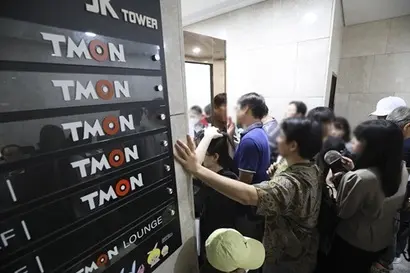
Strengthening Regulations to Prevent a Second TMAP Crisis? "But They Are Going Bankrupt Even Without Regulations"
When the TMAP crisis broke out last year, the long settlement cycles of online platform operators faced public backlash. They were criticized for using sellers' sales proceeds as a means of asset liquidity while operating with settlement cycles longer than a month. Consequently, platform operators began moving to shorten their settlement cycles.
Kim Dae-jong, a professor at Sejong University's School of Business, mentioned, "Practices such as setting long settlement periods of two months or more are fundamentally flawed. The long settlement cycle leads to Ponzi-style circular payment schemes. I believe some level of regulation is necessary for payment settlement methods."
The government also made moves to introduce related legislation to prevent recurrence. Following the TMAP crisis last year, the Korea Fair Trade Commission (KFTC) announced plans to amend the Act on Fair Transactions in Large Retail Businesses (Large Retail Business Act) to prevent a recurrence. The proposal aimed to classify online brokerage platforms above a certain size as large retail businesses, imposing deadlines for settlement of sales proceeds and duties for separate management. However, the amendment to the Large Retail Business Act is currently pending in the National Assembly.
Although the KFTC also expressed its intention to push for amendments to the Fair Trade Act for platform regulation, this also failed to pass the National Assembly. A KFTC official explained, "It was proposed last year, and public hearings were held. The schedule for the bill subcommittee has not yet been set. It remains in a pending state."
Discussions on related legislation, which had been stagnant for a while, are resurfacing as a major topic now that Balan has entered corporate rehabilitation. However, industry experts criticize moves to regulate many companies as if they were potential criminals, arguing it would trample on corporate growth potential. Professor Lee Jong-woo pointed out, "The right direction would be to focus on catching companies that have committed wrongdoing. Treating every company as a potential criminal is not desirable."
There are also concerns that strengthening regulations in the current state of the e-commerce market could inadvertently ruin the industrial ecosystem. Professor Seo Yong-gu expressed concern, saying, "Even though regulations on platforms are not currently significant, aren't we seeing companies going bankrupt like this anyway? I think it's still too early. If they pressure companies to further shorten settlement periods while the market situation is poor, a chain of bankruptcies could occur."
Lee Dong-il, a professor at Sejong University's School of Business, also stated his position, saying, "If regulations are introduced, they could become barriers for new platform operators entering the market. I don't see that as a good way to improve the health of the entire ecosystem."