

[비즈한국] Sulli, Goo Hara, Kim Sae-ron... Popular artists may look glamorous, but they can be treated degradingly at any moment. Their career prospects often hinge on public image and recognition, and they are frequently exposed to physical harm or life-threatening situations. Many suffer severe human rights violations yet are unable to respond properly out of fear that it might damage their image and reputation.
Recently, there has been a surge in incidents where yellow journalists and YouTubers indiscriminately expose artists' private lives, causing deep wounds. While the artists themselves, their families, or their management agencies are expected to respond, it is rarely easy. In some cases, families are unable to provide effective support, or the management company is not in a position to handle the situation properly. Some artists lack management entirely, and there are even those who exploit this vulnerability.
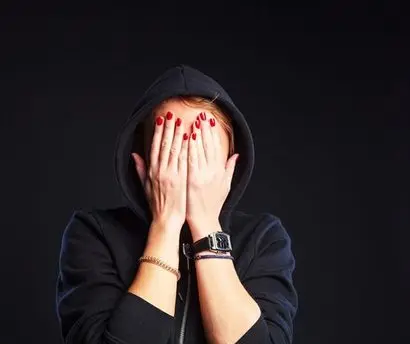
In Korea, many entertainment agencies are very small, making risk management difficult. Artists often struggle alone, and when the burden becomes too heavy, irreversible tragedies can occur. Cases like IVE’s Jang Won-young, who tracked down a "cyber wrecker" (malicious YouTuber) for three years and brought them to court, are rare. Objective and public support is urgently needed, but currently, nothing exists.
Sometimes, civil society organizations step in to help members of society in need. Human rights groups, in particular, have contributed significantly to the democratization and advancement of human rights in Korea. However, popular entertainers are not viewed as subjects of human rights protection. This is because they are not seen as "socially disadvantaged." People often assume that celebrities enjoy worldly success, wealth, honor, and unearned income. Consequently, even when pseudo-journalism triggers human rights-abusing exposures under the guise of revealing their hypocrisy or falsehoods, there has been almost no communal social response.
However, entertainers are also citizens of the Republic of Korea. They suffer from threats and lack proper protection simply because they are well-known to the public. Thanks to the global popularity of K-pop and K-dramas, the average age of Korean entertainers is getting younger; many idols are minors. In particular, a significant number of those suffering from human rights abuses are female adolescents. An approach rooted in youth welfare and human rights is necessary, and a broader cultural perspective needs to be applied here. This is also evident in the case of NewJeans. It is not easy to accommodate their concerns through current laws or institutions. It would have been better if there had been a mediation body to coordinate emotional issues before resorting to legal battles.
Given that K-content is attracting global attention, a national-level response is required. The government relies on the halo effect of Hallyu stars for promotional strategies when things are going well, but abandons them when problems arise. This is because there are no institutional mechanisms or policy systems in place to handle such situations.
Now, popular artists should be regarded as a national cultural asset—a presence that creates added value through content others cannot provide and enhances the national brand value, all on a global scale. Therefore, we need systems and institutions that prevent harm to them and foster resilience when their reputations are damaged. We must listen to their difficulties and help them find solutions when conflicts arise.
Realistically, even for artists, legal action is not easy. They only fear that further exposure in the media or on platforms will cause greater damage. When conflicts or disputes arise, there is no public opportunity or space for artists to clarify the truth or state their position.
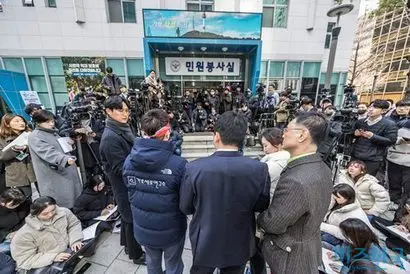
In this context, I propose the establishment of an Artist Human Rights Protection Fund and Center. Funding could be sourced from a small percentage of profits from movie or concert tickets, OTT fees, and album sales. The Artist Human Rights Protection Center should be capable of providing counseling for issues that cannot be disclosed publicly, investigating the truth behind problems or incidents, and coordinating, mediating, and reaching settlements between parties. By routing legal representation through this center, even artists without financial means could receive support. If the matter is serious, the center could also initiate criminal charges.
All matters must be strictly confidential to minimize the blow to the artist should the information become public, and there should be mandatory penalties for violating this confidentiality. This is a measure to prevent harm from the indiscriminate exposures of cyber wreckers or yellow journalism, as well as a preventative step for the fans who love these artists. Fan clubs would likely welcome the establishment of such a system.
While this proposal may not be the only answer, our society must put its heads together to ensure no more artists meet tragic ends due to injustice. Public efforts must be supported to ensure that they can continue to contribute not only to our citizens but to the cultural enjoyment of people all around the world.
The author, Kim Heon-sik, has been walking through or clearing paths in the forest of popular culture phenomena since his 20s, driven by the hope that there is a way to make the world a better place through culture. He continues on the same path in the 21st century, an era of artificial intelligence and quantum computing, with the same belief.