

[비즈한국] As the economy continues to worsen and wildfires have broken out, particularly in the Yeongnam region, the ruling and opposition parties have yet to reach an agreement on drafting a supplementary budget. Amidst ongoing disagreements over the scope and direction of the budget, they are also clashing over the restoration of reserve funds, which were cut last year under the initiative of the Democratic Party of Korea (DPK), in connection with the wildfires.
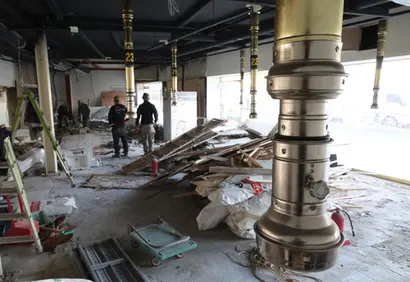
While small neighborhood shops—such as supermarkets, snack bars, karaoke parlors, and pubs—are closing one after another, the ruling and opposition political circles are preoccupied with managing their voter bases and ego contests. There is concern that if the drafting of the supplementary budget is further delayed due to this tug-of-war, the opportunity to provide support to small business owners may be missed entirely.
Kim Sang-hoon, policy committee chair of the People Power Party (PPP), targeted the DPK on March 27, stating, "I urge the Democratic Party to issue an apology to the public for unilaterally cutting reserve funds in the 2025 main budget and to actively cooperate in drafting a supplementary budget for disaster reserves." He added, "Opposing the drafting of a supplementary budget for government disaster response in this situation is an act that ignores public safety."
In response, Jin Sung-joon, policy committee chair of the DPK, retorted on the same day, saying, "It is ridiculous that the People Power Party is trying to restore 2 trillion won in reserve funds using wildfires as an excuse." He added, "The Democratic Party has already earmarked 900 billion won in public safety funds in our own supplementary budget plan announced last February, which includes items like firefighting helicopters and response equipment, so we can begin discussions on the supplementary budget right now."
The government had originally allocated 4.8 trillion won in reserve funds for this year's budget, but 2.4 trillion won was cut under the DPK's initiative. Differences in position regarding the scope of livelihood support remain unresolved. The PPP estimates 3 trillion won is needed for small business owners and vulnerable groups, while the DPK maintains that 13 trillion won is required, including a 250,000 won livelihood support grant for all citizens.
The problem is that as the ruling and opposition parties clash over the supplementary budget, the self-employed, whom they have publicly claimed to be the targets of this support, are falling into even deeper crisis. According to the National Tax Service’s National Tax Statistics Portal, small business owners forming local commercial districts—such as study rooms, pubs, supermarkets, snack bars, karaoke parlors, clothing stores, and shoe stores—have been shutting down one after another last year (as of December).
Analysis of the National Tax Statistics Portal shows that the number of study rooms nationwide dropped by 10.6% (716) last year to 6,058, compared to 6,774 a year earlier. During the same period, the number of simple pubs and beer pubs decreased by 7.4% (731) and 7.0% (1,718), falling from 9,873 to 9,142 and from 24,546 to 22,828, respectively. The number of snack bars also fell by 3.9% (2,112), from 53,760 in 2023 to 51,648 last year, while supermarkets decreased by 2.3% (634) from 27,367 to 26,733. Karaoke parlors saw a 3.4% (892) decline, from 26,524 to 25,632. Self-employed business owners who played a key role in local commercial districts were unable to withstand the worsening economy and closed their doors one by one.
As consumers tighten their belts and cut spending on clothing and cosmetics, businesses like clothing stores, shoe stores, and cosmetic shops have also taken a hit. The number of clothing stores dropped by 3.1% (2,643) last year to 83,395, compared to 86,038 a year earlier. Shoe stores decreased by 5.0% (294) from 5,884 to 5,590, and cosmetic shops fell by 3.0% (1,180) from 38,816 to 37,636. With the economic downturn leading to fewer real estate transactions, real estate agencies, which act as local community hubs, also declined by 2.1% (3,111), from 145,528 in 2023 to 142,417 in 2024.
The concern is that the situation for small business owners is likely to deteriorate further while the ruling and opposition parties fail to find common ground on the supplementary budget. According to the Bank of Korea's Consumer Survey, the Consumer Sentiment Index (CSI) for projected clothing expenditures was 93 in March, remaining below the baseline of 100, while the CSI for dining out expenditures was only 91. The CSI for culture, leisure, and entertainment spending has even fallen to 88. A CSI below the baseline of 100 indicates that more respondents intend to reduce spending over the next six months compared to the current level. Consequently, the number of closures among local clothing stores, shoe shops, snack bars, beer pubs, and karaoke parlors is likely to increase further.