

[비즈한국] Chairman Choi Yun-beom of Korea Zinc010130 has successfully defended his management control over the company. Chairman Choi had been engaged in a dispute over management rights with Chang Hyung-jin, advisor to Young Poong Corporation000670. Advisor Chang's Young Poong had joined forces with private equity firm MBK Partners (MBK) to challenge the Chairman. The winner of the Korea Zinc shareholders' meeting held on the 28th was Chairman Choi. With Young Poong's defeat, it is assessed that MBK has also lost market trust. For MBK, this means they have walked away empty-handed while facing criticism following their application for Homeplus rehabilitation. At the very least, Kim Kwang-il, Vice Chairman of MBK, succeeded in being appointed as a non-executive director of Korea Zinc, allowing him to participate in the board.
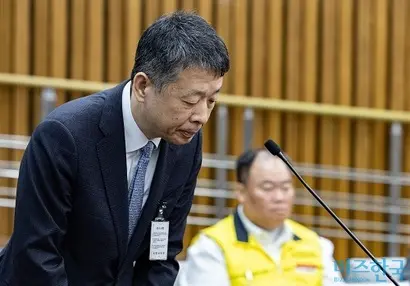
Chairman Choi Yun-beom Wins by Establishing a Circular Shareholding Structure
Young Poong Corp., led by the family of advisor Chang Hyung-jin, and Chairman Choi Yun-beom's family have been embroiled in a dispute over Korea Zinc's management rights since last year. Young Poong recruited MBK as an ally to begin purchasing shares. Currently, it is known that the Young Poong-MBK alliance and its supporters hold approximately 40% of Korea Zinc shares, while Chairman Choi Yun-beom's family and their supporters hold around 34%. Looking at shareholding alone, the Young Poong-MBK alliance held the lead.
Korea Zinc held an extraordinary shareholders' meeting last January. At the time, the business community expected a victory for the Young Poong-MBK alliance due to their lead in shares. In response, Chairman Choi Yun-beom took action by forming a circular shareholding loop. Sun Metals Corporation (SMC), a Korea Zinc subsidiary based in Australia, acquired a 10.33% stake in Young Poong from Chairman Choi Yun-beom and Young Poong Precision036560. SMC is 100% owned by Sun Metals Holdings (SMH), and SMH is 100% owned by Korea Zinc. By having SMC acquire the Young Poong stake, a circular shareholding structure of ‘Korea Zinc → SMH → SMC → Young Poong → Korea Zinc’ was created.
Article 369 of the Commercial Act states, "If a company, its parent company, and its subsidiary, or a subsidiary itself, owns more than 10% of another company's shares, the shares of the company or parent company held by that other company do not have voting rights." This means that in a circular shareholding structure, those voting rights cannot be exercised. Consequently, Young Poong could not exercise its voting rights in Korea Zinc, and Chairman Choi Yun-beom succeeded in defending his management control.
The Young Poong-MBK alliance argued that because SMC is an overseas limited liability company, domestic Commercial Act regulations did not apply. The court initially accepted the alliance's argument. In response, Korea Zinc announced that SMC had transferred its 10.33% stake in Young Poong to SMH. The circular structure was thus changed to ‘Korea Zinc → SMH → Young Poong → Korea Zinc’. Korea Zinc emphasized that unlike SMC, SMH is a corporation under Korean commercial law. The Young Poong-MBK alliance protested, but the court did not accept their arguments. With this, Chairman Choi Yun-beom’s victory was effectively finalized.
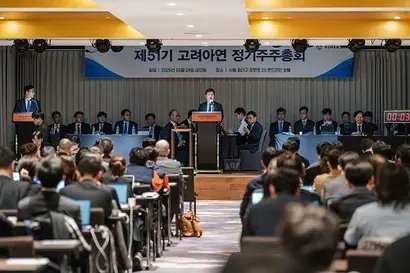
MBK Fails Repeatedly in Management Battles
As expected, the Korea Zinc shareholders' meeting effectively resulted in a victory for Chairman Choi Yun-beom. First, the proposal initiated by Chairman Choi's side to “cap the Korea Zinc board at a maximum of 19 members” was passed. Previously, there was no limit on the number of board members. The Young Poong-MBK alliance had planned to appoint a majority of directors to seize control of the board. However, with the new restriction on the number of board seats, it will be difficult for the alliance to take over the board for the time being.
A total of eight directors were elected at this meeting. The Korea Zinc shareholders' meeting used a cumulative voting system. Cumulative voting is a system where shareholders are granted as many voting rights as the number of directors to be appointed. For example, if there are five director candidates, a shareholder has five votes per share, which they can concentrate on a single candidate.
The election results showed that five directors recommended by Chairman Choi's side and three recommended by the Young Poong-MBK alliance were elected. This reorganized the Korea Zinc board into a structure of 10 members from Chairman Choi's side and four from the Young Poong-MBK alliance. As Chairman Choi's side holds a majority of the board, they are expected to maintain the lead in future management. Since the board is capped at 19, the Young Poong-MBK alliance can only appoint up to five additional directors in the future.
A notable point is that MBK Vice Chairman Kim Kwang-il, recommended by the Young Poong-MBK alliance, was elected as a non-executive director of Korea Zinc. Vice Chairman Kim also serves as co-CEO of Homeplus. Some point out that Kim is showing interest only in Korea Zinc's management rights while ignoring Homeplus. During a National Policy Committee meeting on March 18, Democratic Party lawmaker Kang Joon-hyun pressured MBK, stating, "Resolve the Homeplus crisis, even if it means selling your stake in Korea Zinc."
Following their failure in the Homeplus rehabilitation attempt and now the failure to secure Korea Zinc, MBK is being evaluated as having lost market confidence. Previously, in 2023, MBK jumped into a management dispute at Hankook & Company000240 Group (formerly Hankook Tire Group). They joined forces with advisor Cho Hyun-sik to oppose Chairman Cho Hyun-bum but failed to secure management control. MBK has ended up empty-handed while facing criticism from labor and political circles.
Meanwhile, the Homeplus branch of the Mart Industry Labor Union held a protest against MBK in front of the Korea Zinc shareholders' meeting venue on the 28th. Kang Woo-chul, head of the Mart Union, criticized, “MBK Partners acquired Homeplus, a national company, through a leveraged buyout (LBO) but took no substantive measures for corporate rehabilitation. They must immediately stop acts that destroy healthy companies and focus on the corporate revival of Homeplus.”