

[비즈한국] A video recently produced by a food nutrition analysis YouTuber regarding protein shakes and protein bar products has gone viral. Very few products mentioned in the video were found to have verified nutritional claims, and the comments section was flooded with complaints accusing some products of 'consumer deception.' Criticism is particularly sharp given that these product lines are marketed as 'healthy.' Is there any legal issue with labeling them this way?
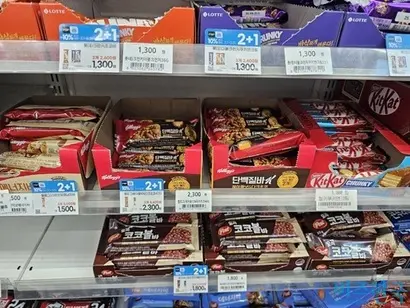
Product names can be regulated under the Labeling and Advertising of Foods Act. If the nutritional labeling can support the presence of the ingredient, there is no issue with including terms like 'protein' in the name, regardless of the content level. However, it is important not to mislead or confuse consumers. If a product that is not a health functional food is labeled or advertised as one, or if it uses false, exaggerated, or deceptive labeling/advertising, it is classified as 'unfair labeling/advertising' under the law and is subject to penalties such as fines.
As a result, the protein content of products sold on the market varies widely. A search for 'protein bar' on Naver035420 Shopping revealed a comparison of the top 5 products by review count. When standardized to a total weight of 60g (based on the largest product), the protein content ranged from a minimum of 9g to a maximum of 20g. The difference in content is also unrelated to the 'food type.' If you enter 'protein bar' into the Ministry of Food and Drug Safety's food nutrition database, the results include 28 types of snacks, bread, or rice cakes; 19 types of processed cocoa or chocolate; 16 types of processed agricultural foods; 8 types of other food products; and 4 types of processed marine products.
While the loose regulations on product names are problematic, the issue of nutrient content claims such as 'high' or 'rich' is even more serious. According to the detailed standards for nutritional labeling, claims like 'contains' are permitted if the food provides at least 10% of the daily nutritional reference value per 100g, at least 5% per 100ml, at least 5% per 100kcal, or at least 10% per reference serving. Claims like 'high' or 'rich' require meeting double these standards. These can be expressed as a percentage or absolute value compared to the standard values of other products, but in such cases, they must be calculated based on at least three similar food products with high market share within the same food type.
The problematic part is the definition of 'same food type.' Even if products are identically named 'protein bar,' their classification can vary—for instance, as 'processed peanut or nut products'—depending on their ingredients. Because the standard is based on the 'same food type,' a product can carry a nutrient claim even if its content is significantly lower than that of other food types. In fact, when examining the nutritional content of a protein bar labeled 'high protein' on its packaging, it was found to contain 57.2g of effective carbohydrates, 8.6g of saturated fat, and 11.9g of protein per 100g. This was significantly lower than competing products, which average 20-30g of protein.
Previously, in 2021, the Ministry of Food and Drug Safety investigated 660 'protein bar' products and took administrative action against false and exaggerated advertising. By focusing on unfair online advertising, they caught 21 websites. However, at the time, the focus was more on advertising than on protein content itself. They targeted products that misled consumers into thinking these general protein bars were health functional foods for dieting, using slogans like 'fat-burning diet bar,' 'muscle-strengthening diet bar,' 'healthy fitness snack,' 'fat-free snack,' and 'weight loss support.' In 2023, the Korea Consumer Agency analyzed 16 protein drink products and pointed out that some were inadequate for protein supplementation, with some containing as little as 4g of protein.