

[비즈한국] The "AI Framework Act," scheduled to take effect next January, finds itself at a crossroads. It is facing demands for flexibility from overseas big tech companies, while internally, critics are pointing out that rational and clear standards for regulatory grounds must be established. As Europe, which introduced the world's first AI Framework Act, moves closer to deregulation, the South Korean government's concerns are deepening.

Major AI tech companies that once claimed they would "willingly accept regulation" have drastically changed their stance since the Trump administration took office. Backed by the Trump administration's deregulation demands, they are busy promoting growth-friendly policies, including weakening copyright laws. Foreign media outlets like The New York Times are reporting that "AI big tech companies are emboldened by Trump."
South Korea is also within the sphere of influence. The Ministry of Science and ICT (MSIT) recently received requests for flexibility in the application of the bill from OpenAI and Google. According to industry sources, officials from the MSIT responsible for AI policy recently held individual meetings with Sandy Kunvatanagarn, Head of Asia Pacific Policy at OpenAI; Alice Hunt Friend, Global Policy Lead for AI and Emerging Technologies at Google; and Eunice Hwang, Head of AI and Emerging Technologies Policy for Asia-Pacific at Google.
Discussions were also held separately with the Business Software Alliance (BSA), which represents about 70 global software companies including Adobe, Amazon Web Services (AWS), IBM, and Microsoft. It is reported that during these meetings, the big tech representatives inquired about the scope of user protection measures among the obligations of business owners to be included in the sub-decrees of the AI Framework Act, as well as the specific definition of "high-impact AI."
Urgency to Resolve Ambiguity of "High-Impact AI," the Core of the Framework Act
Consequently, South Korea's AI Framework Act faces challenges from both inside and out. The AI Framework Act, which passed the National Assembly at the end of last year, is currently in the process of establishing enforcement decrees. Some point out that this law could act as a burden on AI development and industrial growth. It is not merely a simple logical battle between "promotion vs. regulation."
A key issue is the ambiguity in the definition and scope of application of "high-impact AI," which is considered the core of the framework act. Legislative researcher Jung Joon-hwa noted, "Parties who must comply with or interpret the AI Framework Act need to understand what constitutes AI that meets the concept, but it is difficult to provide a clear and consistent answer with the current legal provisions alone," adding, "It is necessary to establish a clear system in the law specifically for high-impact AI."
Article 2, Paragraph 4 of the AI Framework Act defines high-impact AI as "an artificial intelligence system that has a significant impact on or poses a risk to human life, physical safety, and fundamental rights." It specifies 11 criteria, such as having a significant impact on individual rights and obligations or influencing the decision-making of public institutions.
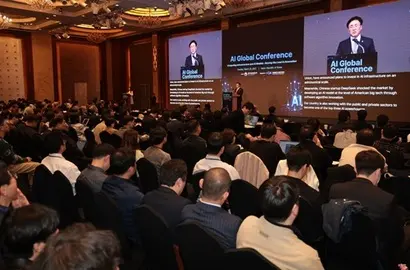
However, because the standards are unclear, industry insiders say it is difficult to determine whether a project falls under regulatory targets in the early stages of technology development. There is also criticism that there is a lack of concrete standards for data quality and fairness, as well as ethical benchmarks and practical implementation methods.
The Digital Economy Research Institute of the Korea Internet Corporations Association pointed out in a report, "Although it is mentioned that ethical principles include 'safety, reliability, and accessibility,' the standards are vague, and there is a lack of specific implementation criteria or procedures."
Preventing Overlapping Regulations and Imbalanced Application to Korean Companies
Similar points are being raised in the legal community. At a seminar titled "Limitations and Improvement Directions of the AI Framework Act" held on the 18th, lawyer Koo Tae-eon stated, "While it can be seen as having the same meaning as the term 'high-risk' classified in the EU AI Act, the term 'high-impact,' which can be interpreted as both 'good impact' and 'bad impact,' is an unfamiliar term in the legal system. It is inappropriate legislation that causes confusion in legal application."
In the case of the EU, standards are classified into four levels, and "low-risk" and "minimal-risk" AI are not subject to separate definition regulations. On the other hand, "prohibited (unacceptable)" AI clarifies the applicable criteria, such as "subliminal techniques, impairment of decision-making ability," "exploitation of vulnerabilities," "unfair treatment or social scoring purposes," and "real-time remote biometric identification systems."
Article 33 of the AI Framework Act allows businesses to request the Minister of Science and ICT to confirm whether their AI is high-impact, but it only contains delegation provisions, making it impossible to guarantee practical management. Researcher Jung explained, "During the standing committee review process, the term was changed to the value-neutral expression 'high-impact AI' to mitigate the negative image associated with the word 'risk.' While the negative feeling has been reduced somewhat, the ambiguity of the concept remains a problem," adding, "It is also questionable to what extent the government can prepare concrete measures."
There are also voices calling for improvements to prevent overlapping regulations. The concern is that although it is a framework act, there are many provisions defining specific rights and obligations, which could lead to conflicts with individual laws, and that the division of responsibility between sector-specific regulations—such as finance, healthcare, and manufacturing—and the AI Framework Act is unclear.
The industry is closely watching what form the AI Framework Act and its enforcement decree will take before their implementation next January. Attention is also focused on how this law will affect domestic companies that may face additional burdens due to domestic regulations, and global big tech companies that are demanding minimal regulation. Koo Tae-eon, Vice Chairman of the LegalTech & AI Forum, pointed out, "The government needs to sufficiently collect opinions from the industry and implement the law flexibly so that it can function as a guideline for healthy growth rather than a stumbling block to innovation."