

[비즈한국] As news broke that Homeplus, South Korea’s second-largest hypermarket chain, had entered corporate rehabilitation procedures, South Korean society was once again stirred by a ‘hit-and-run’ controversy. The ‘buyout’ strategy of private equity (PE) firms, including MBK Partners, the major shareholder of Homeplus, has become a hot topic of discussion. A buyout is a typical strategy for private equity firms to acquire a company with potential, grow it, and then resell it for profit.
MBK acquired Homeplus in 2015. It was a massive investment of approximately 7.2 trillion won, marking the largest buyout in Korean history and one of the largest in the Asia-Pacific region. However, critics point out that the company took on about 5 trillion won in debt during the acquisition process, and since then, management has focused heavily on debt repayment, neglecting necessary investments. In particular, as the National Pension Service faced the risk of losing about 900 billion won—including the 600 billion won it invested during the acquisition and unpaid interest—it triggered public criticism along with concerns over the loss of public funds. Consequently, this has fostered an association where ‘private equity = buyout = hit-and-run,’ leading the public in Korea to view buyout strategies as anything but ‘normal investment activity.’

Past incidents, such as Lone Star’s sale of Korea Exchange Bank and the failed sale of Daewoo Shipbuilding & Marine Engineering, had already left private equity with a negative image, and the Homeplus case has essentially revived those sentiments. The fact that Homeplus is a service consumers experience directly in their daily lives has amplified the impact. A widespread perception has taken hold that since MBK’s acquisition, there have been few large-scale investments or innovations, while the number of stores has decreased and service quality has declined. For consumers, the experience of “it’s not as good as it used to be” translated directly into a decline in brand value. While it may be a strategy for cost optimization from the investor’s perspective, it appears to consumers as if ‘private equity is the culprit killing the company.’
In Europe, the image of private equity and specific buyout cases cannot be generalized. While various factors combine to lead to either profits or losses, investments are evaluated not just on performance, but also on whether they constitute ‘good’ or ‘bad’ investments in relation to the healthy growth of the company. However, in Europe, ESG management strategies across companies are often prioritized due to local trends and policy directions. Therefore, a social consensus that private equity firms must also set exemplary practices in terms of environmental, social, and governance (ESG) factors is more firmly established than in Korea.
In the startup ecosystem, it is common for private equity firms to participate in the scale-up phase once a company has grown beyond a certain size. There are good examples where private equity has helped startups scale up through long-term partnerships that consider both public interest and technological value.
UiPath is a representative example of a company that started in Romania and grew to lead the global Robotic Process Automation (RPA) market. It is specifically cited as an exemplary case of successful scaling through private equity investment.

Following initial VC investment, PE-style funds such as Coatue and Alkeon participated, accelerating the company’s global expansion. In April 2021, UiPath successfully exited by listing on the New York Stock Exchange.
Celonis, a German startup that has since become a unicorn, is another good case. Celonis provides software that visualizes and improves business processes and grew rapidly with the support of various investors. In 2021, it received investment in a Series D round, valuing the company at $11 billion (16 trillion won). This round was led by the private equity firm Durable Capital Partners and the investment firm T. Rowe Price Associates. Asset management firm Franklin Templeton also participated in the investment.
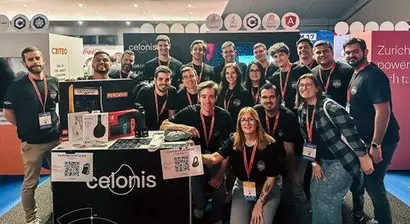
Although Celonis is a German startup, this investment from US-based PE firms helped it become one of the most important startups in both Europe and the US. It continues to receive high praise, such as being named one of the ‘Most Innovative Companies of 2025’ by the New York-based economic-tech media outlet Fast Company & Inc. last week.
SUSE, an open-source operating system company headquartered in Nuremberg, Germany, is called the ‘jewel’ of the European tech industry. As a Linux-based server software company, it went through several changes of ownership in the early 2000s, caught up in M&A activity by large global IT corporations. In 2018, Swedish private equity firm EQT acquired SUSE from US software company Micro Focus for approximately $2.5 billion (3.6 trillion won).
During EQT’s acquisition process, SUSE demanded guarantees for technological independence, the maintenance of its European headquarters, and staff expansion, and EQT fulfilled these promises. They more than doubled SUSE’s R&D headcount and strengthened security certification processes within Europe to release distributions tailored for governments and public institutions. In 2021, they successfully exited by listing SUSE on the Frankfurt Stock Exchange.
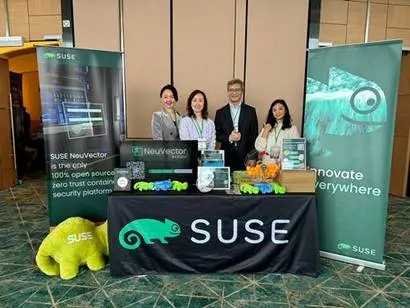
So, is SUSE a good example of a successful private equity acquisition? It is too early to tell. EQT re-acquired SUSE’s remaining shares in August 2023 and pushed for delisting. They conducted a voluntary delisting by purchasing shares from minority shareholders at a high price of about 67%. According to SUSE’s official announcement, the purpose of the delisting was to ‘secure flexibility for long-term innovation in a private state.’ There is a strong commitment to continue growing the company through a private partnership with EQT.
How should we view the case of SUSE? After the EQT acquisition, SUSE showed technically stable growth and was able to maintain its status as an open-source company in Europe. As promised, it was guaranteed independent management and drew attention for a buyout structure that reflected public interest elements, such as ESG considerations. The 2021 IPO was a successful exit by the standards of the time. However, as the stock price languished following the IPO, there is room to argue that the market overestimated SUSE’s growth potential. Critics might also say the re-delisting suggests that the strategy failed in the public market and that the listing was merely for a short-term exit.
However, when viewed as a model that protects technology, employment, and regional industries rather than simply buying a company to ‘sell it high,’ the SUSE case can serve as a good example for contemplating the role of private equity. It is natural for a private equity firm to prioritize profit, as buyouts are, after all, a ‘transaction’ between capital and a company. Nevertheless, one might consider the trading style and philosophy from the perspective of someone nurturing a startup.
In the process of growing startups and building a scale-up ecosystem, can private equity shed the stigma of ‘hit-and-run’ and become a partner for long-term growth? To do so, innovation in business structure and substance—not just financial-centric buyouts—is required simultaneously. There needs to be a responsible design that incorporates public interests like job retention and technology protection alongside transparent exit strategies. Ultimately, while capital is necessary for a company to grow significantly, there must be a strategy that gains public sympathy so the results do not face backlash. It is not just a matter of image loss or public opinion; innovation strategies that resonate are necessary for investment success as well.
The author, Eunseo Lee, majored in law in South Korea and studied theater in Berlin. Based in Berlin, a city of arts and a hub for European startups, she leads 123factory, which connects the startup ecosystems of Korea and Germany, while growing alongside the city.