

[비즈한국] After Part 3 of 'When Life Gives You Tangerines' was released, I found myself weeping uncontrollably again. From the start, the show had high expectations due to its "dream team" of writer, director, and cast. Although I felt a flicker of anxiety—given how many highly anticipated Netflix projects last year fell short—it proved that "greatness remains greatness." The 16-episode series, released in four-episode batches every Friday throughout March, is already being hailed as a "life-changing drama" by many, even before the finale scheduled for March 28.
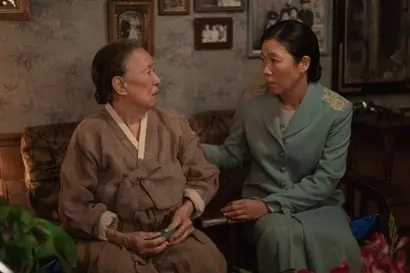
The drama depicts the life of Oh Ae-soon (played by IU and Moon So-ri), a "yomangjin (Jeju dialect for 'smart and spunky') rebel" born on Jeju Island, and her life alongside the "plucky iron-willed" Yang Gwan-sik (Park Bo-gum and Park Hae-joon), unfolding across four seasons. Ae-soon was born in 1951 and Gwan-sik in 1950, making them people in their mid-70s today in 2025—our very own parents or grandparents. Thus, the drama reflects on the lives of parents and children, set against the backdrop of Korea's turbulent modern history, through times that were harsh yet filled with picturesque moments.
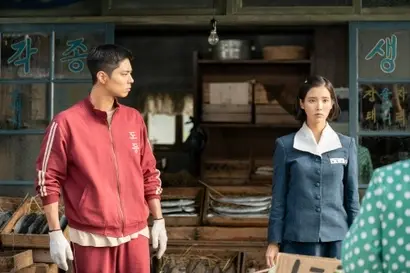
Part 1 (Episodes 1–4) covers their spring-like childhood and the beginning of summer as they become parents. Part 2 (Episodes 5–8) deals with their joys and sorrows as parents and the story of their eldest daughter, Geum-myeong (IU), who has many dreams. Part 3 (Episodes 9–12) follows the episodes surrounding Geum-myeong’s wedding preparations and the story of the eldest son, Eun-myeong (Kang You-seok), who worries his parents compared to the reliable Geum-myeong. By moving between the past and present from the 1950s to the 2000s, the drama weaves together the hearts of parents—which we didn't understand back then—and the hearts of immature children who were only focused on themselves, leaving viewers teary-eyed.
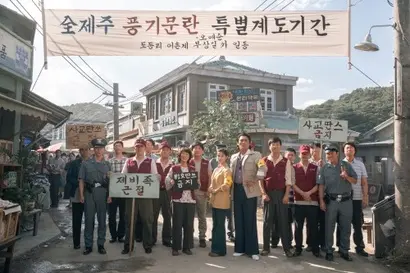
While the main narrative follows Ae-soon, Gwan-sik, and Geum-myeong, 'When Life Gives You Tangerines' is a drama where the stories of diverse characters are etched into the heart. In particular, the appearance of every mother in the world brings tears. Jeon Gwang-rye (Yeom Hye-ran), Ae-soon’s mother, who appears here and there to deliver a powerful resonance, is the protagonist announcing the prologue of the three generations of mothers and daughters: Gwang-rye, Ae-soon, and Geum-myeong. Added to this are Kim Chun-ok (Na Moon-hee), Ae-soon’s grandmother, who asks, "Is it tough?" for a lifetime due to the pain of losing a child; Kwon Gye-ok (Oh Min-ae), Gwan-sik’s mother, who gave Ae-soon a hard time but knew how to silently comfort her after she lost a child; Park Young-ran (Chae Seo-an, Jang Hye-jin), the wife of Bu Sang-gil (Choi Dae-hoon), who raised her stepchildren with care even while dealing with a husband who constantly cheated and abused her; and the mother (Lee Ji-hyun) of Park Chung-seop (Kim Seon-ho), who secretly takes pride in and promotes the movie posters painted by her son even when mistaken for a scalper. Even Yoon Bu-yong (Kang Myung-joo), the mother of Park Young-beom (Lee Jun-young)—the epitome of a rude, mean mother-in-law who places a burden on her child’s heart—has a pitiful side. How distorted, and at the same time how heartbreaking, is the maternal love that tells a son, "You are my pride. You are a masterpiece."
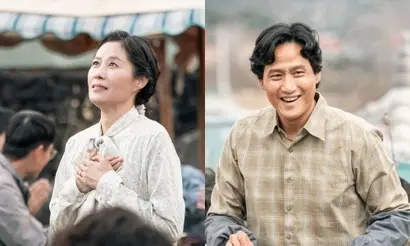
The array of characters, showing how warm and wholesome people can be, is another strength that keeps one watching this drama. There are the three 'Haenyeo aunties'—Chung-soo (Cha Mi-kyung), Choi Yang-im (Lee Soo-mi), and Hong Kyung-ja (Baek Ji-won)—who cared for Ae-soon, the daughter of their fellow Haenyeo Gwang-rye, like a daughter and niece all her life. There's also Na Min-ok (Uhm Ji-won), who gave the 'Do Hee-jung Scholarship' to Ae-soon, who raised her husband's stepchildren; the grandfather (Park Byung-ho) and grandmother (Song Kwang-ja) who owned the Do-dong-ri general store and protected Ae-soon and Gwan-sik’s poverty and pride; and Ae-soon’s uncle Oh Han-mu (Jung Hae-kyun) and his wife, who, despite being stingy enough to begrudge feeding a young Ae-soon yellow croaker, spent their lives caring for his mother and carefully holding ancestral rites for Ae-soon’s father. None of these characters can be brushed aside. The ensemble acting of the actors who brought these characters to life is worthy of endless praise. Even the brief special appearances in single episodes have an incredible presence. The Busan innkeeper (Kang Mal-geum), the jewelry store owner (Shin Mi-young), the real estate agent who danced (Lee Mi-do), the nouveau riche Jenny’s mother (Kim Geum-soon), Eun-myeong’s tongue-tied teacher (Park Jae-yoon), the Cannes Theater owner (Kim Hae-gon)...
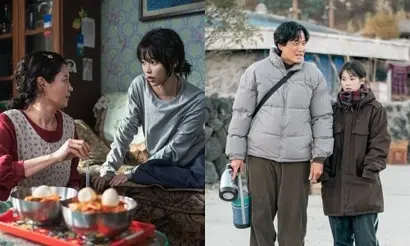
'When Life Gives You Tangerines' is a million light-years away from the dopamine-fueled dramas of late. It depicts parent-child relationships through the four seasons of life's joys and sorrows, but unlike modern dramas, it evokes the hope that "perhaps there is a good ending" even in this harsh, dusty world. In today’s world, the word "kind" has gone beyond meaning "naive" or "ignorant of the world" to being equated with being a "pushover." Yet, this drama throws out the hope that "there should be a good ending." It also shows that this good ending doesn't have to be material success or something recognized by others. The scene where Ae-soon says to Geum-myeong, who complains to her mother about why she lived so poorly and with such hardship, "My life was also quite bright in its own way. There were so many picturesque moments," is worth chewing over for a long time.
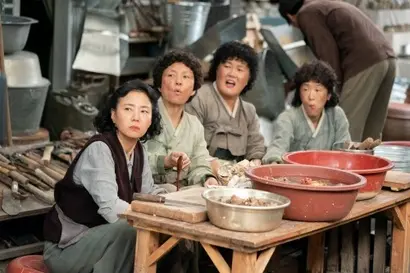
Writer Im Sang-choon's jewel-like lines and narration strike home, and it seems many are already transcribing the famous lines, with requests for the script book flooding social media. Personally, a short but impactful phrase that struck me was when middle-aged Ae-soon asks Auntie Chung-soo, "When do I fully grow up?" and she replies, "I haven't grown up fully yet either." It was enough to sound an alarm for me, who was already slouching like an old person who has lived through all of life. Oh, I still have a long way to grow. How stinging was the narration, "I wrote love letters to others, but treated my most grateful benefactors like a scribble pad." Many people must have seen glimpses of their own selves being annoyed with their mother, who still tries to feed them something and is curious about their daily life whenever they visit home.
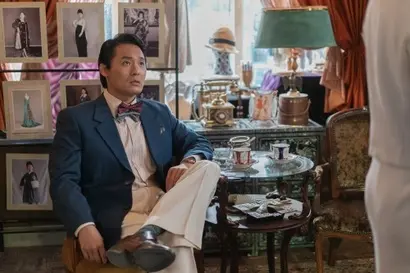
The title 'When Life Gives You Tangerines' (Jeju dialect for "You have worked very hard") perfectly encapsulates the drama's content. It can also be read as "If you live, you will live," the words Gwang-rye used to encourage young Ae-soon. The English title is the same. The English title 'When Life Gives You Tangerines,' inspired by the famous quote from American philosopher Elbert Hubbard, "When Life Gives You Lemons, Make Lemonade," well expresses the meaning of overcoming adversity and hardship in life with a positive mind.
How long and short is life? How sorrowful and brilliant is it? How loose and tight are the ties that get tangled within it? It is not easy to have the experience of reflecting on such a myriad of emotions while watching a drama. This is why I feel anxious that this drama will eventually end as I wait for the final Part 4 of 'When Life Gives You Tangerines.' For those saving it to binge-watch, make sure to stock up on tissues. It wasn't for nothing that Yuhan-Kimberly collaborated with the drama to release a limited edition of 'Kleenex Moisturizing Essence Lotion' tissues.
Who is the writer Jung Soo-jin?
She has worked for several magazines, covering and writing about movies, travel, and pop culture. She doesn't want to fall behind on trends, but she has become an "old soul" who predicts obvious clichés in the next scene while watching the latest dramas. Drifting through the vast world of OTT, she is trying to regain her lost edge, and her current wish is for an integrated OTT subscription plan.