

[비즈한국] The Seoul Metropolitan Government has reversed its decision to lift Land Transaction Permit Zone designations after just one month. The city has decided to expand the designated zones to not only Jamsil, Samseong, Daechi, and Cheongdam-dong, which were originally slated for de-designation, but also to the entirety of their respective districts—Gangnam, Seocho, and Songpa—as well as Yongsan-gu. This decision stemmed from the judgment that apartment transactions have been overheating, particularly in the formerly de-designated areas and along the Han River; however, the policy reversal, occurring just a month later, has plunged the market into chaos.
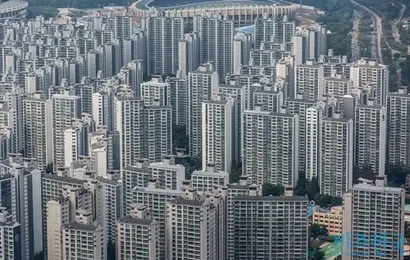
Expansion of Land Transaction Permit Zones Just One Month After De-designation
Previously, on the 13th of last month, the Seoul Metropolitan Government lifted Land Transaction Permit Zone designations in the Gangnam area. This affected 291 out of 305 apartment complexes in Daechi, Samseong, and Cheongdam-dong in Gangnam-gu and Jamsil-dong in Songpa-gu, areas near the International Business District. Fourteen apartment complexes currently undergoing reconstruction in these areas were excluded from the de-designation due to potential speculative concerns. On that day, the city also immediately lifted Land Transaction Permit Zone designations for six projects that had already received union establishment approval out of 123 reconstruction and redevelopment projects under the Rapid Integrated Planning initiative.
Following the lifting of these restrictions, transaction volumes and housing prices surged, particularly in the affected areas. BizHankook analyzed apartment sales in the formerly de-designated areas of Samseong, Daechi, Cheongdam, and Jamsil-dong over the 30-day period from the 13th of last month to the 14th of this month (based on transactions reported by the 16th). The analysis revealed 162 apartment sales, an increase of 85 (110%) compared to the 30 days prior to the de-designation. Transactions that hit new record highs for the same unit size in the same complex accounted for 90 cases, or 49% of the total. According to Korea Real Estate Board statistics, Seoul apartment prices rose by 0.25% in the third week of March, extending their upward trend for four consecutive weeks.
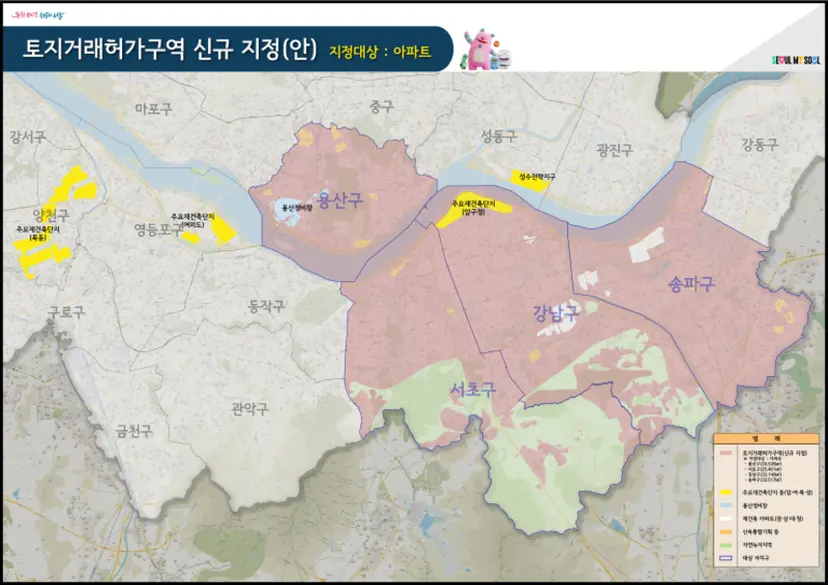
Ultimately, the decision to lift the permit zones was reversed after only one month. The Ministry of Land, Infrastructure and Transport and the Seoul Metropolitan Government announced on the 19th that, as part of measures to stabilize the housing market, they would expand Land Transaction Permit Zones to cover all apartments in Gangnam-gu, Seocho-gu, Songpa-gu, and Yongsan-gu (110.65㎢) for six months, starting from the 24th of this month until September 30th. This move not only includes Jamsil, Samseong, Daechi, and Cheongdam-dong—which were de-designated a month ago—but also extends the scope to cover the entirety of those districts and the neighboring Yongsan-gu.
The Seoul Metropolitan Government explained the background of the designation, stating, "Since the lifting of the Land Transaction Permit Zones in February, we have closely monitored market conditions, as a temporary price increase was anticipated. However, we recently detected signs of overheating, such as a sharp rise in apartment transaction volumes in the de-designated areas and along the Han River. The city views these as abnormal warning signs and determined that there was a high possibility that the increased transaction volume and price hikes in the de-designated areas could lead to speculative trading."
"Policy Changed at the Drop of a Hat": Market in Chaos, Balloon Effect Fears Grow
The market has been thrown into confusion by the flip-flopping real estate policy. A real estate agent operating in Samseong-dong, Gangnam-gu, said, "A client who signed a contract to buy an apartment after the zones were lifted called me, distressed and saying they 'can't sleep because they feel like they bought at the peak' following the re-designation announcement. Since the deposit alone is nearly 300 to 400 million won, they cannot even consider canceling the contract. I cannot understand how a real estate policy that impacts such significant life decisions can be changed at the drop of a hat."
A real estate agent in Jamsil-dong, Songpa-gu, reported, "In the two days since the 19th, when the designation was announced, four properties I held with a dedicated area of 84㎡ lowered their asking prices by about 200 million won (7%). At a nearby agency, a property priced 100 million won lower was sold on the day of the announcement." They added, "One client who wanted to move to a larger unit signed a purchase contract before selling their current home, and now they are in a very desperate situation through the weekend because their existing property isn't selling."
An agent in Seocho-dong, Seocho-gu, added, "With the new designation as a Land Transaction Permit Zone, it’s been total chaos. We had two requests to sell homes just on the day of the announcement, even before the effective date. I think people are rushing to list their homes because if a tenant refuses to vacate, they won't be able to sell the house."
Kim In-man, Director of the Kim In-man Real Estate Economic Research Institute, pointed out, "The market will remain in turmoil until the 24th, the effective date of the designation. Properties bundled with 'jeonse' (long-term deposit rentals) will see asking prices drop as sellers rush to grab an exit opportunity before the deadline. After the designation, inventory in the area will dwindle, raising scarcity value and leading to occasional record-high price reports." He added, "Mapo, Seongdong, and Dongjak districts are already buzzing with expectations of price hikes. Above all, I am concerned about a 'balloon effect,' where price increases spill over into areas outside the designated permit zones. The Seoul Metropolitan Government has made a blunder that destroys trust in its policy while leaving only side effects."
The Land Transaction Permit system requires authorization from the head of the local government when trading land above a certain size in areas where speculative trading is prevalent or land prices are rising rapidly, or where there is a risk thereof. Because only sales intended for actual residence of two years or more are permitted for housing, 'gap investments'—buying a home while keeping it rented out—are effectively impossible. Currently, Seoul's Land Transaction Permit Zones cover a total of 52.79㎢ (9% of the total area), including 14 apartment complexes in the International Business District (1.36㎢) and major reconstruction/redevelopment sites (4.58㎢) in Apgujeong-dong (Gangnam-gu), Yeouido-dong (Yeongdeungpo-gu), Mok-dong (Yangcheon-gu), and Seongsu-dong (Seongdong-gu).