

[비즈한국] Interest from foreign customers in the KF-21 Block 1 is rising sharply. Compared to last year, when expectations were dampened by the reduction of the initial production volume from 40 to 20 units, the situation has reversed in just one year. There are even suggestions that we must now worry about balancing supply and demand. What are the countermeasures for this?
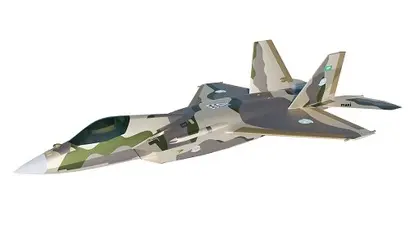
The original plan for the KF-21 was to mass-produce 40 aircraft with Initial Operational Capability (Block 1) starting in 2026, and 80 aircraft with Full Operational Capability (Block 2) starting in 2028, for a total of 120 units to be deployed to our Air Force by 2032. However, due to a review of economic viability and project feasibility by the Korea Institute for Defense Analyses (KIDA), the initial volume was reduced; a contract for 20 units was signed last year, and an additional 20 units are scheduled to be contracted this year. The main contract for Block 2 mass production has not yet been signed. The original plan by the Defense Acquisition Program Administration (DAPA) and the manufacturer, Korea Aerospace 047810 Industries (KAI), was to begin full-scale overseas sales once Block 2 entered production in 2028, with active exports pursued after the Air Force's delivery orders were completed in 2032. Indonesia also planned to license-produce 48 units on a similar schedule to Korea and participate in producing units for future export. However, this plan is not proceeding smoothly.
Furthermore, the establishment of a license production line in Indonesia remains uncertain. While the issue of cost-sharing is being resolved, the installation of license production facilities, preparations for technology transfer, and financing for equipment construction and procurement remain unclear. A few months ago, there was even a situation where employees at PT DI (Indonesian Aerospace), which is set to license-produce the KF-21, were not paid their salaries, forcing the Indonesian president to personally promise payment.
Amidst this, it is noteworthy that international interest in the KF-21 is growing faster than expected. Generally, it is common knowledge that fighter jet exports occur only after the developing nation has completed field deployment and verified performance. A classic example is the French Rafale fighter, which signed its first export contract in 2015, 10 years after its combat deployment. However, with the rapid surge in demand for fighter jets worldwide due to changes in the international landscape, the possibility of accelerating the KF-21's export schedule has increased. The potential reelection of former President Trump, the war in Ukraine, and the Israel-Hamas war are intensifying global competition to secure fighter aircraft. As a result, some countries may request to introduce the KF-21 as early as 2027, the same timeline as the South Korean Air Force's initial receiving date.
The problem is that if overseas exports are accelerated, there is a possibility of a power vacuum in our own Air Force. If the original plan had held, 120 KF-21s would be deployed by 2032, but an accelerated export schedule could make the extended operation of aging KF-5E/F fighters inevitable. Conversely, we cannot afford to miss the opportunity for the largest fighter jet export in the history of the South Korean defense industry.
To resolve this, strategic alternatives are needed to prepare for early exports. The first option is to produce the FA-50PL, adopted by the Polish Air Force, for our own Air Force as well to compensate for the power gap. The FA-50PL can be equipped with an AESA radar and AIM-120C AMRAAM medium-range air-to-air missiles, allowing it to sufficiently perform air patrol and interception missions. Later, once KF-21 production facilities have stabilized, the FA-50PL units could be sold as second-hand aircraft, encouraging additional purchases from existing FA-50 buyers like Poland and Malaysia. The second option is to strengthen negotiations with Indonesia to expedite the license production of the KF-21. Indonesia's interest in license-producing the KF-21 lies not only in securing air power but also in fostering its own defense industry. Therefore, a strategy to utilize the Indonesian production line when exporting to Islamic countries could be considered. This would require the stabilization of PT DI’s management and the fulfillment of the commitment to purchase 48 units and the payment of production costs.
The final option is to consider deploying the six currently developed KF-21 prototypes into combat missions. Usually, prototypes have lower compatibility because their designs differ from mass-produced units, but the KF-21 has gone through a relatively stable development process, making it easier to deploy in combat missions. As planned, the prototypes are scheduled to be operated by KAI for test and evaluation, but if the Air Force were to utilize at least some of them, it could minimize the power vacuum caused by the shortage of initial production units.
Weapon exports are a unique product that can be problematic if they don't sell well, but also a cause for concern if they sell too well. The successful overseas sale of the KF-21 can provide various benefits not only for the advancement of the South Korean defense industry but also for our military. Therefore, it is time to develop creative solutions that allow the KF-21 to establish itself stably in the global market while minimizing any power vacuum caused by early exports.