

[비즈한국] #1 A unit with a private area of 84.99㎡ at Raemian Daechi Palace in Daechi-dong, Gangnam-gu, Seoul, was sold for 4 billion won on the 13th of last month—an increase of 490 million won (14%) from the previous record high of 3.51 billion won set in September last year, prior to the lifting of land transaction permit requirements.
2 A unit of 84.236㎡ at Hillstate 1st in Samseong-dong, Gangnam-gu, Seoul, was sold for 3.1 billion won on the 6th of this month, rising 220 million won (8%) from its previous record high of 2.88 billion won (December last year) before the permit requirements were lifted.
3 A unit with a private area of 82.365㎡ at Cheongdam Xi in Cheongdam-dong, Gangnam-gu, Seoul, finished a sale for 3.75 billion won on the 19th of last month, up 460 million won (14%) from the previous high of 3.29 billion won (June last year) recorded before the area was deregulated.
4 A unit with a private area of 84.82㎡ at Lake Palace in Jamsil-dong, Songpa-gu, Seoul, changed hands for 2.74 billion won on the 1st of this month, a jump of 140 million won (5%) from the previous high of 2.6 billion won (January this year) before the land transaction restrictions were removed.
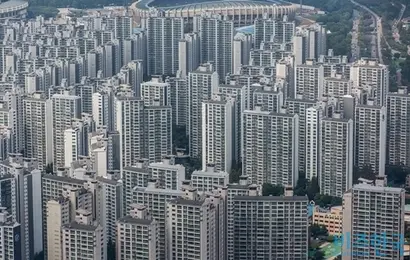
These are examples of recent record-high prices for apartments in Seoul's Gangnam area following the lifting of land transaction permit requirements. BizHankook's investigation confirmed that apartment prices in Daechi, Samseong, and Cheongdam-dong (Gangnam-gu) and Jamsil-dong (Songpa-gu)—areas near the International Exchange Complex—rose by an average of about 13% just one month after the Seoul Metropolitan Government lifted the land transaction permit zone designation. Transactions that broke the previous record high prices before the deregulation accounted for 80 cases, representing 49% of all transactions.
The Seoul Metropolitan Government recently issued an explanatory statement regarding the sharp rise in apartment prices following the lifting of permit requirements, claiming lower transaction volume and price increase rates based on data that included 14 apartment complexes that remained under permit requirements. This has led to criticism regarding the transparency of information disclosure and the Seoul government's grasp of the reality when deciding on land transaction permit designations and their removal.
The Seoul Metropolitan Government lifted land transaction permit requirements in the Gangnam area on the 13th of last month. The measure affected 291 out of 305 apartment complexes in the Daechi, Samseong, Cheongdam, and Jamsil areas near the International Exchange Complex. 14 apartment complexes in these areas currently undergoing reconstruction were excluded from the deregulation due to concerns over potential speculation. On the same day, the Seoul Metropolitan Government also immediately lifted permit requirements for 6 areas out of 123 locations involved in "Rapid Integrated Planning" reconstruction and redevelopment projects that had already completed the establishment of a housing association.
To determine the impact of the Seoul government's lifting of permit requirements on apartment prices, BizHankook conducted a full analysis of the Ministry of Land, Infrastructure and Transport’s actual transaction data (as of the 16th) for 30 days, from the 13th of last month to the 14th of this month. The results show that during this period, there were 162 apartment sales transactions in the deregulated areas of Samseong, Daechi, Cheongdam, and Jamsil—an increase of 85 cases (110%) compared to the 30 days prior to the lifting (January 14th to February 12th). This calculation excludes the 14 reconstruction apartment complexes that were omitted from the deregulation.
Apartment transaction prices in the deregulated areas of Samseong, Daechi, Cheongdam, and Jamsil rose by 13% in just one month. The average transaction price for the 30 days following the lifting was 2.75037 billion won, up about 300 million won (13%) from the 2.44158 billion won average during the 30 days prior to the lifting. Transactions breaking the previous record high for the same complex and unit size accounted for 80 cases, or 49% of the total. There were 76 cases where the transaction price was lower than the previous high, 5 cases where it was the same, and 1 case that was an initial transaction with no prior history.
Critics also suggest that the Seoul Metropolitan Government understated the impact of lifting the land transaction permit zones. On the 16th, the Seoul government released an explanatory document titled "Regarding the surge in apartment prices after the lifting of land transaction permit zones," analyzing transaction trends in Jamsil, Samseong, Daechi, and Cheongdam while including the 14 complexes that remained restricted. The document stated that the transaction volume in the area increased by 77 cases (72%) to 184 in the 30 days following the lifting, with the average price rising 3.7% from 2.72 billion won to 2.82 billion won. However, this data was diluted by the inclusion of transactions from the restricted complexes.
In response, an official from the Seoul Metropolitan Government's Land Management Division stated, "We are internally monitoring and analyzing transaction volume and price fluctuations in the deregulated zones on a daily basis. The transaction price per square meter in the deregulated zones rose by about 5%, from 30.17 million won to 31.6 million won, in the 30 days before and after the lifting," adding, "As there is room for misunderstanding that we are downplaying the impact of rising home prices, we will include separate real transaction analysis data limited to the deregulated areas in future announcements."
The land transaction permit system is a measure that requires approval from the head of a local government when trading land of a certain size in areas where speculative transactions are prevalent, land prices are rising rapidly, or there is a concern for such issues. Since houses are only allowed to be bought for the purpose of actual residence for at least two years, "gap investment"—buying a house while burdened with a lease or deposit (jeonse)—is practically impossible. Currently, Seoul's land transaction permit zones total 52.79㎢ (9% of the total area), including 14 apartment complexes (1.36㎢) in the International Exchange Complex and major reconstruction and redevelopment complexes (4.58㎢) in Apgujeong-dong, Yeouido-dong, Mok-dong, and Seongsu-dong.