

[비즈한국] It has been confirmed that the 'shoe giant' Changshin Group has merged its mold manufacturing subsidiary, Changshin Precision, into Changshin INC. Changshin INC is a global footwear manufacturing company and the headquarters of Changshin Group, holding 100% of Changshin Precision's shares. As both companies have recently experienced a decline in performance, the motive behind the merger is drawing attention.
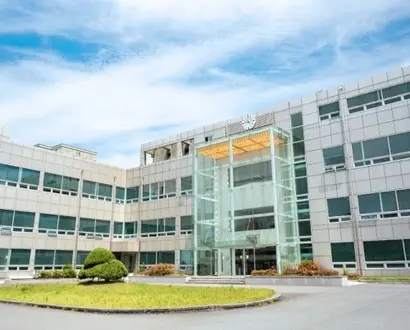
According to the corporate registry, Changshin INC absorbed and merged with Changshin Precision on December 27, 2024. Following the merger, Changshin Precision was dissolved, and Kim Sae-bom, CEO of Changshin Precision, moved to the position of CEO of Seojung001490 on January 1, 2025. Seojung's largest shareholder is Jung Dong-heun, an executive director and son of Changshin Group Chairman Jung Hwan-il. After the merger, employees of Changshin Precision were reassigned to either Changshin INC or Seojung.
Changshin Group is a mid-sized company in Busan engaged in the shoe manufacturing business. Changshin INC, as the group's headquarters, receives orders from famous global footwear brands and delivers products through its overseas subsidiaries. In 1997, Changshin INC became the first in the footwear industry to adopt the Toyota Production System (TPS). TPS, also known as lean manufacturing, is a method of maximizing production efficiency while maintaining only the necessary costs and equipment. Through this method, Changshin INC surpassed 1 trillion won in annual sales and established itself as the second-largest company in the industry.
Looking at the ownership structure of Changshin Group, Changshin INC acts as the headquarters, with Changshin Precision and overseas production subsidiaries underneath. As of the end of 2023, Changshin INC's subsidiaries include Changshin Precision, Changshin Precision Vietnam, Changshin Precision Indonesia, Qingdao Changshin Hyup Co., Ltd., Changshin Vietnam, Changshin Indonesia, Changshin Rexajaya, and Changshin Dongnai. Changshin Precision is its only domestic South Korean entity.
Established in February 2001, Changshin Precision is a company that produces and sells shoe molds and plastic injection molds; it was a wholly-owned subsidiary of Changshin INC. It operates factories in Vietnam and Indonesia and has been considered a core affiliate of Changshin INC.
Additionally, there is Seojung, a shoe material purchasing agency company owned by Chairman Jung’s children. According to the 2023 audit report, Seojung holds a 46.18% stake (including preferred shares) in Changshin INC. The largest shareholder of Seojung is executive director Jung Dong-heun, Chairman Jung Hwan-il's son, who holds a 65.82% stake.
Seojung has maintained a close relationship with Changshin Precision. According to the related party transaction details in Changshin Precision's 2023 audit report, sales of approximately 8.6 billion won were generated from Seojung. This is higher than the sales generated from its parent company, Changshin INC (7.6 billion won). Changshin Precision holds approximately 1.5 billion won in trade receivables from Seojung.
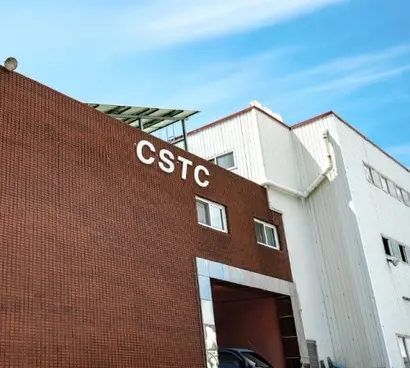
Typically, when companies engage in the merger of subsidiaries or affiliates, it is for purposes such as management efficiency, strengthening business competitiveness, restructuring, or cost reduction. It is also used to improve financial indicators for entities with poor performance. Kim Sung-gyu, an expert in corporate law at Onbeop Law Office, explained, "When merging similar manufacturing businesses, companies can achieve cost-saving effects through vertical integration (internally performing integrated stages of product production, sales, and distribution)."
In the case of Changshin Group, it is presumed that they aimed for financial improvement and synergy creation. This is because the group’s performance has recently deteriorated. Changshin INC's consolidated revenue was 1.9481 trillion won in 2023, a 12.3% decrease from the previous year (2.2226 trillion won), and its operating profit was 129.7 billion won, a 35.3% decrease from the previous year (200.4 billion won).
Excluding subsidiaries, Changshin INC's performance decreased from 2.0741 trillion won in revenue in 2022 to 1.8310 trillion won in 2023, while operating profit nearly halved from 90.9 billion won to 49.2 billion won. During the same period, net income turned into a loss (from 75.8 billion won to -35.7 billion won). Changshin Precision also saw its revenue and operating profit plummet from 27.9 billion won and 3.6 billion won in 2022, respectively, to 19.9 billion won and 200 million won in 2023.
Changshin Group also seems to have sought business diversification. Changshin Precision, a mold manufacturing and sales company, added athletic and sports equipment wholesale/retail, product brokerage, and general merchandise wholesale to its business objectives in 2023. Changshin INC also added information and communication, IT outsourcing, management consulting, and, in 2023, R&D related to shoe manufacturing technology. Following the merger with Changshin Precision, the company is now also able to engage in mold development, manufacturing and sales, and wholesale of mechanical equipment.
Meanwhile, Changshin Group was fined 38.5 billion won by the Fair Trade Commission (FTC) in 2020 after it was found to have provided unfair support to Seojung using its overseas subsidiaries. At the time, the FTC pointed out that by providing excessive financial support to Seojung, the company run by Chairman Jung's children, the overseas production subsidiaries suffered from difficulties such as worsening management conditions.
Furthermore, the FTC viewed that the unfair support strengthened Seojung's monopolistic position compared to other small-scale businesses. There were also concerns that Seojung, which holds a large volume of Changshin INC shares, could be used as a vehicle for management succession through the merger. Although Changshin Group fought the FTC's decision through administrative litigation, claiming it was unjust, the courts ruled in favor of the FTC through the third trial.
Regarding this merger, Changshin Group responded, "It was intended to strengthen the company's core competencies," adding, "Based on the technology and resources secured through the integration, we will expand our technical sales capabilities in the footwear manufacturing sector, actively seek opportunities for business expansion, achieve sustainable growth, and enhance corporate value."