

[비즈한국] As of 2025, the South Korean real estate market stands at the center of turbulence and chaos. While trading volume is surging and prices are rising, primarily in Seoul and some parts of the metropolitan area, other regions are seeing opposite trends, such as an increase in unsold properties and deepening polarization. Consequently, the likelihood of government regulations is rising, fueling confusion and anxiety among investors.
The Current State of the Real Estate Market and Polarization
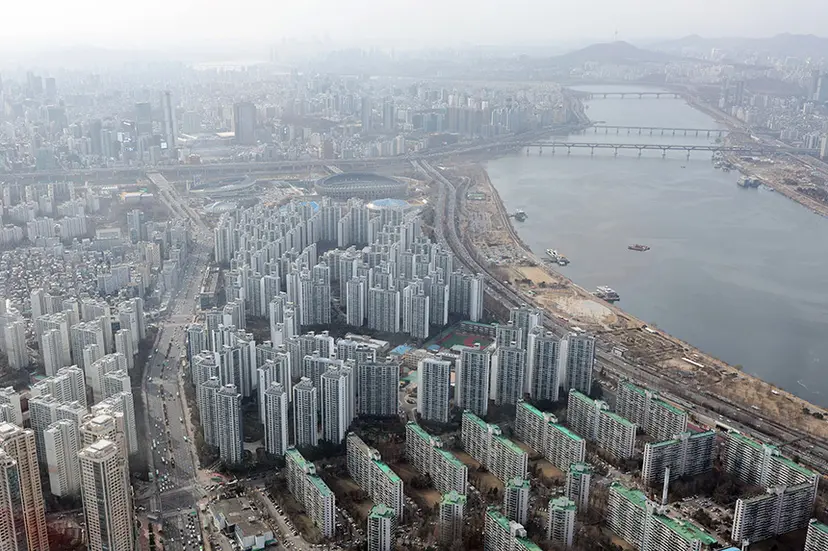
The real estate market is currently showing clear signs of polarization. In high-end areas such as Gangnam, Seocho, and Songpa in Seoul, properties are being sold off rapidly, putting upward pressure on prices. In particular, major complexes in the three Gangnam districts are seeing asking prices jump by 100 to 200 million won each time a property is sold, and this phenomenon is spreading to surrounding areas such as Jamsil, Yeouido, and Mok-dong.
Conversely, the outskirts of Gyeonggi-do and small to medium-sized provincial cities are facing serious problems with unsold properties. Regions where investment sentiment has withered due to oversupply have been unable to shake off a downward trend. Because of this extreme polarization, investors are finding it very difficult to decide where and how to invest.
Surging Trading Volume and the Potential for Loan Regulations
Recently, apartment trading volume in Seoul has been surging. Seoul apartment transactions are estimated to be approximately 5,600 in February 2025 and 8,500 in March. This is a result of sustained low-interest rates drawing liquidity into the market, coupled with a lack of properties in some areas and the lifting of land transaction permit requirements.
In particular, areas like Jamsil, where the land transaction permit requirements were lifted, are seeing rapid price spikes, which is significantly increasing the likelihood of government intervention. The government cannot ignore such market overheating, and there is a strong possibility of loan regulations being introduced, specifically to curb the rise in household debt.
While the increase in household loans was about 5 trillion won in February, it is projected to expand to 7–8 trillion won by the end of March, making it highly likely that the government will prepare immediate countermeasures. However, rather than comprehensive regulations, it is expected that localized and selective regulations centered on specific areas will be implemented.
Learning Market Trends from Past Cases
The real estate market has repeated similar patterns over the past few years. In particular, the market recovery that began in high-end areas centered on Seoul's three Gangnam districts starting last May gradually spread, but after August, the tightening of loan regulations caused non-Gangnam areas to turn sharply downward. Later, the decline stopped, and price recovery reappeared, again centered on Gangnam.
These cases offer important lessons for the current market. When strong regulations pressure the market, a structure is eventually formed where only stable, high-end areas survive. Therefore, investment strategies should be planned around regions with guaranteed long-term value.
Lifting of Land Transaction Permits: Opportunity or Risk?
Following the lifting of land transaction permit requirements in Seoul early this year, the market saw a surge. The rapid price increase began in Jamsil and is having a ripple effect in areas outside of Gangnam. In particular, Jamsil led the price hikes as properties were sold off quickly.
However, an overheated market increases the possibility of triggering further government regulations. The market is already bracing for regulations, and in a time where loan eligibility can change overnight, quick judgment and action are essential.
Market Outlook for Major Declining Regions such as Songdo and Sejong
On the other hand, regions like Songdo and Sejong, which saw significant growth followed by a decline, are currently maintaining a relatively stable state. However, if interest rate cuts become full-scale, there is a high possibility that the market will become active again. In particular, as the volume of new move-ins is expected to drop significantly for two years starting from the middle of this year, there is a high probability of rising Jeonse (lump-sum housing lease) prices and, consequently, rising purchase prices. Additionally, Songdo remains reasonably priced compared to Seoul and the metropolitan area, making it an attractive long-term investment.
Investment Strategy and Precautions
One should be cautious about mindless chasing of the market. However, remembering that a crisis can be an opportunity, a strategic approach focusing on new apartments or undervalued properties in excellent locations is necessary.
Investors should approach the market by thoroughly analyzing future development incentives, regional strengths, and the supply and demand of Jeonse, alongside price comparisons. Rather than aiming for short-term capital gains, one should choose regions that possess both residential value and growth potential from a mid-to-long-term perspective.
Investment Strategy and Precautions at This Point
At a time when government regulations are expected, it is advantageous for investors requiring loans to complete their applications preemptively. This is because loan conditions can become drastically stricter once regulations are implemented.
During periods of concentrated regulation, investment stability increases in high-end areas. Conversely, investors should be careful as mid-to-lower-tier areas may see a significant contraction in liquidity due to regulatory impact. Investors need a strategy that keeps a close eye on the possibility of regulations while selecting areas within the high-end tier that have not yet risen much in price or have high potential for redevelopment and reconstruction.
In conclusion, the South Korean real estate market in 2025 exhibits a duality where crises and opportunities coexist. While price increases are notable alongside rising transaction volumes, uncertainty persists due to the potential for government regulation and regional polarization.
In this situation, it is crucial for investors to possess swift and accurate market analysis, region-specific differentiation strategies, and the ability to respond preemptively to loan regulations. In particular, a selective and strategic approach focusing on high-end areas with high long-term value and regions with development incentives is required.
The essence of investment lies in thorough analysis and cautious execution. Only those who closely observe market variables such as government regulatory moves, regional supply and demand, and changes in interest and loan conditions, and who apply principled strategies without wavering amidst market changes, will be able to achieve successful results. Through such thorough and wise investment, one can seize upcoming opportunities and successfully overcome crises.
Kim Hak-ryul, head of the Smart Tube Real Estate Research Institute and famous by his pen name "Pasyong," previously served as a team leader at the Korea Gallup Real Estate Research Division. He operates and hosts the Naver blog "Pasyong's World Exploration" and the YouTube channel "StuTV." His books include 'The Power of Gyeonggi Real Estate (2024),' 'The Absolute Principles of Seoul Real Estate (2023),' 'The Future of Incheon Real Estate (2022),' 'Kim Hak-ryul’s Absolute Principles of Real Estate Investment (2022),' 'Future Map of South Korean Real Estate (2021),' 'From Now On, Only Places That Will Rise, Will Rise (2020),' and 'User Manual for South Korean Real Estate (2020).'