

[비즈한국] Honestly, it is a bit difficult to watch the Netflix series 'Zero Day' with a calm mind. At least until a few months ago, I would have watched 'Zero Day' and thought, "Oh, how dramatic," but as you know, after experiencing hours of martial law, Koreans can now watch such content and think, "Oh, how realistic."
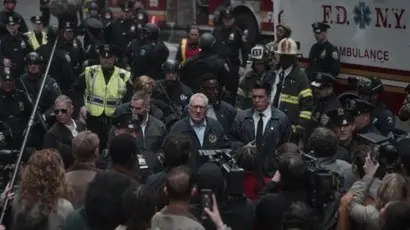
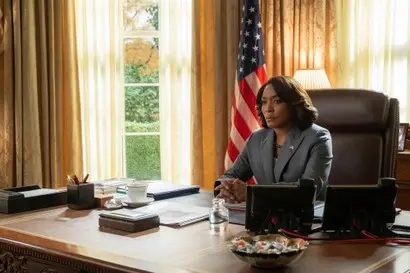
One day, an unidentified cyber-terror attack cuts off electricity and communication across the entire United States for just one minute. That one-minute attack paralyzes every system, leaving 3,402 people dead. Then, a message is delivered to every citizen: “This will happen again.” With no idea who carried out this cyber terror, why, or with what intention, society is plunged into anxiety and chaos. Consequently, incumbent President Evelyn Mitchell (Angela Bassett) creates the 'Zero Day Commission,' granting it extra-constitutional powers to uncover the truth, and asks George Mullen (Robert De Niro), a respected former president and capable former prosecutor, to head the committee.
'Zero Day' depicts the process of former President Mullen encountering massive lies and conspiracies while uncovering the mastermind behind the cyber terror. At first, everyone pointed fingers at Russia, but it turns out the enemy is not outside, but inside. While it is a curious and important point to know who committed the terror and for what purpose, what is more interesting is the fact that the person tasked with finding the truth is former President Mullen, not the incumbent president. President Mitchell’s choice of Mullen was clever. While the truth must be uncovered somehow, the 'Zero Day Commission,' which can arrest anyone without a warrant by wielding extra-constitutional powers, is a burdensome entity—much like a poisoned chalice.
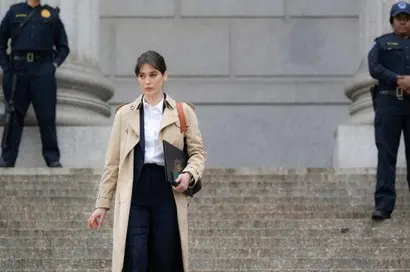
Mullen, who enjoyed bipartisan support while in office and still holds the public's trust even after retiring by declining reelection, accepts this poisoned chalice after much deliberation. At first, Mullen tries not to abuse the commission’s extra-constitutional powers, but under pressure from the government and running out of time, he is swayed by the agitation of Evan Green (Dan Stevens), a famous political talk show host hostile to him, and begins to exercise his powers, leading to aggressive investigations. Public opinion shifts drastically in just a few days, and Mullen is cast as a fascist oppressing the daily lives of ordinary citizens. The fact that the National Assembly forms an oversight committee to check the 'Zero Day Commission' and appoints Mullen’s daughter, Congresswoman Alexandra Mullen (Lizzy Caplan), as its chair is another factor tightening the noose around his neck.
Moreover, the troubles plaguing Mullen are not just external. Unbeknownst to others, Mullen is experiencing symptoms of dementia, such as auditory and visual hallucinations. This seems linked to the guilt he feels over his son's death from drug use, which also explains why he frequently recalls the lyrics to the Sex Pistols' song "Who Killed Bambi?", which was playing when his son passed away. The drama captures the tension by showing Mullen suffering from these hallucinations while leading the investigation, questioning whether he can truly dig up the truth.

In fact, the six-part series 'Zero Day' is not particularly tight in its narrative. It is disappointing that several tension-building elements end up as vague MacGuffins, and the unrefined narrative flow in the beginning can feel like an entry barrier. Nevertheless, the power that keeps you watching this drama lies in the immersive performance of a legendary actor like Robert De Niro and the chaotic reality that invites comparisons to the show. The drama has plenty of food for thought, such as the dangers of extra-constitutional power, the terror of misplaced beliefs or "patriotism" in the name of righteous authority, the ease with which public opinion can be manipulated, and the risks of technology—including advanced deepfake tech that can deceive even experts and smartphone apps that can widely manipulate the populace.
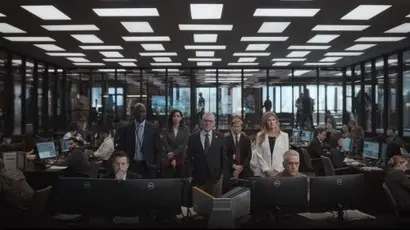
By the end of the drama, one feels disillusioned by the politicians who seek to bury the truth for political gain, even after it is revealed that the cyber terror was carried out as a warning to fix a divided nation. Eventually, Mullen detonates a truth bomb, but in reality, it is uncertain whether the aftermath would be handled justly and legally. This is true not only for the U.S., where Donald Trump and Elon Musk are showing a bizarre collaboration, but also for South Korea, where members of the National Assembly have submitted petitions to the Constitutional Court stating, "Even if martial law constitutes a violation of the Constitution or law, please dismiss the impeachment, considering the severity of legislative dictatorship." It is a situation where one cannot readily assert the aftermath of 'Zero Day'.
Who killed Bambi? No, who is killing democracy? Ultimately, this is the core of the question posed by 'Zero Day.' There are many people who feel beyond disillusioned to the point of despair while watching political news. If you get angry while watching it, you might as well watch 'Zero Day.' At least you can appreciate the legendary acting of Robert De Niro there. You can also experience, if only for a moment, the fantasy of a former president who was a capable prosecutor and remains supported even after retirement.

Who is the writer, Jung Soo-jin?
Having worked at various magazines, I have covered and written about film, travel, and pop culture. I don't want to fall behind on trends, but I've become an old-school person who predicts only obvious clichés in the next scenes while watching the latest dramas. I am currently drifting through the vast world of OTT, trying to regain my lost instincts, and my current wish is for a unified OTT subscription plan.