

[비즈한국] Starting with LG Uplus032640, the three major telecommunications companies will hold their shareholders' meetings sequentially starting at the end of this month. As all three telcos are pushing to pivot into artificial intelligence (AI) enterprises, their board compositions reflect a distinct strategy aimed at strengthening their AI capabilities.
SK Telecom017670 and LG Uplus are adding key executives from their group holding companies to their boards. This move is interpreted as an effort to concentrate on expanding investments in new businesses and enhancing operational efficiency. KT030200, where half of the outside directors' terms are expiring, has decided to reappoint all of them. While there is room for controversy regarding independence—such as maintaining the status quo for personnel associated with Hyundai Motor Company005380, the largest shareholder—the company appears to be prioritizing stability over change. Amidst a "post-telecom" climate and large-scale AI investment pledges by the industry, attention is focused on whether each company’s growth strategy will prove effective.
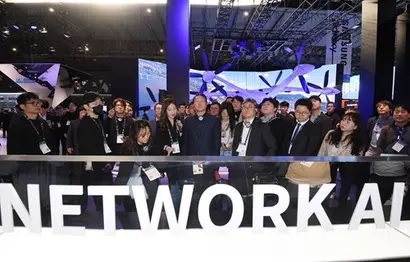
Group-Level Strategists from SK and LG "Mobilize"
The shareholders' meetings for the three telcos kick off on the 25th with LG Uplus. SK Telecom follows a day later on the 26th, and KT will hold its meeting on the 31st at their respective headquarters. The core agenda for this year's meetings across all three companies is undoubtedly "AI investment."
SK Telecom and LG Uplus are appointing key group strategists with experience in large-scale investments. SK Telecom is nominating Kang Dong-soo, head of SK's Portfolio Management (PM) division, as a new non-executive director. Previously, Kang served as head of the Solution & Platform Promotion Group at SK Energy and head of the Portfolio division at SK Innovation. SK Telecom explained, "Kang has a deep understanding of group business strategy, planning, and finance. We recommended him because we believe he will contribute to laying the foundation for continuous growth in communication and AI business areas amidst the recent uncertain external economic environment."
For LG Uplus, the number two figure in the group is stepping in. According to the Financial Supervisory Service's Data Analysis, Retrieval and Transfer System (DART), LG Uplus has designated Kwon Bong-seok, Vice Chairman and COO of LG Group, as a non-executive director. Vice Chairman Kwon, known as the number two man in LG Group, is a trusted figure under Chairman Koo Kwang-mo. Having previously served as head of LG Electronics'066570 HE (TV, Monitor) and MC (Mobile) business divisions and as its CEO, Vice Chairman Kwon currently serves as an executive director for the holding company, as well as a non-executive director for LG Electronics, LG Chem, and LG Energy Solution.
A non-executive director occupies a position between an executive director and an outside director, supervising management through voting rights and participating in major business decisions. While they do not oversee daily business operations, as board members, they hold broader authority and responsibility than outside directors.
These moves by the telecom companies can be viewed as measures for strategic investment and long-term growth. An industry insider noted, "Investment in new technologies like AI carries significant risk. In a rapidly changing market, a macroeconomic perspective is necessary for managing technology investments, assets, and risks."
In particular, LG Group is expected to build a structure that allows for consistent and rapid decision-making through Vice Chairman Kwon. If confirmed as a member of the LG Uplus board, Kwon—who has already been reappointed as an outside director at four other affiliates this shareholders' season—will exert influence across a total of five key group entities, including the holding company. Kwon's addition is interpreted as an intention to lead LG Uplus's AI business from the perspective of the group’s future strategy. Interest is gathering on whether this will help the telecommunications sector act as a bridge for AI technology convergence during cooperation with other affiliates.
KT Focuses on "Maintaining Status Quo" Despite Potential "Oversight" Controversy
KT's board is remaining unchanged. The company appears to have chosen stability over change. According to the notice of the shareholders' meeting published on the 11th, KT decided to reappoint all four outside directors whose terms were scheduled to expire.
KT's board, consisting of 10 members in total, operates with two executive directors and eight outside directors. Of the eight outside directors, four are nearing the end of their terms: Kwak Woo-young (former Head of Hyundai Motor's Vehicle IT Development Center), Kim Sung-chul (Professor of Media at Korea University), Kim Yong-heon (Attorney at Bae, Kim & Lee LLC), and Lee Seung-hoon (former Global Division Head at KCGI). Kwak, Lee, and Kim (Sung-chul) were newly appointed at an extraordinary shareholders' meeting in June 2023, while Kim (Yong-heon) was appointed at the regular shareholders' meeting in March 2022, marking the end of his three-year term.
Reappointing every single outside director whose term is expiring—half of the board—is considered exceptional. Previously, KT's Director Candidate Recommendation Committee had posted a notice for preliminary candidate recommendations last December to find their successors and had begun the new appointment process. Under laws such as the Capital Markets Act, outside directors can serve for up to six years, but there is a continuous demand for term management to ensure the independence and oversight functionality of the board.
Following a large-scale restructuring of 4,500 employees last year, there are voices questioning the board's surveillance and oversight capabilities, especially while internal and external noise persists and major decisions like new business investments and real estate sales are underway. In particular, concerns exist regarding the two directors recommended by the Hyundai Motor Group retaining their positions.
Hyundai Motor became the largest shareholder of KT after the National Pension Service sold some of its shares last year. Political figures have pointed out the lack of mechanisms to ensure Hyundai Motor Group does not participate in the management of KT, a major telecommunications operator. As it stands, there is no way to block the possibility of indirect management participation, and the company relies solely on voluntary measures such as excluding those directors from certain decisions or limiting activities. This is why all eyes were on how the outside director composition would change this year.
Han Young-do, a professor of Global Business at Sangmyung University and a former KT executive, pointed out, "The board is the body that makes final decisions and amends or complements proposed agendas. In a composition where Hyundai Motor-recommended outside directors account for one-fourth of the total, complete exclusion from management is not possible."
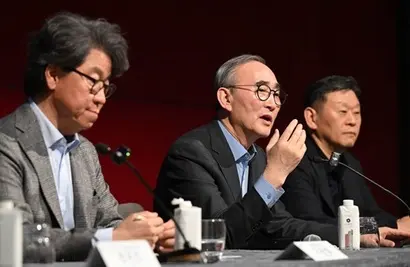
Director Kwak has a background in telecommunications and devices from LG Electronics and Hyundai Motor, while Jo Seung-ah, a professor at Seoul National University Business School, concurrently serves as an outside director at Hyundai Steel and KT, having served as an outside director (audit committee member) at Samsung SDS and Acuon Capital.
The KT labor union stated, "The outside directors from Hyundai Motor, the largest shareholder that declared it would not participate in management during the Ministry of Science and ICT review, are being reappointed. The board must transparently state its position on management separation from Hyundai Motor."
However, KT cited the lack of disqualification grounds as the reason for reappointment, noting that the four candidates contributed to the transformation into an AICT company, communication business strategy, and judging investment feasibility during their tenures. According to the disclosure, KT's Director Candidate Recommendation Committee evaluated candidate Kwak Woo-young by saying, "We expect him to contribute as an ICT expert by continuously monitoring technology trends and presenting appropriate response measures for KT's future growth."
LG Uplus is the only one among the three telcos that has not included an AI expert among its outside directors. With the reappointment agenda for Nam Hyung-doo, a professor at Yonsei Law School, listed this year, no AI expert is included this time either. Professor Nam, who is also an audit committee candidate, is expected to play a role in internal control and legal risk management. SK Telecom has placed two AI experts among its nine outside directors: Oh Hye-yeon, Director of the KAIST MARS AI Integrated Research Center, and Kim Joon-mo, a professor of Electrical Engineering at KAIST. KT has Choi Yang-hee, former Minister of Science, ICT and Future Planning (now the Ministry of Science and ICT), as an outside director.