

[비즈한국] It has been confirmed through BizHankook's reporting that Lotte E&C, currently pursuing large-scale asset liquidation, has begun valuation work for the sale of its stake in an investee company. Lotte E&C recently made its plans to liquidate real estate assets official by initiating the selection of an advisory firm for the sale of its headquarters building, and the scope of asset disposals appears to be expanding to include stakes in general investee companies.
According to industry sources on the 13th, Korea Southern Power (KOSPO) recently conducted an internal review regarding the potential sale of the Daegu Green Power stake held by Lotte E&C. It is reported that Lotte E&C has embarked on valuation work to facilitate the sale. Korea Southern Power holds the right to purchase the Daegu Green Power stake held by Lotte E&C, reflecting a rate of return determined by shareholder agreement. Lotte E&C's acquisition cost for the stake was 31.7 billion KRW, and its book value as of the third quarter of last year stood at approximately 27.5 billion KRW.
Daegu Green Power is an energy company controlled by Korea Southern Power, a subsidiary of Korea Electric Power Corporation015760. It was established in May 2010 to construct a 200MW cogeneration plant in Daegu Innovation City to supply heat and electricity to the surrounding area. As of September last year, the company's equity was held by NongHyup Bank (Investment Trust, 47%), Korea Southern Power (29%), Lotte E&C (19%), and Daesung Energy117580 (5%). If the stakes of financial investors are treated as debt components, Korea Southern Power’s effective stake is the largest at 54%.
Regarding the sale of the Daegu Green Power stake, a Lotte E&C official stated, "We are in the initial review stage, and nothing has been decided regarding the sale." A Korea Southern Power official also added, "We have reviewed the matter of Lotte selecting an accounting firm for valuation, but we have not received any official documentation from Lotte."
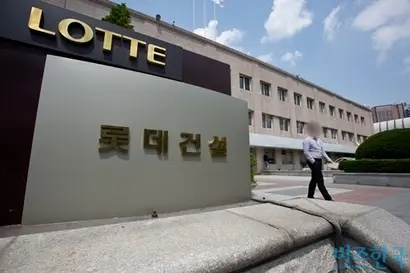
Lotte E&C recently made its large-scale real estate asset liquidation official. Last month, it announced through a press release that it had begun the process of selecting an advisory firm to liquidate its headquarters building in Jamwon-dong, Seocho-gu, Seoul. The company plans to consider various options, including an outright sale, a sale-and-leaseback arrangement, or self-development. Currently, Lotte E&C’s headquarters building is valued at approximately 500 billion KRW in the market. In addition, the company stated it would consider leveraging idle assets such as material warehouse sites nationwide, project land, and stakes in private rental REITs. Currently, Lotte E&C holds over 1 trillion KRW in assets, including real estate and stocks.
Lotte E&C is currently overcoming the liquidity crisis triggered by Project Financing (PF). Its PF contingent liabilities, which had expanded to 6.8 trillion KRW due to fund replenishment for development projects, decreased by approximately 3 trillion KRW to 3.8 trillion KRW as of September last year. During the same period, the debt-to-equity ratio also fell from 269% to 223%. As large-scale projects successfully transitioned to main PF financing, the scale of credit enhancement decreased, and the short-term liquidity risk was further mitigated by the establishment of a 2.3 trillion KRW joint fund with commercial banks in March last year.