

[비즈한국] The atmosphere surrounding Lotte Group is unsettling. In the business world, rumors of a liquidity crisis within Lotte Group are circulating. The deteriorating financial health of its core affiliate, Lotte Chemical011170, has had a negative impact on the entire group. Lotte Group has embarked on improving its liquidity by selling off numerous assets.
The rumors of a Lotte Group liquidity crisis emerged last November when a cross-default trigger occurred for some of Lotte Chemical's corporate bonds. A cross-default clause means that under certain conditions, a creditor can demand early repayment of loans before the maturity date. At the time of issuing the bonds, Lotte Chemical had set a condition to 'maintain a 3-year cumulative average EBITDA (earnings before interest, taxes, depreciation, and amortization) at 5 times or more of interest expenses.' Failure to fulfill this triggered the cross-default clause.
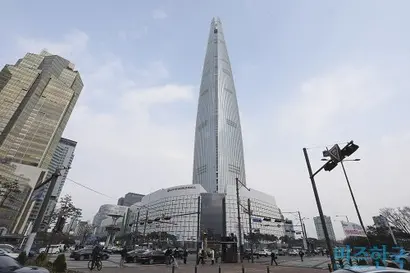
The triggering of a cross-default clause does not mean the bonds must be repaid immediately. Typically, when such a situation arises, a company convenes a meeting of bondholders to request adjustments to terms and conditions. In December last year, Lotte Chemical stated, "Adjustments to the financial covenants related to performance within the corporate bond management agreement have been approved," and added, "We have been engaging in sequential consultations with bondholders. Lotte Group has also maintained close communication with lead creditor banks to strengthen the credit of the corporate bonds, such as by utilizing Lotte World Tower to provide additional bank guarantees to stabilize the capital market."
Although Lotte Chemical succeeded in reaching an agreement with its creditors, concerns regarding a liquidity crisis have not been resolved. In October last year, Lotte Chemical decided to liquidate its Malaysian synthetic rubber production subsidiary, LUSR. Following this, it sold its Pakistani subsidiary, LCPL, in February of this year, and recently announced that it had raised 650 billion won through a Price Return Swap (PRS) contract for a portion of its stake in its Indonesian subsidiary, LCI. A PRS is a derivative product where, upon the expiration of the contract, the parties compensate each other for the difference if the stock price is lower or higher than the reference price.
Lotte Group as a whole is also showing signs of asset sales. Recently, it sold the Lotte Wellfood280360 Jeungpyeong factory. It also signed contracts to sell the ATM business units of Korea Electronic Finance063570 and Korea Seven, and entered into a sales contract for Lotte Rental089860 with Affinity Equity Partners. The company is also pushing for the sale of the Lotte E&C headquarters site. Hwang Gyu-won, an analyst at Yuanta Securities, assessed that "Lotte Chemical’s efforts to reduce financial burdens have entered the visible range."
However, anxiety regarding Lotte Group still lingers. Oh Yoon-jae, a senior analyst at Korea Investors Service, commented, "While cash inflows are expected through the reduction of investment burdens following the completion of LINE (an ethylene project in Indonesia) facilities in the first half of 2025 and the sale of stakes in overseas subsidiaries," he added, "considering the weak cash-generating power, rising financial costs, and the uncertainty regarding the timing and disposal value of asset sales, it will be difficult for the debt burden to ease significantly in the short term."
Furthermore, Lotte Chemical is suffering from poor performance, including an operating loss of 894.1 billion won last year. Evaluation of this year's performance outlook also remains highly uncertain. Kim Myung-joo, an analyst at Shinhan Securities, analyzed, "Lotte Chemical is expected to improve its financial structure in the short term through active asset efficiency efforts and secure mid-to-long-term competitiveness through the advancement of its business portfolio," but warned, "with demand uncertainty persisting in the first half of the year and the burden of new construction expanding, the possibility of a meaningful recovery remains low."
The atmosphere surrounding Lotte Shopping023530, another core affiliate of Lotte Group, is also not good. Lotte Shopping's revenue decreased by 3.91% from 14.5559 trillion won in 2023 to 13.9866 trillion won in 2024. Operating profit also fell by 6.94% from 508.4 billion won in 2023 to 473.1 billion won in 2024.
Lotte Shopping plans to propose the appointment of Lotte Group Chairman Shin Dong-bin as an executive director at the shareholders' meeting on March 24. This is interpreted as Chairman Shin's commitment to fulfilling responsible management at Lotte Shopping.
At least Lotte Shopping significantly improved its liquidity through asset revaluation last year. It disclosed in February that as a result of an asset revaluation of its land holdings, the appraised value of said land increased from 8.2686 trillion won to 17.7351 trillion won.
However, Lotte Shopping's asset revaluation does not directly lead to improved earnings. Also, unless the land is sold, cash does not flow in directly. Lotte Shopping's total debt increased by 11.01% from 19.8082 trillion won at the end of 2023 to 21.9895 trillion won at the end of 2024. Considering the size of Lotte Shopping, it is not at a level where an immediate problem will occur, but it is not something to be complacent about if poor performance continues.
As such, with the chemical and retail industries—core businesses of Lotte Group—underperforming, new businesses have yet to get on track. If the sluggishness in Lotte Group's core businesses continues, the scale of investment in new businesses is bound to shrink. In fact, Lotte Chemical mentioned at a corporate briefing on February 27 that to manage investment risks, it aims to execute investments within its EBITDA amount, adjust the timing of overseas business expansion, and cancel investments of low strategic importance.
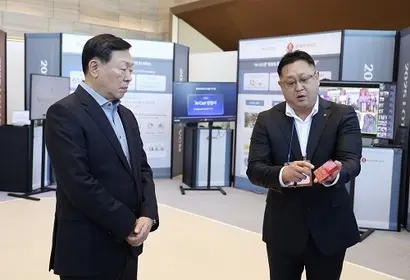
In his New Year's address this January, Chairman Shin Dong-bin also requested, "We must establish financial strategies preemptively and conduct business based on them to increase financial soundness," and added, "Find and remove unnecessary tasks or factors that hinder efficiency, and based on this, all affiliates should focus their efforts on creating a foundation for restoring a leading position."
Lotte Group's new business is being led by Shin Yoo-yeol, Vice President of Lotte Corporation and the eldest son of Chairman Shin Dong-bin. Vice President Shin Yoo-yeol serves as the head of the Future Growth Office at Lotte Corporation. While Lotte Group is striving to improve its finances, Vice President Shin Yoo-yeol is in a situation where he must deliver results in new business.
Lotte Group's stance is to reduce unnecessary investments and concentrate new business investments in necessary areas to achieve results. Lotte Group has presented four major new growth themes: Bio & Wellness, Mobility, Sustainability, and New Life Platform. In fact, Lotte Group is recently achieving meaningful results in fields such as electric vehicle chargers and food tech.
A Lotte Group official stated, "We are trying to optimize investments without excessive spending or waste," adding, "The current direction is to sell off non-core and inefficient assets to continue investing in necessary areas."