

[비즈한국] Hamlet said, “To be, or not to be, that is the question.” This question is not only important in Shakespeare’s literature. A similar question appears in modern physics: Schrödinger’s cat experiment.
Inside a sealed box, there is poison, a radioactive element, and a cat. If the radioactive element decays, the poison is released and the cat dies. If the element does not decay, the cat lives. The problem is that whether this radioactive element decays or not is determined by the uncertainty principle of quantum mechanics. In other words, until the box is opened, the cat is in a state of being both alive and dead at the same time. This absurd situation is possible precisely because of ‘quantum superposition’.
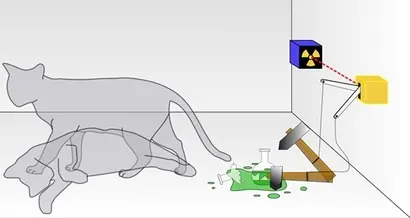
In fact, this famous thought experiment, which is never absent when discussing quantum mechanics, was originally created to highlight the contradictions of quantum theory. Schrödinger devised this experiment to mock young physicists who argued for the difficult-to-understand concept of superposition in the microscopic world. He wanted to show how perplexing it would be if the magic of the microscopic world were scaled up and applied to a macroscopic being like a cat. However, the physicists who advocated for quantum mechanics did not back down and ended up accepting the superposition of a dead cat and a living cat.
If so, does superposition necessarily have to be limited to the inside of a box containing a cat? The same logic could be applied to the laboratory where the box sits, the entire building, and even the universe itself. Thus, the magical story of the famous multiverse concept was born. The multiverse hypothesis is fascinating. Despite being a highly esoteric and complex concept, it is widely used in popular culture, including science fiction films.
In fact, while the multiverse is a mathematically attractive hypothesis, it was long considered to have almost no possibility of being proven through actual observation. However, an interesting claim has recently been raised that a quantum computer developed by Google might prove the possibility of the multiverse's existence. Can the success of a quantum computer truly serve as evidence for the multiverse?
To properly understand this recent controversy, one must first understand why astronomers and physicists are seriously researching the multiverse hypothesis when it cannot currently be proven. The multiverse is not mere science fiction. The reason physicists study the multiverse is not simply out of curiosity about whether another universe might exist. The multiverse hypothesis is significant in that it forces us to view our vast universe as a quantum mechanical entity.
Current physics is built upon two major pillars. One is the physics of the macroscopic world, represented by the classical physics of Newton and Einstein, and the other is the physics of the microscopic world, explained by quantum mechanics. The problem is that these two pillars of physics have yet to be perfectly integrated. The multiverse hypothesis could be a crucial key to connecting them. This is because the multiverse includes the concept that the entire vast universe acts as a quantum mechanical entity, and that a new universe could be born anywhere at any time.
According to the Big Bang theory, the infant universe was on a scale smaller than an atom and was thus governed by the uncertainty principle of quantum mechanics. During this period, space and time functioned in a completely different way than they do now, and even the laws of physics were in a state of uncertainty. According to the uncertainty principle, specific physical values cannot be known exactly, and as a result, energy can fluctuate randomly even in a vacuum. This principle is used to explain ‘Quantum Fluctuation,’ a phenomenon where particle-antiparticle pairs are momentarily created and then vanish. Such phenomena could have occurred in the early universe, suggesting that the initial universe might have begun from a small quantum fluctuation.
If such quantum fluctuations have a sufficiently high energy density, a new independent space can be created. In other words, it is possible that our entire universe started from a single small fluctuation at the dawn of time. This can also be connected to the multiverse hypothesis. It suggests that as long as the uncertainty principle is at work, the birth of a universe is not a one-time event but can happen continuously. This implies that in addition to the universe we live in, countless other universes could be created at different points in time, making it one of the core concepts supporting the multiverse hypothesis.
In the 1950s, Hugh Everett proposed a new interpretation that elevated Schrödinger’s cat thought experiment to a higher level: the Many-Worlds Interpretation. According to the classical quantum mechanical interpretation, the cat in the box exists in a state of superposition where two wave functions—the probability of being dead and the probability of being alive—coexist. It explains that the moment you open the box, all probabilities collapse into one, and you confirm the cat's fate as one or the other.
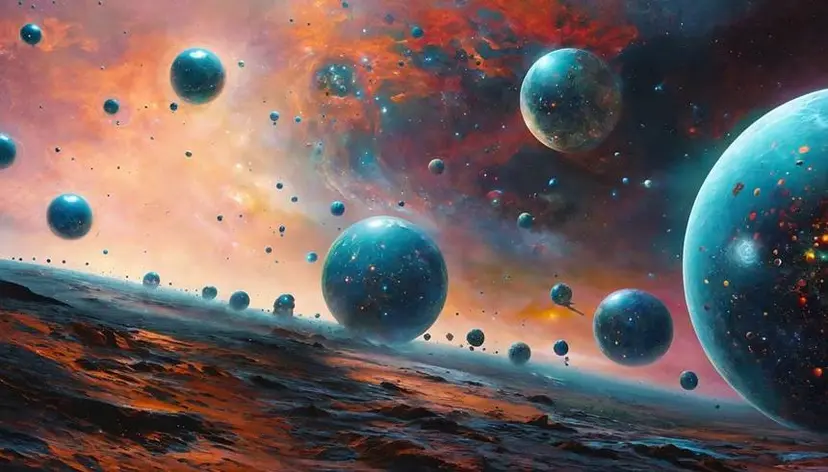
However, Everett found this explanation awkward. He sought a new interpretation that did not require the two existing probabilities to collapse into one side. He thought that if the universe simply keeps splitting into a universe where the cat is alive and one where it is dead at every moment of observation, and we are merely witnessing the events occurring in only one of those universes, then there is no need to assume that the two superimposed probabilities in the actual universe collapse into one. In other words, it is the "Many-Worlds Interpretation," where the fate of the universe branches into multiple directions every time an observation is made. The Many-Worlds Interpretation provides a mathematical answer as to how the universe could be composed of countless multiverses.
If we assume that there is not one, but countless universes, we can more "lazily" solve the fine-tuning problem of the universe that cannot be neatly explained. Physics raises the question of why the physical constants of our universe are so exquisitely tuned to allow for the existence of life. One interpretation is that the universe we live in is just one of countless universes, and that in many other universes, the physical constants are set differently, making the birth of life impossible. The logic follows that we inevitably find ourselves in a "habitable" universe.
Therefore, when discussing the multiverse hypothesis, an essential concept is the ‘Anthropic Principle.’ The Anthropic Principle basically contains the logic that we are able to observe this universe because the universe is constructed in such a way that observers like us can exist. The Anthropic Principle is largely divided into two types.
The first is the ‘Weak Anthropic Principle,’ which provides the simple explanation that we exist because our universe is suitable for life to exist.
The second is the ‘Strong Anthropic Principle,’ which implies a bolder claim that the universe is inherently tuned so that observers can exist. This suggests that the reason the universe's physical constants are tuned to support life is not merely a coincidence, and it is deeply related to the multiverse hypothesis.

Google recently announced its quantum computer called ‘willow,’ promoting its ability to calculate, at lightning speed, problems that would take longer than the age of the universe to solve. In doing so, they grabbed headlines by mentioning that their quantum computer demonstrates the possibility of the existence of the multiverse.
A quantum computer is a new concept that goes beyond the method of calculating only with 1s and 0s, using quantum superposition where two states coexist. It was first conceived by physicist Richard Feynman, and later, British physicist David Deutsch developed the modern grammar of quantum computers. Many physicists predict that if quantum computers are commercialized to a meaningful level within the next few years, Deutsch is highly likely to be a Nobel Prize winner.
Deutsch once used an interesting metaphor while explaining the principles of quantum computers. “A quantum computer is no different from connecting to multiple multiverses and performing parallel calculations like a GPU.” His cinematic metaphor gives the impression that a real-world quantum computer is mysteriously working by connecting to another universe existing beyond our own. However, this is just a beautiful poetic metaphor; it is difficult to see the literal operation of a quantum computer as experimental evidence of a multiverse. It only tells us that our understanding of quantum superposition and entanglement is not wrong and that quantum mechanical phenomena are occurring exactly as we predicted, not that there are truly countless universes coexisting beyond ours.
As an astronomer trained to have a professional bias toward believing only what is observed, the multiverse hypothesis evokes both a strange attraction and a resistance in me. It feels as though the attraction and the resistance are in superposition. Looking at the history of astronomy, humanity has always flowed in a direction that reveals the reality that we are not unique, despite always thinking we were. The Earth, the Sun, and our galaxy, which we thought were special, turned out to be just one of countless stars, planets, and galaxies. Naturally, such concerns are now directed toward our entire universe. Could our universe, which we thought was unique, also be just one of many? Looking at the path the history of astronomy has taken, it does not seem impossible.
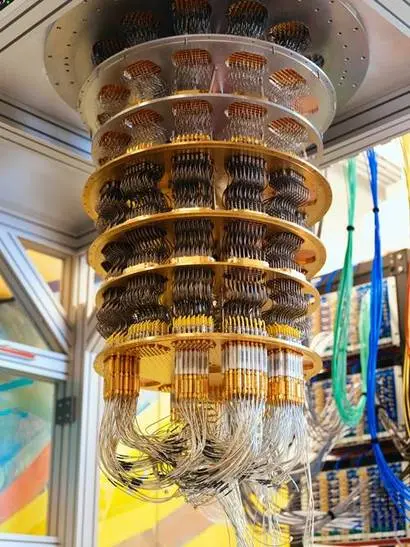

However, at the same time, in terms of talking about a universe beyond the observable universe, it feels like a futile story that is impossible to prove from the start. Ultimately, to be accepted as an astronomical truth, it must be confirmed through actual observation.
Rather, the multiverse is attractive in a different sense. Our universe was smaller than an atom at the dawn of time. Therefore, to understand the beginning of the universe, we need quantum mechanics, not the physics of Newton and Einstein that sing of the macroscopic world. The universe that has swelled significantly in between pretends to be a large and grand world from the start, but in fact, its beginning was insignificant.
The universe is a microscopic entity pretending to be macroscopic. The multiverse hypothesis is attractive in that it makes us view the universe as both a macroscopic and a microscopic entity. The Big Bang was the most macroscopic event that birthed a huge universe, but at the same time, it was the most microscopic event that took place amidst the waves of extremely randomly fluctuating quantum fluctuations.
Personally, I don’t like the term "quantum computer." In fact, quantum computers work fundamentally differently from the classical computers we currently use. Calling them quantum computers causes a misunderstanding that they are just a higher version of the computers we use today. So, if I had to name them, wouldn't it be fairest to just dryly call them "quantum machines"? If a quantum computer, or "quantum machine," is truly a machine like a GPU that connects to the multiverse, perhaps our universe has also been having its resources stolen by a universe inhabited by more advanced beings for a very long time. Now, it's about time we started stealing from someone else's universe.
Who is the author, Ji Woong-bae? He loves cats and the universe. As a child, he watched ‘Galaxy Express 999’ and dreamed of sharing the beauty of the universe. He is currently researching the evolution of galaxies through interactions at the Yonsei University Galaxy Evolution Research Center and the Near-Field Cosmology Lab, and is engaged in various science communication activities including lectures and writing. He is the author of books such as ‘The Observatory with a Crush,’ ‘Thinking About the Universe All Day,’ and ‘Stars, the Science of Light.’