

[비즈한국] Artificial Intelligence (AI) technology is expanding its reach into public interest services for the socially vulnerable, such as people with disabilities and the elderly. Since last year, local governments across the country have been increasingly adopting AI-linked welfare policies in collaboration with corporations. Companies are just as active in promoting AI welfare technology as they are in searching for "profitable" AI services. This isn't just to emphasize corporate social responsibility and brand image; it serves as a crucial testbed to understand how AI functions in real-world settings and to identify service demands or areas for improvement. With most AI services yet to reach the monetization stage, companies appear to be focusing on technological innovation and discovering profit models linked to public policy rather than short-term gains.
‘Predicting’ behaviors of people with developmental disabilities and ‘friendly’ check-in calls for seniors living alone
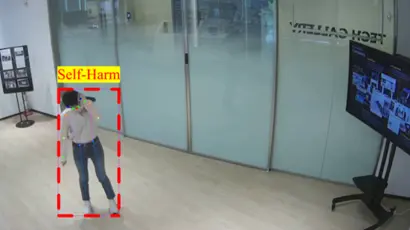
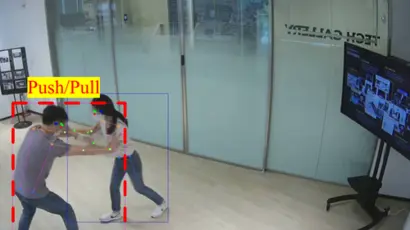
The Dobong Lifelong Education Center for People with Developmental Disabilities, located in Dobong-gu, Seoul, established an AI environment in 2023 through a collaboration project between the Seoul Metropolitan Government and SK Telecom. People with severe developmental disabilities may exhibit "challenging behaviors," such as self-harm or hurting others. Sudden behavioral changes, such as hitting their own head or throwing food while laughing and talking, are difficult for families or caregivers to predict. For this reason, daily life and communication are often disrupted, and there have been significant gaps in existing social services for these individuals.
According to the center, this technology is a system that records statistics by identifying the types and frequency of "challenging behaviors" in people with severe developmental disabilities. SKT’s deep learning-based “Vision AI technology” has been applied to several CCTV cameras installed within the center. Video surveillance solutions from Focus H&S are also utilized.
It automatically recognizes a total of nine movements in real-time, including wandering, running, jumping, kicking, punching, pushing/pulling, lying down, falling, and self-harm, and generates and records data on the frequency and patterns of these actions. This is the result of analyzing body parts such as the torso, limbs, and head by identifying subjects on screen using skeleton-based techniques centered on major joints. This information becomes critical data analyzed by behavioral intervention experts. After verifying behavioral patterns and duration, experts make a diagnosis and communicate intervention methods to the institution.
The warning signs and patterns of challenging behaviors vary from person to person. Providing precise solutions to teachers is expected to enable more effective interventions and reduce the burden of caregiving.

Care services via AI chatbots and phone calls are being applied to various local government projects and corporate services ahead of others. Naver’s Clova Care Call is a service where AI calls seniors in need of care once a week to check on their well-being. The conversation is natural enough to allow for emotional empathy, and it implements continuous dialogue through features like "remembering" past conversations. In cases where dementia is suspected, it also functions as an "AI social worker" for regional health prevention and management by alerting local public health center officials in real-time following an additional call from a Naver counselor.
First launched in Haeundae-gu, Busan, in November 2021, this service achieved the feat of being adopted by more than half of all cities, counties, and districts nationwide (128 locations) in about three years as of last August. Its usability is still being confirmed, with places like Cheongju recently adopting the service.
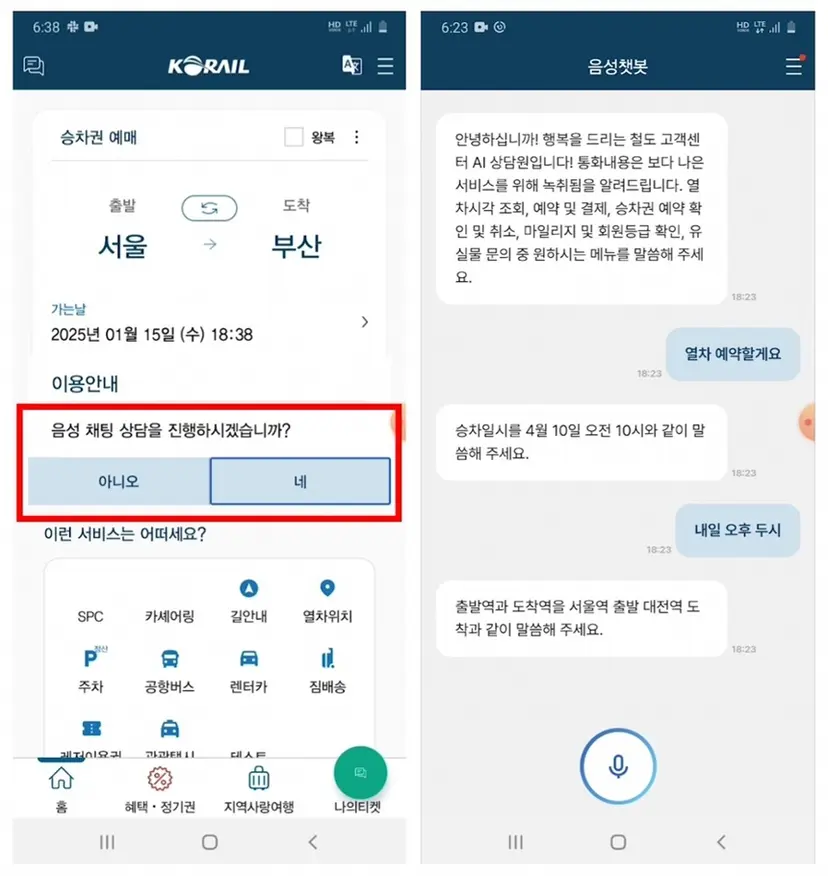
AI service company Mind AI377480 partnered with Korea Railroad Corporation (KORAIL) to build an AI voice chatbot system for customer service, which officially launched on the 20th of last month. For the convenience of the transportation-vulnerable, including those with visual and physical disabilities, the system was developed so that a voice consultation prompt automatically pops up when accessing the KORAIL app.
‘Care AI’ still has many limitations… What is the way forward?
The SKT project, which was piloted at centers in Jongno and Dobong, Seoul, is expanding to Jungnang and Dongdaemun. Adoption is also expected to increase in centers throughout Gyeonggi Province and Daejeon Metropolitan City this year.
AI-based services being introduced in the fields of disability and elderly welfare are not yet at a stage where they generate profit. As these projects emphasize public interest for the socially vulnerable, it is difficult to expect direct profit generation or high profitability in the future. However, they are evaluated as highly effective testbeds for the commercialization of new technologies and the identification of demand. By applying AI solutions tailored to specific user groups to the field, companies can identify useful data necessary for service improvement.
SKT is considering various improvements, such as service formats, based on feedback from pilot centers. Cho Hye-jin, an SKT department head in charge of AI care, attended a National Assembly seminar hosted by the National Association of Parents for the Disabled last September and said, "Currently, the model relies on external behavioral intervention experts, but (through feedback) we are also considering support options where the center operates internally without a third party, like the Daejeon model." She added, "We are aware that initial adoption costs are a burden. To achieve universal adoption, we are keeping in mind the need for lightweight models and cost-effectiveness."
While current laws do not allow CCTV to record audio, the company is also pursuing plans to advance the service by obtaining consent for information provision from subjects, onsite teachers, and behavioral intervention experts.
The fields of disability and elderly welfare suffer from chronic labor shortages, which is why efficiency through AI is attracting attention. However, there are voices saying that AI cannot solve every blind spot. At this point, the limitations of AI are clear, and there are concerns about side effects, such as leaving the welfare of the vulnerable entirely to AI.
Kang Jeong-bae, Secretary-General of the National Association of Parents for the Disabled, explained, "AI cannot handle everything. The classification of challenging behaviors is just based on nine major actions requiring intervention; they cannot be defined merely by quantity. Currently, a lot of human intelligence is involved in AI. I believe human intervention will still be necessary (to grasp personal context) in the future," adding that "resistance to being filmed on video is also a limitation."
Kim Go-eun, a professor of Social Welfare at Kwangwoon University, pointed out, "If we can identify the parts we missed through AI data, we might be able to find the causes more quickly," while noting, "While it is important to see what happens before and after a behavior, it would be better if the difficulties in a person's entire life were also taken into consideration."