

[비즈한국] Oasis has announced its intent to acquire TMON, which is currently undergoing corporate rehabilitation procedures. The industry's attention is focused on this adventurous bet by Oasis, a company that has long insisted on safe choices, having never missed a profitable quarter since its inception in 2011.
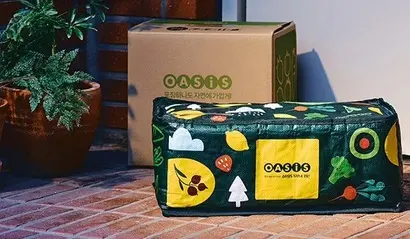
Why Oasis, a bastion of conservative management, jumped into the TMON acquisition race
Upon hearing the news of Oasis acquiring TMON, the first reaction from most industry insiders was a skeptical “Is this just a rumor?” Some even speculated that it was a groundless claim leaked by TMON. That is how unexpected this move by Oasis was.
An official from Oasis explained, “We have an intention to acquire. We have applied to be a conditional stalking-horse bidder, and a related agreement was signed today. I understand that an open bidding process will follow.”
The sale of TMON and Wemakeprice (T-Weme) is being pursued via a "stalking horse" method, where a conditional buyer is selected before an open competitive bidding process occurs. Other companies may submit better offers during the open bidding, but if no such offer is made, Oasis becomes the acquirer. As the stalking-horse bidder, if another company proposes better terms, Oasis retains the right to match those terms and secure the acquisition. The sale notice is expected to be posted next week, with the final acquirer determined next month following the open bidding.
Oasis and T-Weme held their first meeting last month. It is known that T-Weme has been in discussions with various companies, and met with Oasis during that process. While no specific details were discussed at the first meeting, it is reported that concrete contract conditions were addressed in their second meeting last week. Particularly with the court-mandated deadline for the rehabilitation plan submission approaching on March 7, T-Weme’s urgency to secure an acquirer reportedly accelerated the discussions with Oasis.
Oasis cited securing a member base and brand awareness as the primary drivers for the acquisition. The aforementioned official stated, “Oasis’s strength is our operational know-how, which has kept us profitable for 12 consecutive years. Our weakness, however, is our relatively low member count and brand awareness. We determined that TMON possesses exactly the opposite strengths and weaknesses of ours,” adding, “We believe we can operate TMON successfully by applying our operational know-how.” Oasis Market currently has about 2 million members, whereas TMON had over 28 million members as of 2021.
Park Sung, head of the Real Retail Research Institute, analyzed, “The cost to acquire a single new customer is significant. Even if TMON has lost its market competitiveness, its customer database remains; they likely calculated that if they could buy TMON cheaply, it would be a reasonable way to secure members.”
Kim Dae-jong, a professor of business administration at Sejong University, interpreted it by saying, “Platform companies value each member anywhere from 100,000 to as much as 600,000 won. The ability to acquire over 20 million members at once likely represented immense value to Oasis.”
Some view the TMON acquisition as a strategic move for a future IPO. Park noted, “Currently, Oasis is like a neighborhood grocery store. However, by acquiring TMON, they could effectively become a nationwide e-commerce player. Since the scale of the company would change fundamentally, I believe they must have crunched the numbers regarding an IPO.”
The Oasis official remarked, “We are continuously preparing for an IPO. However, this review of the TMON acquisition is separate from our IPO plans,” adding, “Even if we acquire TMON, we will not take immediate actions like rushing into an IPO.”

Difficult e-commerce market conditions, coupled with piles of problems like unpaid wages and settlements
Concerns remain. TMON is a loss-making entity that has also lost its competitive edge in the market. TMON caused a massive settlement payment default last year and has yet to resolve the issue. An industry insider noted, “TMON is even unable to pay its employees. Management is completely out of control; there are even employees who just log their attendance to claim wages later without actually working,” adding, “There are monumental tasks to resolve, including employee wages and settlement defaults, and I worry about how they intend to handle them.”
Regarding the issue of unpaid settlements after the acquisition, the Oasis official responded, “We cannot disclose contract details to the public. As these settlements are overseen by the court, we understand they will follow court procedures.”
The e-commerce market climate is also tough. Lee Jong-woo, a professor of business administration at Ajou University, pointed out, “In the past, the e-commerce business was thriving, leading to massive investments by conglomerates and subsequent changes. But now, the duopoly of Coupang and Naver is set in stone. Because the scale difference is so vast, it is becoming increasingly difficult for companies other than these two to achieve results in the market.”
Founded in 2011, Oasis initially sold organic food through offline stores before launching its e-commerce business in 2018 with the fresh food dawn delivery platform ‘Oasis Market.’ Oasis Market is noted as the only dawn delivery company to be profitable, having maintained a profitable trend every year since the business began.
The secret to Oasis’s sustained profitability is ‘conservative management.’ Oasis has minimized advertising and marketing expenses and has been passive about expanding into new businesses. Rather than drastically expanding its outward appearance, it has focused on strengthening its fundamentals to generate consistent profits.
The Oasis official stated, “Once you solidify your internal base, don't you then try to expand the business and grow the scale? The same goes for Oasis,” adding, “Our goal isn’t to operate solely for our 2 million members, so this is an effort to continue our growth.”