

[비즈한국] Korean medicine pharmacists who were accused by the Ministry of Health and Welfare of handling prescription drugs have recently sparked controversy after receiving "non-prosecution" decisions from the police. Previously, in December of last year, another Korean medicine pharmacist accused of violating the Pharmaceutical Affairs Act for providing prescription drugs also had their case closed with a "no charges" decision. Bizhankook met with the party involved in this case, a Korean medicine pharmacist identified as A.
A claims that the pharmacy community intentionally approached them to entrap them into illegal activities. A asserts that the police's non-prosecution decision has actually clarified the scope of a Korean medicine pharmacist’s license and the legal status of dispensing and selling prescription drugs.
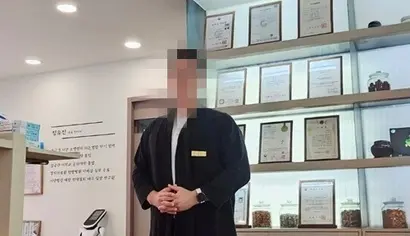
Reported after receiving eye ointment for free
The "incident" happened to pharmacist A last July. A customer, B, who visited A's Korean medicine pharmacy, received the prescription drug "Oquflox Ophthalmic Ointment" without a prescription and then reported A for violating the Pharmaceutical Affairs Act.
According to the complaint A reviewed through a freedom of information request, B claimed, "The accused sold prescription drugs to the accuser without a doctor’s prescription, and such an act is equivalent to an unqualified person dispensing prescription drugs," alleging that A violated Article 23, Paragraph 1; Article 23, Paragraph 3; and Article 50, Paragraph 2 of the Pharmaceutical Affairs Act.
However, after months of investigation, the police issued a "non-prosecution decision." In the decision document, the police stated, "According to the Ministry of Health and Welfare's interpretation of laws and Supreme Court precedents, providing eye ointment for free is reasonably viewed as 'dispensing and selling prescription drugs.' However, because there are no explicit regulations in the Pharmaceutical Affairs Act regarding the scope of a Korean medicine pharmacist’s license, a criminal offense cannot be established. Furthermore, under the principle of prohibition of analogy, it is difficult to conclude that the suspect's act of providing eye ointment does not constitute 'social service,' and there is insufficient evidence to prove a violation of the relevant laws; thus, there are no charges."
A stated, "Investigators usually don't write non-prosecution decisions in such detail. I think this decision is significant because it covers even points not mentioned in the complaint and addresses the Pharmaceutical Affairs Act as a whole."
"The non-prosecution decision specifically details the Pharmaceutical Affairs Act"
According to pharmacist A, the situation at the time was as follows: A knew from the moment B entered the pharmacy that they were not there with pure intentions. This is because it is common for people from the pharmacy association or pharmacy-related groups to visit disguised as customers. A said, "I've lived in this neighborhood for over 20 years, so I know most of the customers who come to my pharmacy. Even those from other neighborhoods usually call in advance saying, 'I was referred by so-and-so' to get herbal medicine made. But pharmacists, without even being asked, start with, 'I live in this neighborhood.' B also said, 'I live in this neighborhood and came early because I finished work early,' so I was immediately suspicious."
B showed a cream containing terbinafine and asked if they and their son could use it for athlete's foot. It was the same type of question a pharmacist would ask. A stated, "Since that is a diagnostic act, only a doctor can do it. There are pharmacists who record these conversations and post them on YouTube. So, I tried to avoid answering as much as possible." A added, "They just said 'my son,' but whether that ingredient can be used depends on the patient's age. So I replied, 'It seems you suspect a skin condition, and most doctors provide this (eye ointment) when consulted for suspected skin disease symptoms. But as I mentioned earlier, (since I cannot sell it), I can only give it to you for free.'"
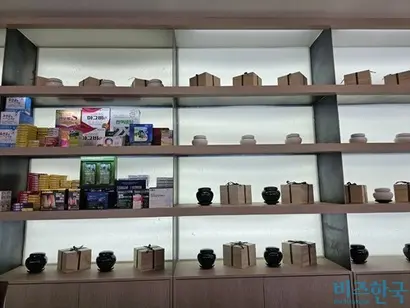
A said, "When writing the statement later, our accounts regarding which items were given differed. But B took out a hidden camera and said, 'The item I bought is recorded here.' It seems the police also realized the incident was staged. Thanks to that, I think the case proceeded in a direction more favorable to me." A claims that based on information received, this reporting was "planned" by the pharmacy community. A said, "I was told that at least five to six people were involved in this. I heard that a regional pharmacist association and a pharmacy group planned it with an advisory lawyer."
A presumed to have become a target of the pharmacy community because of being vocal about the Korean medicine pharmacist-pharmacist conflict on their blog. Ultimately, the case resulted in no charges, and the content of the non-prosecution decision carries significant weight. A pointed out, "Similar incidents occurred in Gyeonggi-do and Gwanak-gu in 2020 and 2021, but the police non-prosecution decisions at that time contained only limited information. This time, they specifically categorized it into 'judgment on the scope of a Korean medicine pharmacist's license' and 'dispensing and selling of prescription drugs.' It was helpful to many Korean medicine pharmacists who wanted to know the exact boundaries of what they could do."
"Most Korean medicine pharmacists investigated by the Ministry were taking prostate or hair loss medication themselves"
A also mentioned the fact-finding survey on prescription drugs conducted by the Ministry of Health and Welfare on Korean medicine pharmacies last year. According to A, the pharmacies investigated were those that had ordered a certain amount of "reimbursable" prescription drugs more than twice. A explained, "From the Ministry’s perspective, it didn't make sense for Korean medicine pharmacies to keep ordering 'reimbursable' drugs on which they cannot add a profit margin. They suspected the drugs were being mixed into herbal medicine or sold to third parties for profit, so they launched a full-scale investigation." A added, "It’s an uncomfortable truth, but 70% of the investigated pharmacists said, 'They expired and were discarded.' Some said they took them personally or used them for social service activities."
At the time, about 60 people were ultimately subject to investigation, and they claimed they took the medicine themselves. A explained, "(The self-medicated drugs) were mostly prostate or hair loss medication. For hair loss medication, the non-reimbursable product has two to three times the dosage of the reimbursable product. They claimed that since suddenly taking a high dose causes side effects like depression and suicidal impulses, they ordered the reimbursable products with lower content. It seems they intended to start with smaller amounts and gradually increase the dosage." A added, "Ultimately, only 20 out of the 60 were forwarded to the police, and none of them received any disciplinary action. As for the remaining 40, they were told they would be investigated by local public health centers, but I understand there has been no news yet."