

[비즈한국] The conflict between Hyundai Steel004020 and its labor union is deepening as the company has responded to partial strikes with a lockout. A prolonged lockout could have a negative impact on earnings and share prices. The value of the Hyundai Steel stake held by Chung Mong-koo, Honorary Chairman of Hyundai Motor005380 Group, may also decline. While a quick resolution would be ideal, the current atmosphere suggests that it will not be easily resolved in the short term.
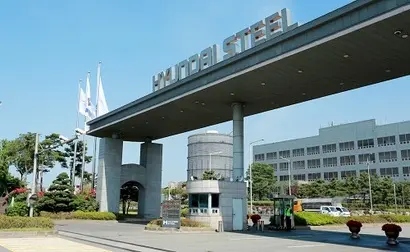
Labor and management at Hyundai Steel have been negotiating wage and collective agreements since last September, but have yet to reach an agreement. Management has proposed a performance bonus equivalent to 450% of the base salary plus 10 million won in cash, averaging about 26.5 million won per employee. The union has demanded 500% of the base salary and 18 million won in cash, which is similar to the level at Hyundai Motor Company.
Hyundai Steel management argues that it is difficult to pay bonuses at the level demanded by the union due to recent deteriorating earnings. Hyundai Steel's operating profit has been declining every year: 2.4475 trillion won in 2021, 1.6165 trillion won in 2022, 798.3 billion won in 2023, and 159.5 billion won in 2024.
The union counters that this is inequitable, citing that when Hyundai Steel's past performance was strong, bonuses were aligned with those of Hyundai Motor. The Hyundai Steel union has been staging partial strikes since January.
As the labor-management conflict persisted, Hyundai Steel took the drastic measure of a lockout on February 24, shutting down the cold-rolled steel plant at its Dangjin Steelworks. Seo Gang-hyun, CEO of Hyundai Steel, stated to employees, "A strike like this is an act that weakens the company's foundation for survival and will ultimately leave irreversible damage to us all," adding, "To minimize such damage, the company has no choice but to respond strictly to the union's strike in accordance with laws and principles."
The cold-rolled steel plant at the Dangjin Steelworks produces 70% of Hyundai Steel's cold-rolled steel sheets. Cold-rolled sheets are steel materials used in automobiles and home appliances. Hyundai Steel estimates that it lost 254 billion won due to the inability to produce 270,000 tons of cold-rolled sheets during the partial strike from February 1 to 22. It appears that losses have increased further as the lockout continues.
Furthermore, the environment surrounding Hyundai Steel is unfavorable, with U.S. President Donald Trump announcing plans to impose a 25% tariff on all steel and aluminum imports. Jung Ik-soo, a senior analyst at Korea Investors Service, assessed, "If U.S. tariff barriers are strengthened and tariff-targeted regions expand, there is an inherent possibility that the performance of Hyundai Steel's steel pipe and cold-rolling businesses could be constrained directly or indirectly," adding, "As the difficult situation persists across the board, there does not appear to be much room for a recovery in profitability in the short term."
If earnings worsen due to a prolonged lockout, the management cannot be free from responsibility. Deteriorating earnings at Hyundai Steel could also negatively affect its stock price. Lee Hyun-soo, a researcher at Yuanta Securities, analyzed, "The first quarter of this year is observed to be negatively affected in terms of production and sales due to fewer operating days and seasonal influences," and "The strikes are also understood to have lowered the utilization rates of some plants."
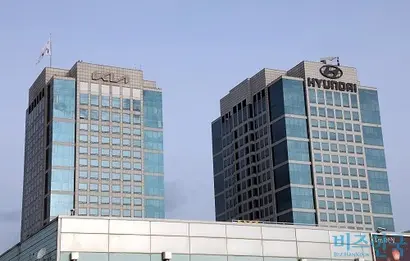
A decline in Hyundai Steel's stock price could also affect the governance control of Euisun Chung, Chairman of Hyundai Motor Group. Chairman Chung's current major subsidiary stakes include: 20.00% in Hyundai Glovis086280, 11.72% in Hyundai Engineering, 7.33% in Hyundai AutoEver307950, 2.67% in Hyundai Motor, 2.00% in Innocean, 1.95% in Hyundai Wia011210, and 1.78% in Kia. His stakes in key affiliates like Hyundai Motor, Kia, and Hyundai E&C are relatively low.
Chairman Chung could strengthen his governance control if he receives shares gifted by his father, Honorary Chairman Chung Mong-koo. Honorary Chairman Chung owns stakes including 11.81% in Hyundai Steel, 7.29% in Hyundai Mobis, 5.44% in Hyundai Motor, and 4.68% in Hyundai Engineering. Of these, the 11.81% stake in Hyundai Steel is worth approximately 420 billion won based on recent stock prices. If Hyundai Steel's share price falls, the value of Honorary Chairman Chung's stake in the company will also decrease.
The lockout at Hyundai Steel is not just an issue for the company itself. Hyundai Steel supplies steel to Hyundai Motor Group affiliates such as Hyundai Motor, Kia, and Hyundai E&C. From the first to the third quarter of last year, the revenue Hyundai Steel generated from Hyundai Motor reached 209 billion won. It earned 78.2 billion won and 307.6 billion won from Kia and Hyundai E&C, respectively. Considering that cold-rolled steel sheets are mainly used in automobiles, there are concerns that this could negatively affect Hyundai Motor and Kia.
However, neither side at Hyundai Steel shows signs of compromise, making a quick resolution seem unlikely. Instead, the situation appears to be worsening. With other labor unions within the group openly supporting the Hyundai Steel union, the overall atmosphere within Hyundai Motor Group is poor. Branches and chapters of the Hyundai Motor Group under the Korean Metal Workers' Union issued a joint statement, warning, "The responsibility for prolonging the 2024 wage and collective agreement negotiations until February 2025 and inducing a strike lies entirely with management," and "Apologize for the aggressive lockout and promise to prevent recurrence. If not, all Hyundai Motor Group labor unions will engage in an all-out war against the control strategy of Hyundai Motor capital this year."
A Hyundai Steel official stated, "According to the lockout notice, the lockout will be lifted once the strike stops," adding, "We are trying our best to resolve this through dialogue."