

[비즈한국] Last week, the summit between Ukrainian President Zelenskyy and U.S. President Trump emerged as a global issue. Open shouting between the leaders led to comments that “such a summit is the first in human history.” The U.S.-Ukraine mineral agreement, which President Trump had put forward as the first gateway to a ceasefire, returned to square one. Europe, which supports Ukraine, no longer seems to be on the same page as the U.S. In particular, statements from major European heads of state and EU leaders immediately after the summit clearly showed that the positions of the U.S. and Europe differ.

European Commission President Ursula von der Leyen stated in an open letter immediately after the summit, "You (Zelenskyy) are never alone. We will continue to work with you for a just and sustainable peace." EU High Representative for Foreign Affairs and Security Policy Kaja Kallas remarked, "Ukraine is Europe, and we stand with Ukraine," adding, "We will increase support for Ukraine to defeat the aggressor." After a meeting with NATO Secretary General Mark Rutte, French President Emmanuel Macron posted on X, "There is an aggressor = Russia, there is a victim = Ukraine," expressing his continued support for Ukraine.
German Chancellor Olaf Scholz also commented, "No one wants peace more than the citizens of Ukraine. That is why we are working together to find a way for a sustainable and fair peace." Hungarian Prime Minister Viktor Orbán was the only European head of state to support Trump. He wrote on X, "Strong people create peace, weak people create war. Trump bravely stood up for peace that evening, but those who opposed it probably found it hard to accept. Thank you, Mr. President."
Rapid growth in recent years
In this situation, the importance of investment in the defense industry, especially in the field of defense technology, is being further highlighted. Reflecting this, the European defense technology startup ecosystem has shown rapid growth over the past few years.
According to the latest report published by the NATO Innovation Fund (NIF) and Dealroom, defense, security, and resilience (DSR) technology startups in Europe attracted a total of $5.2 billion (approximately 7 trillion KRW) in VC investment in 2024. This is a 24% increase compared to the previous year and about a 5-fold increase compared to 2019.
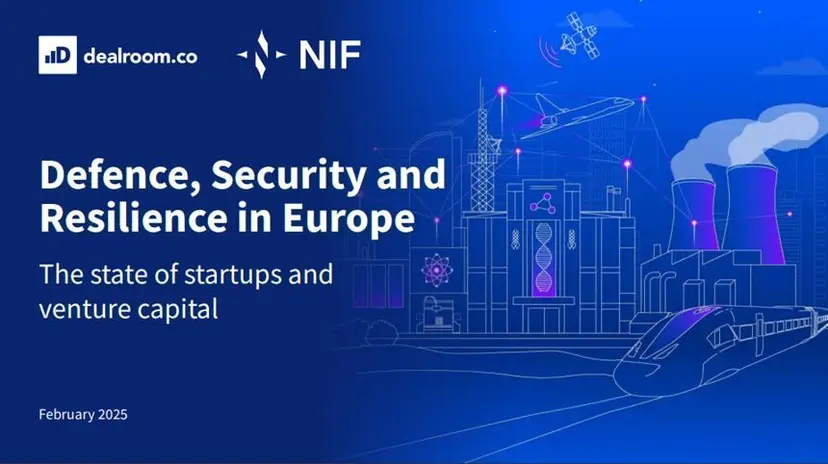
What is particularly noteworthy is that the share of defense technology in total European venture capital investment has reached an all-time high of 10%. This is a 2.5-fold increase over the past two years, demonstrating the rapidly rising interest of investors in Europe's defense technology sector.
In particular, AI, quantum technology, and energy security are leading the growth, and Munich has emerged as a major investment hub for the defense sector. For Switzerland and the Netherlands, 2024 was the year with the highest amount of VC funding allocated to the DSR sector since 2019.
The challenges in the DSR field that most urgently require technological solutions include decision-making support in complex environments, ground and aerial situational awareness, threat detection, energy storage solutions, nuclear energy, water management, space sovereignty infrastructure, maritime autonomy, supply chain resilience, biotechnology, water accessibility, and food supply solutions.
Three years ago, Russia invaded Ukraine, leading to the deadliest war in Europe since World War II. In Europe, the importance of defense technology is increasingly highlighted in response to Russia's rising military power and the increasingly nationalistic stance of the United States.
The situation requiring urgent strategy in this field seems to offer significant opportunities for European defense companies. In fact, shares of major European defense contractors such as Rheinmetall, BAE Systems, and Thales surged last week. European venture capital (VC) investors, who have historically avoided defense industry investments, are also pouring funds into defense tech startups.
Europe's leading defense startups
Helsing and Tekever are representative startups leading this investment.
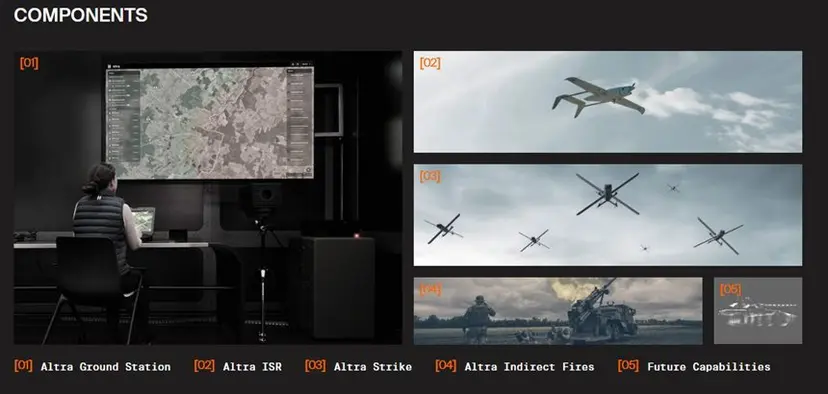
Founded in Munich, Germany, in 2018, Helsing develops AI-based defense software and attracted 450 million euros (approximately 650 billion KRW) in investment in 2024 at a corporate valuation of 4.5 billion euros (approximately 6.5 trillion KRW). Under the slogan "AI to protect our democracy," Helsing provides real-time situational awareness and decision support systems. This system is being used not only in the military domain but also in the civilian sector. Recently, they signed a partnership with French AI startup Mistral and are paving the way for growth while pursuing military contracts.
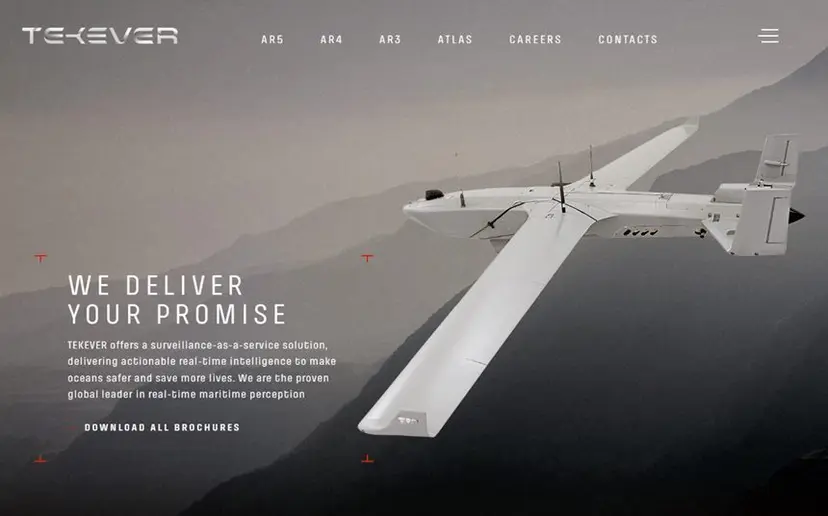
Founded in Portugal in 2001, Tekever develops dual-use drones for military and civilian purposes and attracted $74 million (approximately 99 billion KRW) in a Series B round in November 2024. Tekever's drones are used in various fields such as maritime surveillance, border security, and disaster response.
Tekever is one of the companies in the NIF portfolio, founded by graduates of the Instituto Superior Técnico (IST) in Lisbon in 2001. Expanding its market through European technology joint ventures since 2006, it now has branches in the UK, the U.S., and France. Although it has been 20 years since its inception, the reason it is only now receiving Series B investment is because Tekever generated revenue upon its establishment and has grown steadily through a bootstrapping method. This is a very rare case in the defense sector, which requires astronomical amounts of investment.
The emergence of defense tech funds and expanded investment
Funds specializing in defense tech investment have also newly emerged. In January 2024, the EU launched a 175 million euro (approximately 182 billion KRW) "Defense Equity Facility."
The NIF mentioned earlier was also launched in 2023. NIF announced a 1 billion euro fund to support deep-tech and defense tech startups. NIF is an independent VC supported by 24 NATO member states, leading initial investments of up to 15 million euros and supporting follow-on rounds. To receive investment from NIF, the company must have its headquarters in one of the NATO countries. It is characterized by a strong national network, providing portfolio companies with a network to interact with 90 NATO-affiliated test centers and over 6,000 allied scientists.

As it has a collaborative relationship with NATO Diana, an accelerator under NATO, it also organically invests in companies and founders that have participated in NATO Diana's global accelerator program and received grants.
In January, Estonia's state-owned fund SmartCap also launched a 100 million euro defense tech fund. The primary goal of this fund is to support new defense tech VC funds. In addition to the defense tech fund, SmartCap manages the SmartCap Venture Capital Fund, which supports general VC funds, and the SmartCap Green Fund, which invests directly in climate-related companies. The fact that a state-owned fund created in 2011 recently launched a defense tech fund shows the high level of interest in the defense industry from the European tech investment community.
Why are European investors paying attention to defense tech?
There are several reasons why European investors are taking interest in and increasing investments in defense tech. Among them, the Russia-Ukraine war, which has lasted for the past three years, is the most direct reason for the increase in investment. As security threats in Europe have escalated due to the war between two countries with close ties to Europe in terms of energy, agriculture, and minerals, the importance of defense technology has been emphasized.
Furthermore, the recent strengthening of U.S. protectionism has spread the perception that Europe must possess its own independent defense capabilities. Since this trend is expected to strengthen further after the launch of the Trump administration, the "self-reliance theory," which argues that Europe must break away from U.S. influence and seek independent survival, is expected to gain more momentum.
Finally, the growing potential for innovation in defense tech due to advancements in cutting-edge technologies like AI, drones, and quantum computing is also why investors are paying attention to this field. There is also an expectation that defense tech will provide a very important key to the civilian high-tech sector. For example, autonomous AI and computing technology will be critical to advanced defense tech. As this will drive the development of AI chips and processors, its ripple effect will be significant. Additionally, drone and UAV collaborative robot technology can be used not only in the defense sector but also in industrial fields such as oil pipeline inspection and railway inspection. Furthermore, advancements in grid technology and smart grids could lead to innovations in the energy storage sector. In this way, investment in defense technology raises expectations of maximizing returns for investors due to its scalability into the civilian sector.
However, there are still challenges to be addressed in the European defense tech startup ecosystem. The first challenge is the execution speed of defense tech investment funds. The "Defense Equity Facility," launched in 2024, has not yet made its first investment because the European Investment Bank (EIB) has not updated its regulations regarding "dual-use technology."
The procurement processes of European governments, which are the main customers of the defense industry, being overly bureaucratic and slow, are also expected to be a major obstacle. While investment attraction is currently active, if startups fail to overcome the wall of procurement processes before generating their first revenue, additional inflow of private investment could become difficult.
Another challenge to address is that many European investors, especially public sector funds, cannot invest in the defense tech sector due to ESG criteria. If defense tech startups do not provide particularly high returns and cause a lot of headaches due to regulations and ethical issues, investors will hesitate as to whether they need to invest in them at all. Also, the defense industry has many hardware-centric business models that require a lot of capital, making it unattractive to investors who prefer SaaS models that generate predictable revenue. In addition, the lack of scale and financial power compared to U.S. defense tech firms is another challenge to overcome.
The author, Lee Eun-seo, majored in law in Korea and studied theater in Berlin. Based in Berlin, a city of art and a European startup hub, she leads 123factory, which connects the Korean and German startup ecosystems while growing alongside the city.