

[비즈한국] South Korea and Taiwan, both considered strategic hubs for the U.S. and China, share a similar fate. The second Trump administration has demanded that Taiwan pay a defense contribution equivalent to 10% of its GDP, a crisis that will soon reach South Korea as well. The same applies to plans for imposing tariffs on semiconductors. Through the ‘Reading the Korean Peninsula from Taiwan’ series, Bizhankook meets with key figures in Taiwan’s politics, security, and economy to diagnose the current situation and analyze its impact on South Korea.
Taiwan’s domestic politics and security issues also resemble those of South Korea. While Taiwan implements a conscription system, there is constant pressure for a shift to an all-volunteer force. Simultaneously, there is strong demand to bolster military power in preparation for a potential Chinese invasion. Taiwan faces a dilemma: it must keep China's threats in check while maintaining its identity as a democratic republic.
In 2018, Taiwan drastically reduced its mandatory military service from one year to four months. Because it involved only basic military training, many assessed that it had effectively transitioned to an ‘all-volunteer system.’ However, six years later, in January 2024, the service period was increased back to one year. While the primary cause was a decrease in troop numbers, the pressure from the U.S., which intends to use Taiwan to keep China in check, was an undeniable factor.
What is the current state of Taiwan’s security? And how do they view the ‘rumor of China’s 2027 invasion of Taiwan’? I visited the Institute for National Defense and Security Research (INDSR) in Taiwan to diagnose the current situation.
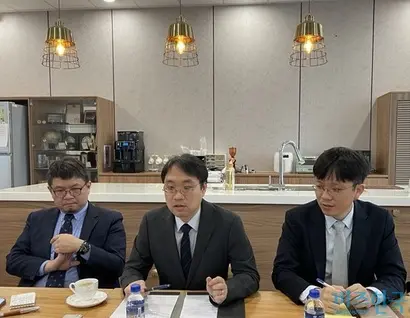
On February 12, Bizhankook met with researchers Shen Ming-shih, Hsu Chih-hsiang, Li Chun-yi, and Lin Chih-hao at the INDSR. During the interview, the researchers discussed Taiwan’s current military capabilities, China’s invasion scenarios, and the conscription system.
Researcher Hsu Chih-hsiang stated that Taiwan is suffering from a manpower shortage. “The reduction in service time was largely political. It was gradually shortened to garner support from the youth. High-skilled young people perceived military service as a waste of time because they could not utilize their majors or technical skills. They also judged the possibility of war with China to be low. However, the fundamental problem with the current troop level is not institutional, but rather that the birth rate is too low,” he explained.
The reason for reverting the service period from four months back to one year is also due to this manpower shortage. Researcher Shen Ming-shih said, “As China’s threats increased between 2022 and 2023, President Tsai Ing-wen restored the service period to one year through an administrative order. However, it is not a complete return to a ‘conscription system’ from an ‘all-volunteer system.’ Taiwan’s constitution specifies conscription. When we reduced the service to four months, we left a provision that it could be reverted to one year in an emergency. If South Korea is considering a transition to an all-volunteer system, it would be necessary to include such a provision.”
The INDSR analyzed that South Korea and Taiwan are suffering from similar military service issues. Researcher Hsu Chih-hsiang pointed out, “The problem we face is similar to South Korea’s. Four months is not enough for military training, but one year is not necessarily enough either. Ultimately, the question is how effectively you can conduct military training within a certain period, and how modernized that training is.”
Researcher Shen Ming-shih added, “The fact that violence and abuse issues occur in the military is also similar to South Korea. There is also the issue that young people with their own fields and majors cannot utilize their skills while in the military.”
Regarding female military service, he explained that women can already serve as volunteers. Researcher Shen Ming-shih said, “In Taiwan, women can enlist not only as non-commissioned officers but also as regular soldiers. Also, unlike in South Korea, there is not much debate surrounding male conscription, and this issue does not lead to social conflict. The Taiwanese Ministry of National Defense is actively pursuing gender equality policies and striving to reduce discrimination based on gender.”
Researcher Lin Chih-hao remarked, “South Korea seems to manage its ROTC and reserve forces systems very well. However, unlike Taiwan, South Korea does not operate a volunteer system for general enlisted soldiers.”
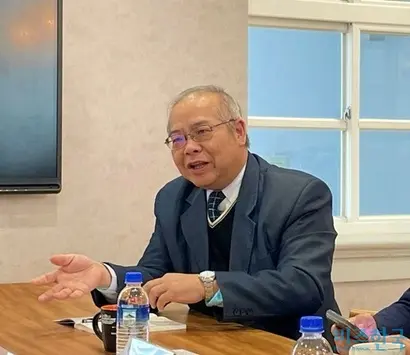
Has Taiwan’s troop shortage problem been resolved after extending the service period back to one year? Researcher Shen Ming-shih explained, “The current total enlistment rate is at the 70–80% level. The shortage is severe in units that require long-term training or those that need NCOs.”
According to the INDSR, Taiwan’s military power problem does not stem solely from manpower. Researcher Li Chun-yi stated, “It’s not just a shortage of personnel. There is the question of whether they can complete all the training within a year when assigned combat duties, but there is also the issue of whether these people remain in the military afterward. How modernized the weapons are for military training is also an issue. In the long term, we must build a sustainable military service system that allows for the maintenance of social order and territorial defense even after soldiers retire.”
Researcher Lin Chih-hao identified the lack of advanced technology as a problem. “Expanding the conscription system is not a fundamental solution. The lack of modernized military training and technical training is a bigger problem. Taiwan’s defense reform should shift toward actively utilizing AI-based automated systems rather than just extending the service period.”
Currently, Taiwan has no plans to further extend the service period. Researcher Lin Chih-hao said, “We plan to change training regulations and unit assignment rules within a year. However, there are no plans to modify the one-year service period for the time being.”
What is the likelihood of a Chinese invasion? Researcher Li Chun-yi said that the possibility of conflict with China should be examined from three perspectives: the stability of President Xi Jinping’s power, the military capability of the People’s Liberation Army (PLA), and the possibility of U.S. intervention. “If President Xi’s domestic power is stable, he would have no need to invade Taiwan, but if not, there is a possibility. While it is true that China’s military capability has increased, I still have doubts about their landing operation capabilities. Since major cities are concentrated along the Taiwanese coast, urban warfare would be inevitable. Most importantly, it depends on the possibility of U.S. intervention. If the U.S. intervenes when war breaks out, the price China has to pay would be too high. One must judge what is more important.”
Researcher Li Chun-yi concluded that while a Chinese invasion is possible, the probability of a large-scale war is not high when considering the possibility of U.S. intervention. “This issue must be viewed within the framework of U.S.-China relations. The key is how much capability the PLA has to deter the U.S. if it intervenes. There are currently four major military bases in South Korea that the U.S. can use. It is highly likely that these bases play an important role in keeping the PLA in check.”
Researcher Hsu Chih-hsiang added, “In terms of troop strength, I believe a Chinese invasion of Taiwan is possible in the 2030s. Our most important consideration is China’s military capability. President Xi’s regime stability comes second. Currently, China’s ongoing military drills are at the battalion level or below, so I view the situation as not yet fully mature.”
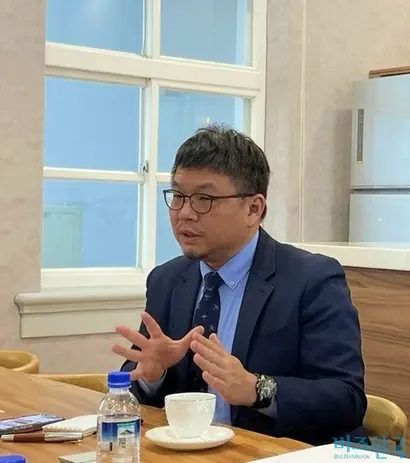
What changes will there be in East Asian affairs during the second Trump administration? Researcher Hsu Chih-hsiang said, “I believe security in East Asia will ultimately be determined by the U.S. position. I am not overly worried about Japan’s military expansion because it will operate within the U.S.-Japan alliance.”
Researcher Hsu Chih-hsiang explained that we should also pay attention to North Korea’s role. “As North Korea’s role grows during the second Trump administration, the situation in Northeast Asia is becoming unstable. I view this negatively. If the Korean War was a ‘War to Resist America and Aid Korea’ for China, then if a war breaks out in the Taiwan Strait, North Korea might intervene based on the logic of ‘Resisting America and Aiding China.’ However, this possibility is not high. North Korea’s ultimate goal is regime survival.”
Taiwan analyzes that North Korea is seeking relationships not only with China but also with other countries like Russia. Researcher Lin Chih-hao explained, “North Korea assesses the surrounding situation very rationally. In a crisis, I believe they will head toward strengthening their nuclear weapon capabilities. Currently, North Korea is considering its relationships with the U.S. as well as China and Russia.”