

[비즈한국] Recently, the domestic real estate market has shown a trend where prices rise primarily in the Gangnam area, while transaction volumes and market prices remain stagnant in Gangbuk and the outskirts of the metropolitan area. The polarization of the real estate market is intensifying due to a combination of factors, including increased loan burdens caused by interest rate hikes, economic uncertainty, and the government's regulatory policies.
Under these circumstances, the need for investors and prospective homeowners to approach the market based on more sophisticated strategies is growing, and there is a demand to look beyond simple buying and selling strategies toward comprehensive market analysis and response plans.
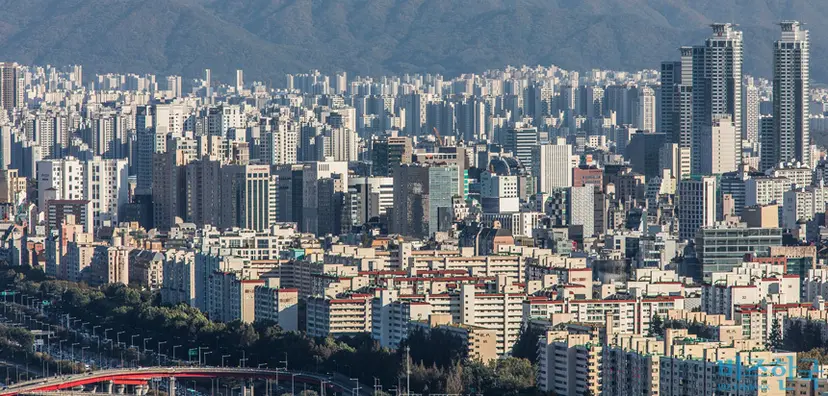
In this column, I intend to diagnose the characteristics of the current real estate market and explore ways to seek sustainable investment strategies even during a downturn. To this end, I will examine the major flows of the real estate market and suggest strategic response measures in terms of diversifying investment portfolios, distinguishing between owner-occupancy and investment purposes, focusing on cash flow, and analyzing government policies and risk management.
Real Estate Market Conditions Differ by Region
The current real estate market shows different patterns by region. The Gangnam area still maintains solid prices or shows an upward trend, which can be interpreted as a result of a combination of factors such as school districts, transportation, and living infrastructure. On the other hand, the outskirts of the metropolitan area are showing a trend of price stagnation or decline due to increased supply and shrinking demand. In particular, the impact of interest rate hikes has increased the loan burden, leading to a notable contraction in the low-to-mid-priced housing market and a decrease in investor participation.
The factors behind price increases in the Gangnam area can be summarized as follows:
First, the scarcity of the Gangnam area acts as a core driver for continuous price increases.
Second, the excellent school districts and educational infrastructure serve as important factors driving real estate demand, which reinforces housing demand centered on actual residents.
Third, as major reconstruction and redevelopment projects within the Gangnam area are being actively pursued, expectations for future value increases are being reflected.
On the other hand, the real estate market in the outskirts of the metropolitan area is seeing a decline in transaction volume due to oversupply and population outflow, leading to an intensifying market downturn.
Sophisticated Strategies Such as Portfolio Diversification Are Required
Amid this market environment, the need for investors to move away from traditional, simple buying strategies and employ more sophisticated investment strategies is emerging. In the next section, let’s consider specific strategies to effectively respond to the real estate market downturn.
The most necessary thing when responding to the real estate market during a correction period is the diversification of the investment portfolio.
In a high-volatility market like the current one, a strategy of concentrating investments in a specific type of real estate is highly likely to increase risk. Therefore, diversifying the investment portfolio is necessary. For this, it is advisable to concurrently pursue investments in key areas of Gangnam, secure stable income-generating real estate, and make medium-to-long-term investments in redevelopment and reconstruction projects.
Investment in key areas of Gangnam has low risk and high probability. Real estate in major areas within Gangnam, such as Daechi-dong, Banpo-dong, and Apgujeong-dong, still maintains high demand, and stable asset growth is expected from a medium-to-long-term perspective.
The utilization of income-generating real estate should also be considered. It is necessary to include small officetels, commercial facilities, and urban lifestyle housing that can secure stable cash flow even during an economic downturn in your portfolio.
Selecting and investing in areas where long-term value appreciation is expected, such as through redevelopment, reconstruction, remodeling, or the reconstruction of aging residential areas, can be promising.
In a stagnant market, it is important to clearly distinguish between owner-occupancy and investment purposes. Real estate for owner-occupancy should be chosen considering long-term value appreciation potential, while real estate for investment purposes should be approached focusing on markets with high liquidity.
For owner-occupancy, location selection considering living infrastructure, school districts, and proximity to work is necessary. For investment purposes, it is advisable to invest mainly in areas with high liquidity (Gangnam area, near major business districts in Seoul).
A careful analysis of government policies and market cycles is also necessary. Since government policies have a significant impact on the real estate market, it is important to react sensitively to policy changes. It is essential to carefully analyze supply measures, interest rate policies, and tax changes, and establish investment strategies accordingly.
It is important to select areas where a supply shortage is expected in 2 to 3 years due to supply contraction. It is necessary to adjust the timing of purchases by considering when interest rates might be lowered. Systems such as benefits for first-time homebuyers and rental business registration can be actively utilized.
Do Not Overlook Risk Management Against Uncertainty
Also, much attention should be paid to risk management and loan strategies that are easy to overlook. As the real estate market enters a downturn, managing loan risk is becoming increasingly important. It is necessary to establish funding plans that consider the possibility of interest rate fluctuations and prepare strategies to reduce the burden of loan repayments.
Minimize interest rate risk by utilizing fixed-rate loans. Avoid excessive leverage and establish stable fund management strategies. Secure emergency funds to respond to unexpected market fluctuations.
Just because the real estate market has entered a downturn does not mean there are no opportunities. Rather, in such times, there are opportunities to secure valuable assets based on more thorough analysis and strategy. While keeping an eye on the upward price trend centered on the Gangnam area, one should carefully establish owner-occupancy and long-term investment strategies, and it is important to invest mainly in areas where future value appreciation is expected, such as income-generating real estate, redevelopment/reconstruction, and GTX development areas.
Ultimately, to achieve sustainable success in the real estate market, a strategic approach that considers data-driven analysis and future value, rather than a simple market-following strategy, is essential. Recognizing that there are more opportunities to secure valuable assets during a correction period, one must seek out survival strategies in the real estate market based on prudent and systematic judgment.
Kim Hak-ryeol, head of the Smart Tube Real Estate Research Institute and famous by his pen name "Pashong," previously served as the head of the Real Estate Research Division at Gallup Korea. He operates and hosts the Naver blog "Pashong's World Exploration" and the YouTube channel "Stue TV." He is the author of books including "The Power of Gyeonggi-do Real Estate (2024)," "The Absolute Principles of Seoul Real Estate (2023)," "The Future of Incheon Real Estate (2022)," "Kim Hak-ryeol's Absolute Principles of Real Estate Investment (2022)," "The Future Map of South Korean Real Estate (2021)," "From Now On, Only Places That Will Rise, Rise (2020)," and "South Korean Real Estate User Manual (2020)."