

[비즈한국] Foreign investors continue to pull out of the domestic stock market. The foreign-held portion of total market capitalization has failed to recover to the 30% level since August 2024, and the total value of foreign holdings has dropped from 738 trillion won at the end of 2023 to 666 trillion won as of January 2025. Feeling the urgency, the government launched the "Korea Value-up Index," consisting of 105 undervalued blue-chip stocks, as part of a program to resolve the "Korea Discount." Each week, we select one stock from this index to analyze its management status and corporate value enhancement plans, determining whether it is a stock with the potential to prevent the "fall of the Korean market."
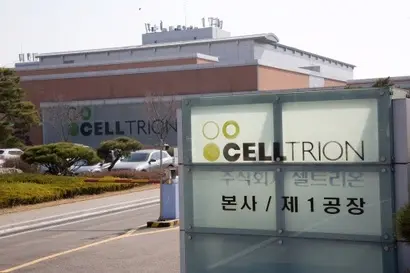
Celltrion ranks 4th among the constituents of the Korea Value-up Index and is the only pharmaceutical/biotech company in the top 10. As of February 28, its stock price stood at 184,000 won, with a Price-to-Book Ratio (PBR) of 2.35x. In the pharmaceutical and biotech sector, stock prices are typically shaped by expectations of future value, leading to PBRs of at least 2x, which is higher than in other industries. Celltrion shareholders saw a return of 1.4% over the past year, -4.4% over the past six months, and 3.4% over the past three months. Looking at the stock price over the last year, it reached a high of 201,524 won on July 30, 2024, and a low of 153,101 won on November 15.
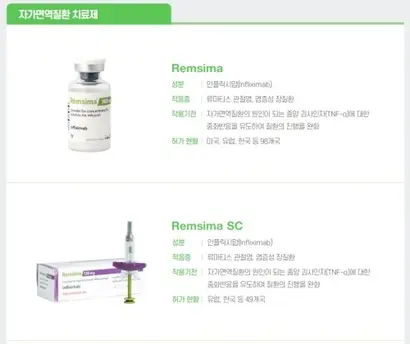
Celltrion maintains a significant presence in both its industry and the stock market. Having successfully developed the world’s first antibody biosimilar, the company is a global leader in the field. Antibody biopharmaceuticals are drugs made from proteins (antibodies) generated by the human immune system to fight external antigens; biosimilars are copies that are more affordable while offering the same efficacy. Key biosimilar products from Celltrion include "Remsima" for rheumatoid arthritis, "Herzuma" for breast cancer treatment, and "Truxima" for blood cancer treatment.
Revenue in 2024 was 3.5573 trillion won, a 63.5% increase from the previous year (2.1764 trillion won), marking the highest annual revenue in its history. Fourth-quarter revenue reached 1.0636 trillion won, exceeding the 1 trillion won mark for a single quarter for the first time. Conversely, annual operating profit decreased by 24.5% compared to the previous year (from 651.5 billion won to 492 billion won). Celltrion attributed the revenue growth to the fact that "new product sales increased from 26% to 38%, becoming a major pillar of revenue." The decline in operating profit was attributed to "increased cost-of-goods ratios following the merger with Celltrion Healthcare, as well as increased selling, general, and administrative (SG&A) expenses due to the expansion of overseas sales subsidiaries to boost export volumes."
Celltrion is famous for having a long, troubled history with short selling. The actions of Seo Jung-jin, Chairman of Celltrion Group, cannot be overlooked. Celltrion entered the stock market via the KOSDAQ in May 2008 before transferring its listing to the KOSPI in February 2018. The problem is that it became a primary target for short sellers after listing.
In November 2011, Chairman Seo Jung-jin declared "war on short selling" and began taking countermeasures such as share buybacks. During this process, he faced investigations into alleged stock price manipulation and even announced the sale of his stake in 2013. Over a decade has passed, yet the company is still not free from short selling. As of February 26, Celltrion ranked 12th in terms of short-selling balance volume (1.9 million shares) and 2nd in terms of balance value (359 billion won) among KOSPI stocks.
The company also appeals to shareholders while remaining vigilant against short selling. In a statement to shareholders on November 16, 2024, Celltrion noted, "An excessive level of securities lending balance (shares borrowed by investors but not yet returned) can be exploited when the stock price is unstable," and requested that shareholders "terminate their securities lending contracts."
Although not specifically required by the Value-up Program, Celltrion has consistently announced and implemented shareholder return policies. In 2024, the company repurchased a total of 534.6 billion won (2,940,778 shares) in treasury stock and canceled 700 billion won worth of shares. In January, it canceled approximately 3.01 million shares (worth about 553.3 billion won) with the aim of enhancing share value. On February 19, it decided on its first share buyback of the year and began open-market purchases the following day. The total acquisition size is 554,632 shares, amounting to 100 billion won. The company previously stated, "We are considering implementing share buybacks as needed until the financial market stabilizes."
A plan to increase dividends was also introduced. The medium-to-long-term goal is to expand cash dividends to 30% of post-investment profits. This year, the company is also preparing its largest-ever stock dividend, the first in two years. Celltrion will proceed with the dividend following approval at the regular general shareholders' meeting in March. It plans to pay a cash dividend of 750 won per common share and a stock dividend of 0.05 shares per share. The cash amount is approximately 153.7 billion won, and the number of shares is approximately 10.25 million. Celltrion stated, "We decided on the stock dividend decisively because we believe the current corporate value is significantly undervalued relative to future business plans."
The company also actively communicates with shareholders. It provides regular updates whenever there are issues that could affect the stock price, such as global news. Perhaps because of this, Celltrion was selected as the only pharmaceutical/biotech company among those recognized for "Excellence in Disclosure" on February 27. This recognition was earned by submitting the highest number of disclosures (235) among peers in 2024 and for preemptively responding to the policy mandating English-language disclosures.
Celltrion also prepared measures for the inauguration of the U.S. Trump administration. On January 30 and February 19, it announced response strategies for drug tariffs. The company explained that the impact of tariffs on this year's U.S. sales was minimized by securing inventory, and it revealed plans to focus on exporting active pharmaceutical ingredients (APIs), which carry lower tariff burdens, and to consider local production. Perhaps due to these efforts, Celltrion was the only stock among the top 10 on the Value-up Index to finish in the green (up 0.7%) on February 28, even as the market plummeted following President Trump's announcement of tariffs on Mexico and Canada.
However, securities analysts point out that measures are needed to move the stock price out of its trading range. Han Seung-yeon, an analyst at NH Investment & Securities, analyzed, "A gradual rebound in the stock price is possible if performance in Europe and other countries increases," adding, "We need to see the realization of results from its first U.S. new drug, Zymfentra (an autoimmune disease treatment), or its Contract Development and Manufacturing Organization (CDMO) business in Korea and the U.S."